A comeback strategy is taking shape in the back end of chipmaking
Intel’s long effort to rebuild its manufacturing relevance is usually discussed in terms of fabs, process nodes, and its competition with Taiwan Semiconductor Manufacturing Company. But one of the company’s more promising plays now sits in a different part of the stack. Advanced packaging, the process of combining chiplets and other components into a custom integrated product, is emerging as a potential near-term revenue engine for Intel’s foundry business.
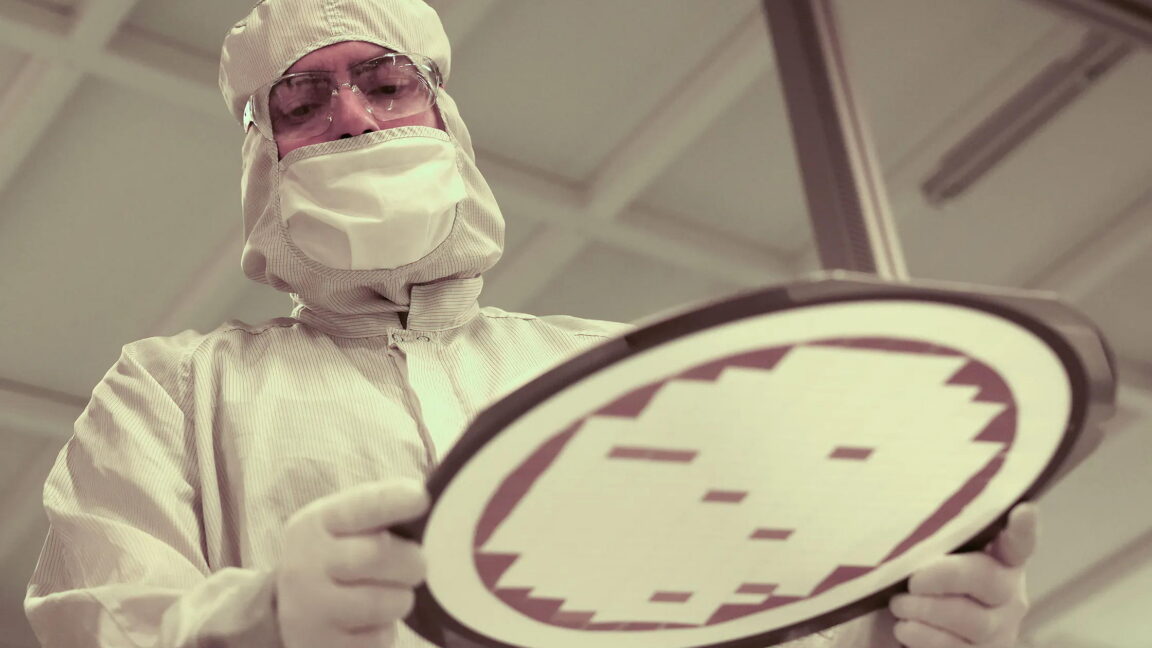
Ars Technica reports that Intel has poured billions into its Rio Rancho, New Mexico, operations, including a facility that had once gone dormant. Fab 9, which had been idle after Intel’s earlier business struggles, was restarted in January 2024. Together with neighboring Fab 11X, it now forms critical infrastructure for Intel’s packaging push.
The timing is not accidental. AI demand has changed what customers need from chip suppliers. Large technology companies increasingly want customized silicon arrangements optimized for specific workloads, and advanced packaging is central to making those designs practical at scale. In that environment, the value is no longer only in fabricating a monolithic chip. It is in assembling multiple components into a high-performance package that behaves like a tailored system.
Why packaging matters more than it used to
For years, packaging was often treated as a downstream step, important but secondary to front-end manufacturing breakthroughs. That hierarchy is weakening. As chip design becomes more modular, packaging turns into a strategic capability. It determines how chiplets connect, how efficiently heat is handled, and how flexibly customers can mix components designed for different functions.
Intel appears to believe this is an opening. The company’s executives have increasingly emphasized packaging as a differentiator. During a January earnings call, CEO Lip-Bu Tan described it as a major advantage over competitors, while chief financial officer Dave Zinsner said packaging revenue could arrive before meaningful wafer revenue from the foundry turnaround. That sequencing is important. It implies Intel may be able to monetize part of its manufacturing platform before the full foundry vision is proven.
Zinsner went even further in later remarks, saying the company’s packaging revenue expectations had risen from hundreds of millions of dollars to well above $1 billion. He also suggested Intel was close to major packaging deals worth billions of dollars per year.

The real prize is customer relevance
Multiple sources cited by Ars say Intel has been in talks with at least two large customers, Google and Amazon, for advanced packaging services. Those would be consequential wins. Both companies build custom chips and outsource parts of the production chain. If Intel becomes a key packaging partner for hyperscalers, it would gain more than revenue. It would gain a place inside the product roadmaps of some of the most important AI infrastructure buyers in the world.
That matters because Intel’s recovery is not just about capacity. It is about relevance. A packaging deal can give the company a role in the AI boom even if it is not yet leading the front-end manufacturing race. It also creates a commercial bridge between Intel’s legacy manufacturing footprint and the new wave of demand for custom accelerators and specialized compute hardware.
Packaging may be especially attractive to customers because it offers flexibility. A company can source or design multiple chiplets, optimize them for different tasks, and use a packaging specialist to turn them into a unified product. That approach can speed product cycles and reduce dependence on one manufacturing path.
A pragmatic way to compete with TSMC
Intel is still chasing TSMC on scale, and the article makes clear that Taiwan’s manufacturing leader remains far ahead in production. But the packaging angle gives Intel a less direct way to compete. Rather than matching TSMC everywhere at once, Intel can target an area where customer demand is expanding and where differentiated capability may matter enough to win business.
This is a pragmatic strategy. Foundry turnarounds are expensive, slow, and easy to overpromise. Advanced packaging offers Intel a nearer-horizon business case. It allows the company to show commercial progress, deepen relationships with potential anchor customers, and capitalize on the AI buildout without waiting for every other part of the manufacturing revival to mature.
That does not guarantee success. Packaging revenues alone will not solve Intel’s broader challenges. But if the company can turn New Mexico into a high-value packaging hub, it may prove that the comeback does not need to begin where everyone expects. It can begin in the part of the chip pipeline that has suddenly become indispensable.
- Intel has revived key New Mexico facilities to support advanced packaging work.
- Executives say packaging revenue may arrive before meaningful wafer revenue from the foundry business.
- Potential deals with large custom-chip buyers could make packaging a strategic bridge into the AI hardware boom.
This article is based on reporting by Ars Technica. Read the original article.

Originally published on arstechnica.com


