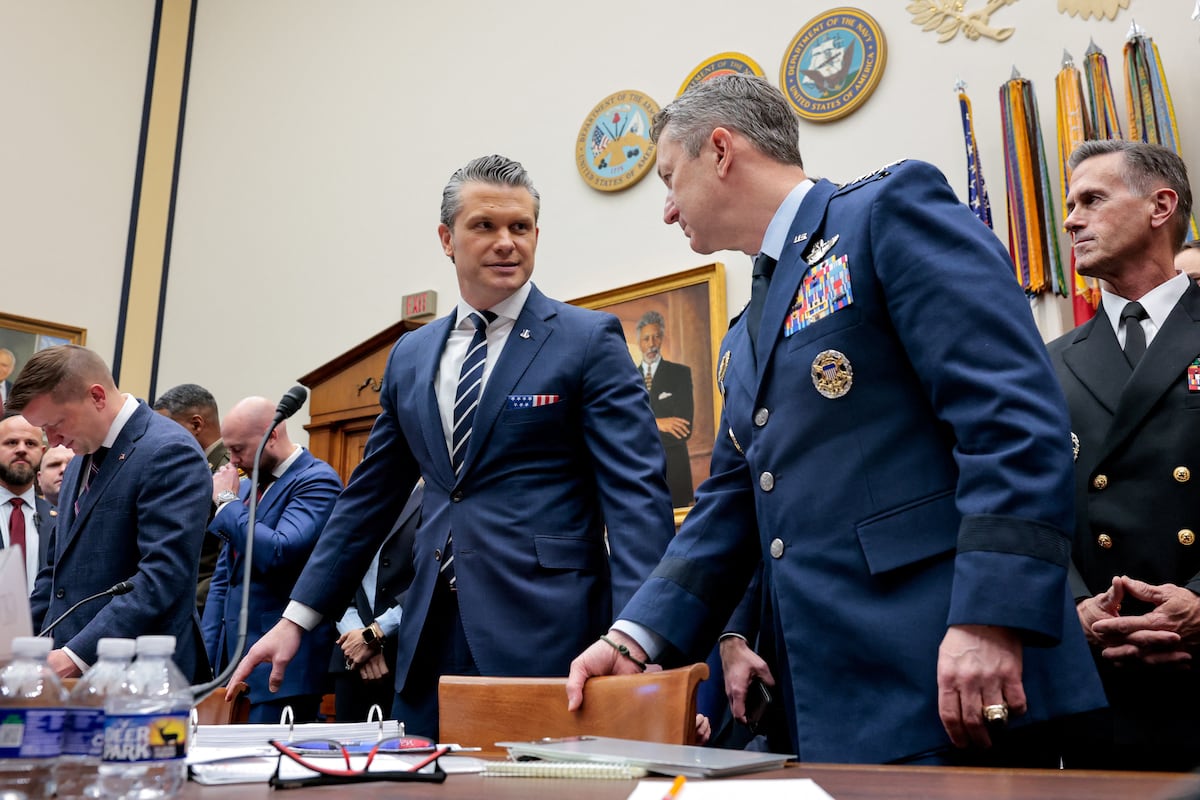
Une audience budgétaire se transforme en débat sur la stratégie de guerre
Ce qui avait commencé comme une audition sur la demande budgétaire 2027 du Pentagone s’est rapidement transformé en un débat plus large sur l’orientation de la guerre en Iran. Le secrétaire à la Défense Pete Hegseth a utilisé la séance du 29 avril pour défendre l’approche de l’administration, tandis que les élus l’ont interrogé sur la durée possible du conflit et sur l’objectif réellement poursuivi par les États-Unis.
L’échange était important, car il mettait au jour un fossé grandissant entre les affirmations tactiques de succès militaire et les questions sans réponse sur l’issue stratégique finale. Les membres de la commission ont salué les militaires déployés, mais plusieurs ont exigé une réponse plus claire sur la durée, l’autorisation et la logique politique de la poursuite de la campagne.
Hegseth a refusé de spéculer sur la durée de la guerre. Il a en revanche fustigé ses critiques au Congrès, qualifiant certains élus de « téméraires, inutiles et défaitistes » pour avoir remis en question l’objet et la trajectoire de l’opération. L’affrontement a souligné à quel point la guerre est devenue politiquement sensible à l’approche des échéances légales et constitutionnelles.
Ce que l’administration dit avoir accompli
Selon le compte rendu de l’audition figurant dans le texte source fourni, le président Donald Trump avait exposé trois objectifs initiaux lorsque les États-Unis et Israël ont lancé des opérations de combat en Iran le 28 février : détruire la capacité de missiles de l’Iran, anéantir sa marine et faire en sorte que le pays ne possède jamais d’armes nucléaires.
La source indique que l’opération a tué le guide suprême iranien, l’ayatollah Ali Khamenei, ainsi que plusieurs autres dirigeants clés, détruit la marine iranienne et anéanti des installations militaires stratégiques. Hegseth a soutenu que l’administration avait pris la seule mesure sérieuse jamais adoptée par un dirigeant américain pour empêcher physiquement l’Iran d’obtenir une arme nucléaire.
Il a également affirmé que l’Iran continue d’avoir des ambitions nucléaires malgré les dégâts infligés par l’opération Midnight Hammer l’été dernier, qu’il a dit avoir anéanti des installations. Sa formulation suggérait que la logique stratégique de la guerre repose désormais moins sur la destruction initiale sur le champ de bataille que sur la contrainte exercée sur l’Iran afin qu’il abandonne ses ambitions nucléaires à la table des négociations.
Pourquoi les élus ne sont pas convaincus
C’est cette ambiguïté stratégique qui a suscité les questions les plus dures. Le membre le plus haut placé de la commission, Adam Smith, a demandé quelle était la direction de la guerre. Le représentant John Garamendi a déclaré que l’armée avait obtenu un « succès tactique », mais a estimé que la stratégie globale de l’administration reflétait l’incompétence.
Ces critiques ne visaient pas l’exécution militaire. Elles visaient l’absence d’issue définie. Si la marine iranienne est détruite et que l’infrastructure militaire a été lourdement endommagée, les élus veulent savoir quel seuil marquerait l’achèvement de la mission et qui déciderait si la campagne doit se poursuivre.
Hegseth a rejeté l’idée que l’opération dérivait vers un bourbier, affirmant que les critiques devraient avoir honte d’employer ce terme à peine deux mois après le début de l’effort. Mais le simple fait que la comparaison ait été évoquée montre à quelle vitesse la patience politique peut s’éroder lorsque les objectifs de guerre évoluent plus vite que les explications publiques.
L’horloge de la War Powers est la pression immédiate
L’audition s’est tenue juste avant l’expiration d’un délai de 60 jours prévu par la War Powers Act. Comme l’indique le texte source, la loi exige que le président demande au Congrès l’autorisation de poursuivre l’opération ou retire les troupes. Trump peut demander une prolongation si davantage de temps est nécessaire pour retirer les forces américaines en toute sécurité.
Cette échéance transforme un débat stratégique en enjeu institutionnel. Les élus ne demandent plus seulement si la campagne est judicieuse. Ils se demandent si l’administration entend la poursuivre avec un soutien explicite du Congrès.
C’est pourquoi le refus d’évoquer la durée est politiquement lourd de conséquences. Un président peut soutenir que des opérations militaires sont nécessaires. Il est plus difficile de maintenir indéfiniment cette position sans préciser combien de temps l’engagement pourrait durer ni quelles conditions y mettraient fin.
Le coût et les représailles sont déjà réels
Le compte rendu de l’audition souligne aussi les coûts déjà supportés. Selon le témoignage, la guerre a coûté 25 milliards de dollars à ce jour. La source précise en outre que les représailles iraniennes ont pris la forme de frappes de missiles et aériennes contre des installations militaires américaines, tuant 13 personnes et endommageant des bases dans toute la région ainsi que des cibles civiles dans des pays du Moyen-Orient.
Ces éléments élargissent le débat au-delà de la procédure juridique. Ils soulèvent la question de savoir si les bénéfices stratégiques de la campagne sont mis en balance avec un fardeau régional croissant. Un conflit peut produire des gains tactiques tout en laissant ouverte la question de savoir s’il crée un environnement à long terme plus dangereux.
Pour le Congrès, c’est précisément la raison pour laquelle l’autorisation compte. Lorsque les pertes augmentent, que les coûts montent et que les objectifs passent de la destruction à la contrainte, l’argument en faveur d’une responsabilité politique explicite devient plus fort.
Ce que ce moment révèle
La dernière audition a révélé une administration qui tente de tenir deux positions à la fois. D’une part, elle veut présenter la guerre comme un succès opérationnel. D’autre part, elle veut éviter d’être contrainte de préciser le calendrier, l’issue ou les conditions de sortie. Cela peut se comprendre du point de vue de la communication en temps de guerre, mais c’est intrinsèquement instable dans un système constitutionnel qui attend un contrôle du Congrès.
L’échange a également montré que l’argument de l’opposition devient plus précis. Les élus ne se contentent pas d’une objection abstraite. Ils demandent comment l’action militaire se traduit en résultats politiques durables et combien de temps l’exécutif peut poursuivre la campagne sans autorisation formelle.
Trois questions sans réponse définissent désormais la phase suivante :
- L’administration demandera-t-elle l’autorisation du Congrès avant l’arrivée à échéance complète du délai de la War Powers ?
- Quel résultat serait considéré comme la fin de l’opération actuelle ?
- Quel coût supplémentaire et quelle escalade régionale la Maison-Blanche est-elle prête à absorber ?
Un tournant politique, pas seulement militaire
La campagne militaire contre l’Iran se trouve peut-être encore dans une phase opérationnelle active, mais politiquement, elle entre dans une autre étape. Le débat se déplace de la question de savoir si le recours à la force était justifié vers celle de savoir comment une campagne sans limite de durée est gouvernée, financée et encadrée.
Le refus de Hegseth de spéculer sur la durée lui a peut-être permis d’éviter un engagement dans la salle. Il n’a pas pour autant réduit la pression qui monte autour de la stratégie de guerre de l’administration. À mesure que l’échéance de la War Powers approche, la question la plus difficile n’est plus de savoir si le Pentagone peut poursuivre le combat. Elle est de savoir si la Maison-Blanche peut continuer à définir le succès sans définir la fin.
Cet article est basé sur un reportage de Defense News. Lire l’article original.
Originally published on defensenews.com