Les dirigeants de la Marine esquissent une voie prudente pour le BBG(X)
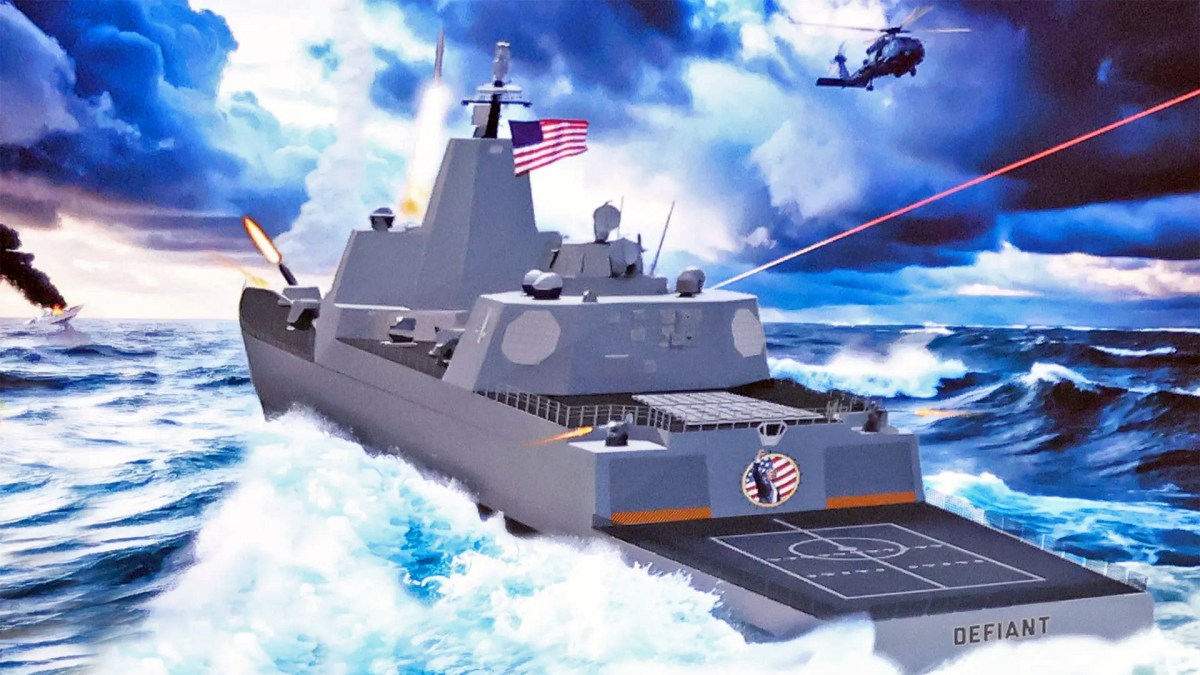
L’US Navy donne une image plus claire de la manière dont elle souhaite aborder le programme de cuirassé de classe Trump, également connu sous le nom de BBG(X), et le message des dirigeants est autant centré sur la rigueur des acquisitions que sur la puissance de combat. Lors de l’exposition Sea Air Space 2026 de la Navy League, le chef des opérations navales, l’amiral Daryl Caudle, et le secrétaire à la Marine, John Phelan, ont discuté du programme en cours d’élaboration, officiellement présenté par le président Donald Trump en décembre. Le premier navire devrait actuellement s’appeler USS Defiant.
Le programme est décrit comme un important nouveau projet de grand bâtiment de combat de surface. D’après les éléments communiqués jusqu’à présent, les navires de classe Trump déplaceraient environ 35 000 tonnes, soit à peu près trois fois le déplacement des tout derniers destroyers Arleigh Burke de Flight III. Les navires devraient mesurer entre 840 et 880 pieds de long, avec une largeur comprise entre 105 et 115 pieds, et atteindre une vitesse maximale supérieure à 30 nœuds.
Le chiffre qui retient l’attention est le coût. Le premier bâtiment pourrait coûter environ 17 milliards de dollars, selon le rapport. Une telle ampleur fait du programme un pari stratégique et budgétaire, et non un simple projet de construction navale. La direction de la Marine insiste sur le fait que la conception doit être figée avant le début de la construction, une leçon tirée de l’effondrement du projet de frégate de classe Constellation l’an dernier.
La stabilité de la conception est désormais l’enjeu central
Les déclarations publiques de la Marine montrent que les responsables comprennent les risques liés au lancement des travaux avant que la conception ne soit mûre. La frégate de classe Constellation est devenue un exemple d’avertissement après que l’instabilité de la conception et des changements répétés ont largement contribué à l’échec du programme. Pour le BBG(X), les dirigeants indiquent qu’ils veulent empêcher le même schéma de s’installer.
Cette préoccupation est importante parce que le cuirassé proposé n’est pas une simple adaptation d’une plateforme existante. Sa taille, sa charge utile de missiles prévue et son profil de mission le placent dans une catégorie différente de celle des destroyers et des croiseurs. L’armement devrait inclure un mélange de missiles nucléaires et conventionnels, y compris des types hypersoniques, chargés dans de grands lanceurs verticaux. Cela ferait du navire à la fois une plateforme de frappe majeure et un symbole visible de la puissance navale.
L’amiral Caudle a décrit le navire comme un élément nécessaire de la force et a déclaré qu’il offrirait de la flexibilité. Cette présentation suggère que la Marine considère le BBG(X) comme une plateforme capable de contribuer à plusieurs concepts d’emploi, et non comme un simple remplacement étroit d’une classe plus ancienne. L’association d’armes à longue portée, d’un déplacement important et d’une vitesse élevée pointe vers un bâtiment conçu pour la présence, la capacité de frappe et la survivabilité à grande échelle.
Un changement de direction ajoute de l’incertitude
La discussion sur le programme a eu lieu alors que le Pentagone annonçait le départ immédiat du secrétaire à la Marine, John Phelan, de l’administration. Le sous-secrétaire Hung Cao doit devenir secrétaire par intérim. Aucun motif n’a été donné immédiatement dans le reportage fourni.
Ce calendrier ajoute de l’incertitude à un programme qui sera de toute façon probablement examiné de près. Un bâtiment de tête à 17 milliards de dollars, une nouvelle appellation de cuirassé et une conception incluant des options de missiles nucléaires et conventionnels appellent un débat politique, budgétaire et stratégique. Le programme devra non seulement survivre à l’examen technique, mais aussi aux pressions habituelles du contrôle parlementaire et à l’évolution des priorités de défense.
L’accent mis très tôt par la Marine sur la maturité de la conception est donc significatif. Il reconnaît que le succès du programme dépendra de la capacité du service à transformer son ambition en une conception stable et constructible avant le début des travaux industriels. Si la conception reste mouvante, les risques de coût et de calendrier pourraient augmenter rapidement.
Pourquoi c’est important
Le programme de cuirassé de classe Trump est important parce qu’il reflète une question plus large à laquelle l’US Navy est confrontée : les très grands bâtiments de combat de surface offrent-ils encore assez de valeur opérationnelle pour justifier leur coût et leur complexité ? La Marine semble penser qu’un navire fortement armé, rapide et doté de grands ensembles de missiles peut offrir de nouvelles options aux commandants. Mais les mêmes caractéristiques qui rendent le BBG(X) attrayant rendent aussi son exécution difficile.
Pour l’instant, le programme est moins une réponse achevée qu’un test de la capacité de la Marine à appliquer les leçons tirées des échecs de construction navale. Le service promet un processus de conception plus ferme et un cas d’usage plus clair. L’étape suivante dira si ces engagements peuvent tenir sous la pression des coûts, de la politique et des réalités pratiques de la construction d’un navire de guerre de cette ampleur.
Cet article s’appuie sur un reportage de twz.com. Lire l’article original.

Originally published on twz.com