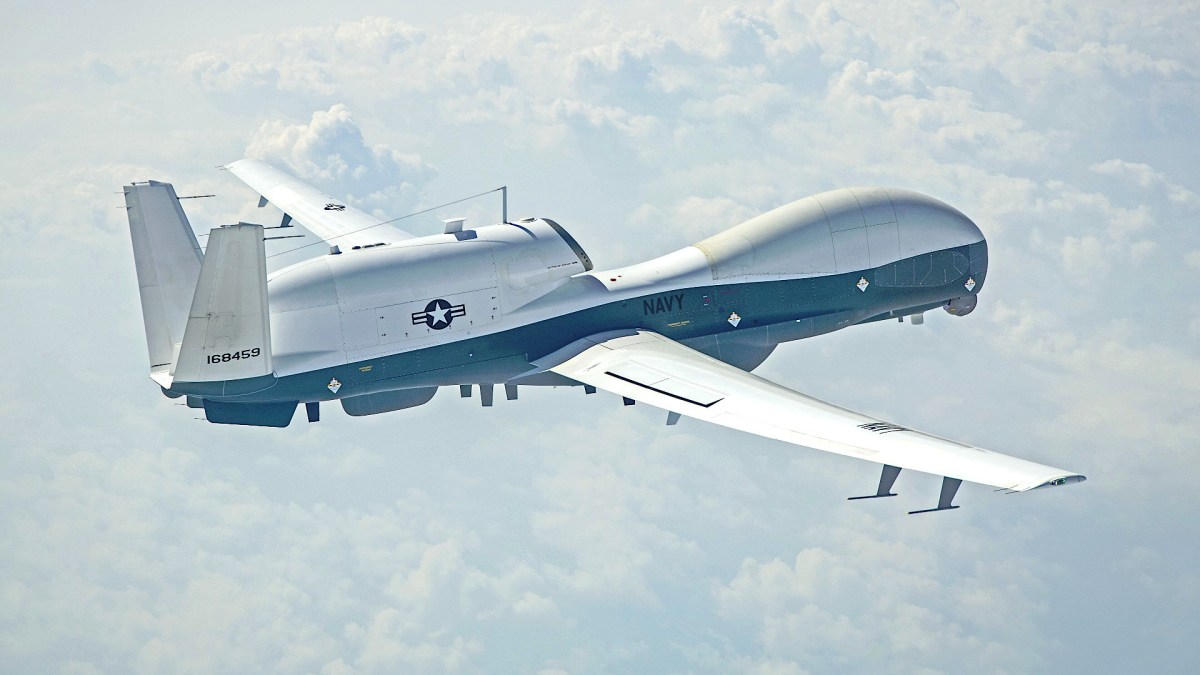
Une perte suspectée devient un incident officiel
La marine américaine a désormais confirmé qu’un drone de surveillance MQ-4C Triton s’est écrasé le 9 avril 2026, après que l’appareil a disparu des flux de suivi en ligne alors qu’il survolait le golfe Persique. La confirmation est apparue dans le résumé public des incidents du Naval Safety Command, qui recensait un incident de classe A à un endroit non divulgué pour des raisons de sécurité opérationnelle et indiquait qu’aucun membre du personnel n’avait été blessé.
Cette reconnaissance officielle est importante parce que la perte avait été largement déduite, sans toutefois être formellement annoncée. Dans les jours qui ont suivi la disparition de l’appareil, les données de suivi visibles publiquement laissaient déjà penser à une grave urgence en vol. Selon le texte source fourni, le drone est brutalement passé d’une altitude de croisière typique d’environ 50 000 pieds à moins de 10 000 pieds, et son transpondeur a émis le code de détresse 7700, l’indication générale utilisée pour les urgences aériennes. Ces signaux n’expliquaient pas la cause, mais rendaient peu probable une issue sans gravité.
La marine n’a pas divulgué les circonstances ayant conduit au crash, et le Commandement central américain n’a pas souhaité commenter lorsque The War Zone l’a contacté. La question centrale reste donc sans réponse : le Triton a-t-il été perdu à cause d’une défaillance mécanique, de conditions environnementales, d’un problème de pilotage ou d’une action hostile ? Le dossier officiel publié à ce jour n’apporte pas de réponse. Il fait simplement passer l’incident de la spéculation au fait confirmé.
Pourquoi le Triton compte
Le MQ-4C n’est pas un drone ordinaire dans l’inventaire de la marine. C’est une plateforme de surveillance à haute valeur et à très longue endurance, conçue pour observer de vastes zones maritimes pendant de longues périodes. Le texte source précise que les documents budgétaires fixaient récemment son prix unitaire à un peu plus de 238 millions de dollars. En 2025, la marine comptait 20 Triton en service et prévoyait d’en acquérir sept de plus. En perdre un est donc important, non seulement en valeur financière, mais aussi en capacité de flotte.
Ce coût et cette rareté expliquent en partie pourquoi l’incident est classé en catégorie A. Selon les définitions de la marine citées dans le texte source, cette catégorie s’applique aux incidents impliquant plus de 2 millions de dollars de dégâts, une invalidité permanente, un décès ou une combinaison de ces conséquences. L’appareil valant bien davantage que ce seuil, la classification était inévitable une fois le crash confirmé.
Le contexte opérationnel compte aussi. L’aéronef volait au-dessus de l’une des voies navigables les plus stratégiquement sensibles du monde, le golfe Persique et le détroit d’Ormuz, avant de disparaître. Les missions de surveillance dans cette région servent des fonctions évidentes de renseignement et de sécurité, en aidant à suivre l’activité maritime et les évolutions militaires régionales. Toute perte à cet endroit attire l’attention, car elle touche à la fois aux capacités et à la dissuasion. Même sans preuve d’une implication ennemie, la disparition d’un grand moyen américain de surveillance dans cet espace aérien est lourde de conséquences.
Ce qui reste inconnu
Pour l’instant, le dossier public reste mince. Le résumé de l’incident ne donne que la date, la classification, l’emplacement non divulgué et la confirmation qu’aucune personne n’a été blessée. Les données de suivi de vol rapportées plus tôt ne fournissent que des indices circonstanciels. Une perte soudaine d’altitude et un code de détresse suggèrent que l’équipage ou les opérateurs ont identifié un problème grave, mais ils n’établissent pas la nature de ce problème.
Cette incertitude devrait perdurer quelque temps. Les enquêtes sur les incidents militaires avancent souvent lentement, surtout lorsque l’appareil est lié à des missions sensibles ou opère dans des régions contestées. Même lorsqu’une cause est identifiée en interne, les responsables ne publient parfois que des détails limités afin de ne pas exposer des vulnérabilités, des schémas opérationnels ou des concepts d’emploi des capteurs. Dans ce cas, la mention « emplacement non divulgué » indique déjà que la transparence publique restera contrainte par des considérations opérationnelles.
Malgré tout, la perte fera presque certainement l’objet d’un examen attentif au sein de la marine. Une flotte aussi réduite ne peut pas absorber des revers répétés à la légère. Si la cause s’avère technique, cela pourrait affecter la disponibilité opérationnelle, les pratiques de maintenance ou les futurs calendriers d’acquisition. Si elle renvoie à une menace externe, les implications seraient encore plus larges, touchant à la protection des forces et à la survivabilité d’actifs de surveillance sans pilote de haut niveau dans des théâtres exposés.
Un rappel sur les risques des systèmes sans pilote modernes
Le crash du Triton rappelle aussi que les aéronefs sans pilote sophistiqués restent vulnérables malgré leur endurance et leur portée. Les systèmes de surveillance à longue distance élargissent la connaissance de la situation, mais ils opèrent aussi loin de leur base, dans des environnements difficiles et parfois à proximité d’adversaires capables. L’absence d’équipage à bord change le calcul du risque humain, mais elle n’efface pas le coût stratégique de la perte de la plateforme.
Dans les faits, la confirmation par la marine clôt une question étroite et en ouvre une plus vaste. Oui, un MQ-4C a été perdu le 9 avril. Non, le public ne sait toujours pas pourquoi. Jusqu’à ce que de plus amples informations émergent, l’incident restera à la fois un accident coûteux et une étude de cas sur la manière dont la transparence militaire moderne accuse encore du retard sur ce que les observateurs en sources ouvertes peuvent détecter en temps réel.
Pour les analystes qui suivent l’évolution de la surveillance maritime sans pilote, cet écart fait partie de l’histoire. Les drones haut de gamme sont désormais centraux dans les opérations militaires, mais lorsqu’un appareil disparaît, la frontière entre les preuves publiques, la confirmation officielle et l’explication réelle peut encore être étonnamment large.
Cet article est basé sur un reportage de twz.com. Lire l’article original.
Originally published on twz.com