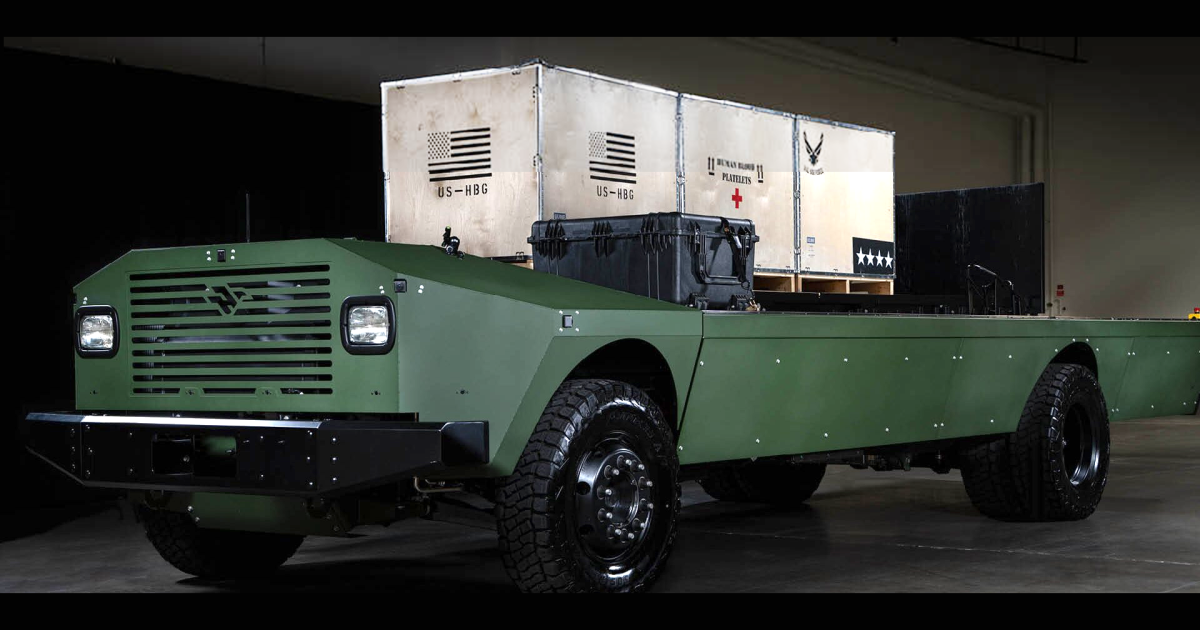
L’armée veut des véhicules de fret qui ressemblent moins à des camions
L’armée américaine et, plus largement, le département de la Défense poursuivent plus loin la logistique autonome avec un nouvel effort visant à développer des véhicules de fret robotiques capables d’acheminer des fournitures plus près du champ de bataille sans embarquer de conducteur humain.
Selon le texte source fourni par New Atlas, American Rheinmetall et Harbinger ont été retenus pour travailler sur une nouvelle génération de camions robotiques furtifs, peu coûteux et consommables. L’objectif n’est pas d’automatiser la cabine d’un camion conventionnel. Il s’agit de construire une famille de plateformes de fret attritables, façonnées spécifiquement par les exigences d’environnements contestés.
Ce changement reflète une réalité militaire brutale. Aussi avancés que soient les réseaux logistiques modernes, il existe toujours un point où les approvisionnements doivent être transportés sur des terrains dégradés sous la menace. Plus le matériel se rapproche du front, plus il est difficile de protéger les personnes qui le déplacent.
Le nouveau programme vise à réduire cet écart.
Ce que les entreprises apportent
Dans le cadre du contrat de modernisation décrit dans le texte source, American Rheinmetall prendra en charge l’intégration des véhicules de combat, l’architecture modulaire, les interfaces adaptables des kits de mission et l’ingénierie des systèmes de mission. Harbinger fournira un châssis hybride-électrique drive-by-wire dérivé du secteur commercial ainsi que des technologies d’électrification.
Cette association est révélatrice. Rheinmetall apporte une expérience d’intégration de véhicules militaires, tandis que Harbinger contribue avec une approche de plateforme de type automobile fondée sur des systèmes électrifiés drive-by-wire. Le programme se situe donc à l’intersection de la modernisation de la défense et de la technologie des véhicules commerciaux.
Le texte source indique que l’accent initial sera mis sur des véhicules tactiques terrestres autonomes capables d’opérer en zone de combat. À plus long terme, l’effort devrait s’étendre à des plateformes robotiques optimisées pour les opérations mixtes homme-machine.
Pourquoi l’absence de cabine compte
L’un des détails les plus frappants de la source est que ces véhicules n’auront pas de place pour un conducteur humain. C’est plus qu’une simple originalité de conception. Supprimer la cabine modifie les arbitrages liés à la forme du véhicule, à sa taille, à sa survivabilité et à son coût.
Si un véhicule n’est pas conçu autour de la protection et de l’accueil d’un conducteur, il peut être optimisé plus agressivement pour la charge utile, le profil et le caractère consommable. En termes militaires, cela soutient l’idée d’un système attritable : suffisamment utile pour être déployé à grande échelle, mais assez bon marché pour que la perte de certains véhicules dans un environnement contesté soit acceptable.
Cette philosophie est devenue de plus en plus courante dans les drones et les systèmes autonomes. L’appliquer à la logistique terrestre prolongerait la même logique à l’un des goulets d’étranglement les moins glamour, mais les plus persistants, de la guerre.
La furtivité et la propulsion hybride sont des caractéristiques opérationnelles
Le texte source souligne que les camions utiliseront une propulsion hybride et pourront passer en mode électrique. Il ne s’agit pas d’un choix environnemental, mais tactique.
La traction électrique peut réduire les signatures acoustiques et thermiques, ce qui a du sens pour des missions de ravitaillement dans des zones où la détection compte. Un véhicule plus silencieux et à signature réduite transportant des munitions, de la nourriture ou du matériel pourrait être nettement plus difficile à cibler qu’un camion de fret conventionnel dans certaines conditions.
Les systèmes hybrides offrent aussi une autonomie et une flexibilité opérationnelle que des plateformes logistiques militaires entièrement électriques peinent encore à fournir dans des environnements plus hostiles. Cet équilibre entre déplacement plus furtif et endurance pratique semble être l’une des principales raisons du choix de l’architecture hybride.
Pourquoi la logistique est ici le véritable champ de bataille
La couverture des technologies militaires se concentre souvent sur les missiles, les avions et la robotique de première ligne. Mais c’est la logistique qui détermine si les unités de combat peuvent tenir dans la durée. Le texte source le souligne clairement, en notant que malgré d’immenses systèmes d’approvisionnement nationaux, il subsiste un inévitable problème du dernier kilomètre où les soldats finissent par porter les charges à la main.
Réduire cette charge pourrait avoir une valeur tactique immédiate. Cela pourrait fatiguer moins les troupes, réduire leur exposition sur des routes de ravitaillement dangereuses et améliorer le rythme auquel les unités sont soutenues dans des terrains complexes.
Les camions autonomes ne sont pas une idée nouvelle en soi. La source note que les camions sans conducteur existent depuis plus de 20 ans, généralement dans des rôles de convoi supervisés par des humains. Ce qui change ici, c’est l’intention opérationnelle. Au lieu d’automatiser des segments du transport conventionnel, le Pentagone semble rechercher des plateformes conçues dès le départ pour la logistique militaire autonome en conditions de champ de bataille.
À quoi ressemblerait le succès
Si le projet aboutit comme prévu, l’armée pourrait disposer d’un outil logistique évolutif pour les missions de combat, de soutien et d’appui. Le texte source décrit l’objectif comme le développement rapide de plateformes robotiques produisibles en masse et abordables, utilisables dans les opérations de combat et de logistique.
Le mot « production de masse » est important dans cette description. La valeur d’un véhicule logistique robotique augmente fortement s’il peut être déployé en quantité et accepté comme consommable si nécessaire. Un petit nombre de systèmes de fret autonomes très sophistiqués ne résoudrait pas le problème plus large du réapprovisionnement militaire.
L’accent mis sur l’architecture modulaire et les interfaces de kits de mission suggère aussi que l’armée envisage autre chose qu’un simple format de camion figé. Une famille de plateformes pourrait à terme prendre en charge différents chargements ou profils de mission tout en partageant une base commune autonome et électrifiée.
La tendance générale
Ce programme s’inscrit dans une tendance de défense plus large: utiliser l’autonomie non seulement pour la détection et la frappe, mais aussi pour le déplacement routinier des matériels qui rendent les opérations militaires possibles. C’est peut-être moins spectaculaire que les drones armés, mais cela pourrait être tout aussi déterminant si cela réduit l’une des vulnérabilités les plus anciennes de la guerre.
Le résultat à court terme est encore un développement, pas un déploiement. Mais le concept est clair. L’armée soutient des véhicules de fret robotiques qui remplacent la cabine conventionnelle par l’autonomie, la propulsion hybride-électrique et une logique de survivabilité sur le champ de bataille. Le résultat pourrait être une plateforme logistique moins visible, moins coûteuse et moins dépendante du fait de placer des soldats au volant lorsque l’itinéraire devient dangereux.
Cet article s’appuie sur le reportage de New Atlas. Lire l’article original.
Originally published on newatlas.com