A New Chemistry Moves Closer to Commercial Reality
Sodium-ion batteries have spent years as a promising alternative to lithium-based storage. What they have lacked is large, concrete deployment at the utility scale. A new project in Romania suggests that gap may be starting to close.
Renalfa Power Clusters has acquired two late-stage renewable energy projects in Arad County in western Romania and plans to combine them into a single hybrid power cluster. The first asset is the 365 megawatt-peak Horia 2 solar power plant. The second is a nearby 400 megawatt, 800 megawatt-hour standalone battery energy storage system. Renalfa says it intends to merge the projects and target a commercial launch in 2027.
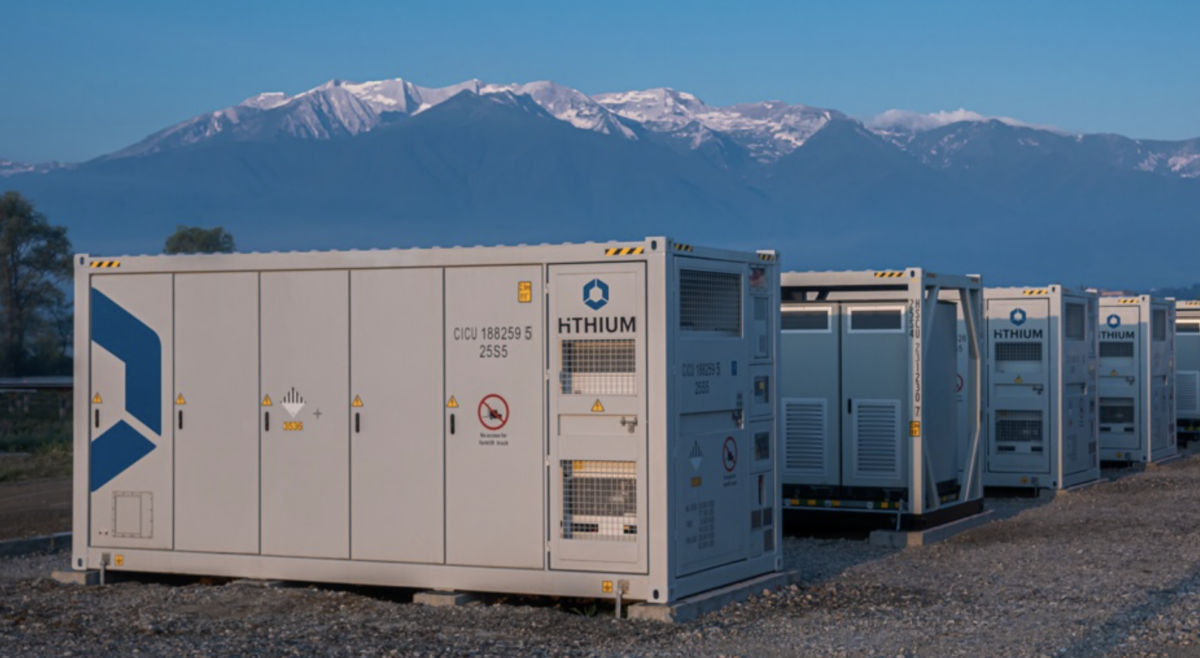
The more consequential detail is the planned technology mix. Beyond the acquisition itself, the company says it wants to expand the combined Horia-Arad site in two stages and introduce a dual-chemistry architecture that combines lithium-ion and sodium-ion storage while also adding grid-forming technology.
That makes this more than another solar-plus-storage announcement. It is an early signal that sodium-ion is moving from laboratory promise and small-scale trials toward integration into large power assets designed for commercial operation.
Why the Hybrid Design Matters
Most grid batteries deployed today rely on lithium-ion chemistry. That dominance is built on manufacturing scale, supply-chain maturity, and a decade of rapid cost declines. But the industry has been actively exploring alternatives that could diversify materials, improve resilience, and open different operating profiles for stationary storage.
Renalfa’s Romanian project is notable because it does not frame sodium-ion as a complete replacement. Instead, it proposes a hybrid system alongside lithium-ion. That is a more realistic path for new storage chemistries entering the market. Utilities and developers do not necessarily need a winner-take-all shift. They need systems that can combine technologies in ways that improve cost, operational flexibility, or supply security.
A dual-chemistry site can also serve as a live test of how newer battery types perform under commercial conditions. If sodium-ion proves effective within a large asset rather than only in isolated pilots, it could accelerate confidence for broader adoption across Europe and other markets.

Romania’s Role in the Broader Energy Buildout
The location is also significant. Romania has become part of a wider Eastern European push to expand renewable generation, upgrade grid infrastructure, and add storage that can help integrate intermittent power. A 365 MWp solar plant paired with a major battery installation is already a large infrastructure play. The addition of sodium-ion gives it a second layer of strategic importance.
According to the announcement, the projects are fully derisked and in late-stage development. That matters because storage headlines often arrive long before financing, permitting, grid access, or engineering work is mature. Late-stage status suggests this is not simply a concept piece built around a fashionable technology claim.
The target commercial launch of 2027 also puts the timetable on a near-term track. If execution stays on schedule, the market will get an operational reference point relatively soon.
Grid-Forming Technology Raises the Stakes
One of the most underappreciated elements in the plan is the addition of grid-forming technology. As renewable penetration rises, electricity systems need more than bulk energy shifting. They increasingly need assets that can help stabilize and support the grid itself.
Grid-forming capability is part of that next phase. It points toward batteries that do more than store solar output for later use. They can become active participants in maintaining system performance as conventional generators play a smaller role. In that context, the Romanian cluster is being positioned not just as a storage project, but as an infrastructure platform aligned with the needs of a more renewables-heavy power system.
That framing matters because it suggests sodium-ion is entering the market in a more demanding role than simple peak shifting. If it can operate effectively within a hybrid, grid-supporting configuration, the technology’s commercial credibility will rise.
What This Signals for the Storage Market
Battery markets tend to evolve in waves. First comes a dominant chemistry. Then come niches, pilots, and demonstrations. Only after that do alternative technologies begin to appear inside mainstream commercial projects. Renalfa’s plan appears to place sodium-ion at that third stage, or at least near it.
It is too early to call this a market turning point on its own. The project still has to be built, commissioned, and operated. Performance, cost, and long-term reliability will determine whether the design becomes a template or remains a one-off experiment.
Still, the announcement is important because it is specific. It names the assets, the capacities, the location, the hybrid design, the dual chemistry, and the launch target. That is more meaningful than generalized optimism about emerging battery chemistries.
If the Horia-Arad cluster proceeds as planned, it could give Europe one of its clearest examples yet of sodium-ion moving into utility-scale infrastructure. For a storage industry searching for diversification beyond lithium-ion, that would be a development worth watching closely.
- Renalfa acquired a 365 MWp solar project and a 400 MW/800 MWh battery project in Arad County, Romania.
- The company plans to merge them into a single hybrid power cluster with a 2027 commercial target.
- The expansion plan includes both lithium-ion and sodium-ion storage.
- The project also aims to add grid-forming technology, increasing its grid-support role.
This article is based on reporting by PV Magazine. Read the original article.
Originally published on pv-magazine.com