Europe’s hydrogen strategy is shifting from climate ambition to strategic resilience
Europe’s long campaign to build a green hydrogen economy is showing signs of life again, but the argument is changing. What began as a decarbonization project is increasingly being discussed as an energy security measure, with fresh geopolitical pressure helping revive a sector that had been slowed by high costs, missed targets and cautious buyers.
Green hydrogen is produced by splitting water with electricity from renewable sources, offering a lower-carbon alternative to conventional hydrogen made from natural gas or coal. In the years around and after Russia’s invasion of Ukraine, European governments and companies promoted large, integrated hydrogen plans, including so-called hydrogen valleys that would link production, storage, transport and end users.
But the sector struggled to maintain momentum. Costs remained stubbornly high, and many expected industrial buyers did not emerge at the pace developers needed. The result was a market defined as much by delay and disappointment as by ambition.
Higher gas prices may reopen the window, at least temporarily
The latest change in tone is tied partly to fossil fuel volatility. According to the supplied source text, the gas price spike that followed President Donald Trump’s war against Iran has reopened discussion about whether green hydrogen could move closer to cost parity with fossil-based hydrogen. That does not guarantee a durable turnaround, but it changes the immediate economics enough to put the issue back on the table.
Even supporters are not treating this as a settled recovery. BloombergNEF analyst Martin Tengler, as cited in the source material, warned that temporary increases in natural gas prices have historically faded, and interest in green hydrogen has faded with them. His view suggests that if Europe wants a lasting hydrogen buildout, it will need policy commitment grounded in long-term energy security rather than another short-lived commodity shock.
That distinction matters. A hydrogen market built only on temporary gas price spikes is fragile. A market built on strategic concerns about domestic supply, military resilience and reduced exposure to hostile or unstable suppliers could prove more durable, even if the economics remain difficult in the near term.
Defense and local supply chains are becoming part of the pitch
One of the more notable developments in the latest debate is the role of defense-linked stakeholders. The source text says parts of the defense supply industry are now making the case for locally sourced, locally produced green hydrogen in Europe as a hedge against Russian aggression. That framing broadens hydrogen’s political base beyond climate and industrial policy.
It also reflects a larger European reality: energy systems are no longer being evaluated only on price and emissions. They are increasingly judged on whether they can be sustained during conflict, diplomatic rupture or supply disruption. In that environment, even technologies that previously looked too expensive can gain new relevance if they promise strategic autonomy.
That does not eliminate the sector’s core problems. Green hydrogen still faces a difficult commercialization path, especially where projects depend on coordinated infrastructure and dependable industrial demand. But it does mean the technology is being reconsidered in a different policy environment than the one that existed when many early projects stalled.
Europe may be entering a second, more selective phase
The immediate lesson is not that Europe’s hydrogen economy has arrived. It is that the rationale for pursuing it is evolving. Developers and policymakers appear to be moving away from a broad expectation of fast market adoption and toward a more selective case centered on resilience, domestic production and strategic sectors.
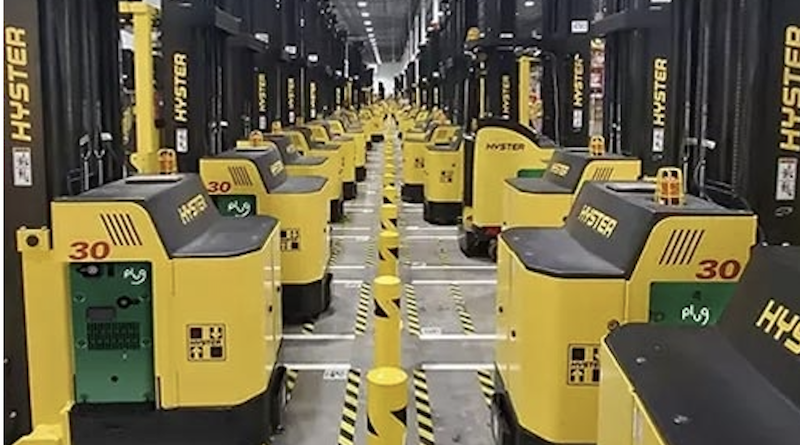
The source material points to new activity in the EU and UK and references involvement from the US company Plug Power, a firm that began in fuel-cell forklifts before expanding into green hydrogen. Even in this early signal, the pattern is clear: cross-border industrial coordination remains part of the story, but the political logic is becoming more security-oriented.
If that trend holds, Europe’s next hydrogen phase may look different from the first. Fewer projects may move ahead, but the ones that do could be tied more tightly to industrial policy, defense readiness and supply-chain independence. That would mark a meaningful shift from the earlier vision of green hydrogen as a sweeping climate-era growth engine.
- Europe’s green hydrogen sector had been slowed by high costs, failed projects and weak offtake.
- Recent gas price shocks are renewing debate over whether green hydrogen can compete more effectively.
- Defense and energy security concerns are becoming central to the technology’s political case.
- The next phase may be smaller and more targeted, but potentially more durable if backed by strategic policy.
For now, the sector remains in a transitional moment. The economic obstacles that weakened the first wave have not disappeared. What has changed is the context around them. In today’s Europe, the question is no longer only whether green hydrogen is clean enough or cheap enough. It is whether the continent believes it is strategic enough to build anyway.
This article is based on reporting by CleanTechnica. Read the original article.
Originally published on cleantechnica.com




