Le Défi de l'Intégration dans les Essaims de Drones
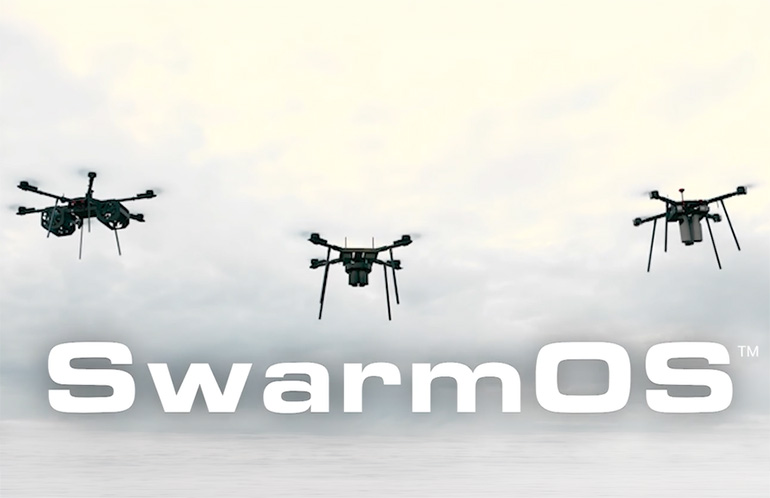
Construire un seul drone autonome est difficile. Construire dix qui peuvent coordonner leurs actions en temps réel, partager la conscience situationnelle, s'adapter collectivement aux conditions changeantes et exécuter des missions complexes sans direction humaine constante est un défi d'ingénierie entièrement différent. Palladyne AI, une entreprise spécialisée dans les systèmes d'IA multi-agents pour les plates-formes autonomes, et Draganfly, un fabricant de drones commerciaux avec des applications défensives, ont annoncé qu'ils ont complété avec succès un essai de vol simulé intégrant le logiciel de coordination SwarmOS de Palladyne à la plate-forme matérielle de drones Draganfly — éliminant ainsi un obstacle technique clé sur la voie des essaims autonomes déployables.
L'étape d'intégration représente la première fois que les systèmes des deux entreprises ont fonctionné en tant que plate-forme unifiée plutôt qu'indépendamment. SwarmOS gère la logique de coordination de haut niveau qui permet à plusieurs véhicules autonomes de partager les objectifs, de diviser les tâches, d'éviter les collisions et de maintenir la cohésion en tant qu'essaim sans nécessiter d'entrées de commande individuelles pour chaque drone. Le matériel Draganfly fournit la plate-forme de vol physique, la charge utile du capteur et l'informatique embarquée qui traduisent les commandes SwarmOS en manœuvres de vol réelles.
Ce que fait SwarmOS
La capacité clé que SwarmOS de Palladyne apporte à l'intégration est le comportement d'essaim émergent — la capacité d'un groupe de véhicules autonomes d'atteindre collectivement les objectifs de mission qu'aucun véhicule individuel ne pourrait atteindre seul, et de le faire de manière adaptative à mesure que les conditions changent. Les drones individuels en vol coordonnés par SwarmOS connaissent leur propre position et statut, les positions et statuts des autres membres de l'essaim, les objectifs de mission partagés et les contraintes environnementales de la zone opérationnelle. La couche logicielle s'exécutant sur chaque drone traite ces informations d'état distribuées pour prendre des décisions locales qui, collectivement, produisent un comportement d'essaim coordonné.
Cette architecture distribuée est fondamentalement plus résiliente que les systèmes où la coordination dépend d'un contrôleur central. Dans un système centralisé, la perte du nœud de commande désactive l'essaim entier. Dans une architecture SwarmOS distribuée, l'essaim peut continuer à fonctionner même si plusieurs véhicules individuels sont perdus, car chaque drone restant possède suffisamment d'informations et de capacité décisionnelle pour continuer à poursuivre les objectifs de mission de manière indépendante tout en maintenant la coordination avec les membres de l'essaim survivants.
Pour les applications défensives, cette résilience dans les conditions dégradées est souvent un attribut de performance plus important que la capacité absolue dans les conditions idéales. Un essaim qui peut maintenir son efficacité après avoir absorbé des pertes importantes — qu'il s'agisse d'actions ennemies, de défaillances d'équipement ou de guerre électronique — est beaucoup plus précieux militairement qu'un essaim qui s'effondre lorsque ses unités les plus capables sont mises hors ligne.
Performance de l'Essai de Simulation
L'essai a démontré un vol autonome coordonné sur plusieurs véhicules Draganfly exécutant une mission de couverture de zone simulée. Les drones ont divisé la zone de mission entre eux, ont attribué des routes de vol pour minimiser le chevauchement tout en maximisant l'efficacité de la couverture, ont ajusté dynamiquement leur allocation lorsque des anomalies simulées ont été introduites et ont maintenu la discipline de formation tout au long de l'essai. L'essai comprenait des interruptions de communication simulées qui obligeaient l'essaim à maintenir l'efficacité de la mission en utilisant uniquement une communication intermittente entre véhicules — un test réaliste de la résilience de l'architecture dans des conditions de guerre électronique.
Palladyne et Draganfly n'ont pas divulgué le nombre de véhicules impliqués dans l'essai ni les détails complets du profil de mission, citant des discussions en cours avec les clients défensifs. Cependant, les deux entreprises ont caractérisé l'intégration comme complétant la démonstration technique principale nécessaire avant de passer aux tests de vol en plein air de la plate-forme combinée.
Applications Défensives et Contexte du Marché
Les essaims de drones autonomes ont suscité un intérêt intense de la part des établissements de défense du monde entier depuis que leurs avantages théoriques en matière de collecte de renseignements, de guerre électronique et d'applications d'attaque ont été démontrés dans des jeux de guerre analytiques. L'expérience de combat du monde réel en Ucranie a considérablement accéléré cet intérêt : les drones se sont avérés décisifs d'une manière que même les évaluations les plus enthousiastes d'avant-guerre n'avaient pas entièrement anticipée, et les limitations des drones opérés individuellement — en particulier l'exigence de pilotes humains qualifiés — ont stimulé l'investissement dans des systèmes plus autonomes qui peuvent maintenir leur efficacité lorsque les communications et le contrôle humain sont compromis.
L'initiative Replicator du département de la Défense américain, qui vise à déployer des milliers de systèmes autonomes à faible coût dans un délai comprimé, a créé un pipeline d'acquisition important pour les entreprises développant des plates-formes capables de former des essaims. Palladyne et Draganfly sont positionnées comme des fournisseurs potentiels pour les programmes adjacents à Replicator, et l'étape d'intégration réussie renforce leur position combinée dans un domaine concurrentiel qui comprend à la fois des géants de la défense établis et un nombre croissant de start-ups technologiques de défense.
Prochaines Étapes : Tests en Plein Air et Évaluation Opérationnelle
Les entreprises ont annoncé leur intention de progresser des essais de simulation vers les tests de vol en plein air dans une installation sécurisée, visant une démonstration à mi-année. Les tests en plein air mettront l'intégration SwarmOS-Draganfly à l'épreuve contre les conditions du monde réel que la simulation ne peut pas complètement reproduire : les environnements réels de signaux GPS, les vents et le climat variables, les interférences électromagnétiques et les réalités mécaniques du vol multi-drones. Les performances lors des tests en plein air informeront la préparation opérationnelle du système pour l'évaluation par les clients défensifs, qui appliqueront leurs propres scénarios opérationnels et exigences avant de prendre des décisions d'approvisionnement.
Les deux entreprises ont exprimé leur intérêt pour élargir l'ensemble des capacités de la plate-forme au-delà de la mission de couverture de zone démontrée lors de l'essai de simulation initial. Les applications de recherche et sauvetage, d'inspection d'infrastructure et de surveillance maritime figurent parmi les applications civiles et à double usage en cours d'évaluation, en plus des cas d'usage défensifs qui ont motivé l'investissement principal dans le programme d'intégration SwarmOS-Draganfly.
Cet article est basé sur les reportages de The Robot Report. Lire l'article original.
Originally published on therobotreport.com