AI World Generation Moves Closer to Consumer Hardware
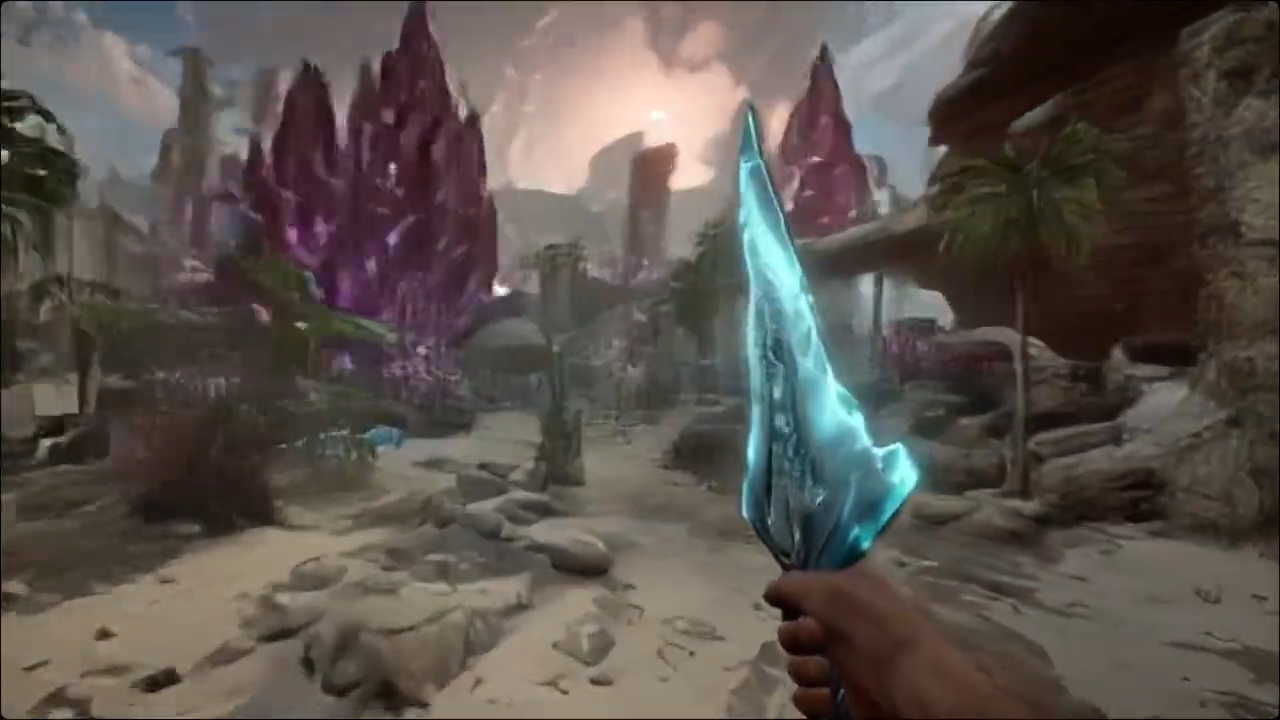
Overworld has released Waypoint-1.5, an update to its real-time world simulation system that brings AI-generated interactive 3D environments to consumer Mac and Windows devices for the first time, according to The Decoder. The company says the new release offers two model tiers: one targeting 720p at 60 frames per second for higher-performance systems, and another 360p tier designed for a wider range of gaming PCs with NVIDIA RTX graphics and, eventually, Apple Silicon.
The significance of that announcement is practical rather than purely visual. AI-generated worlds have often been shown as research demos or cloud-heavy prototypes that hint at future possibilities without fitting cleanly into ordinary hardware budgets. If Overworld’s claims hold under real user testing, Waypoint-1.5 suggests the category is beginning to move from frontier showcase toward accessible software tooling.
What Changed in Version 1.5
The Decoder reports that compared with Waypoint 1.0 and 1.1, the new version delivers noticeably better visual quality, improved efficiency, and stronger overall system performance while being half the size. Overworld also says the model was trained on roughly 100 times more data than the original version.
That combination is notable because generative world systems face a difficult balancing act. Better visuals usually increase compute demands. Broader accessibility often requires compromise on fidelity, responsiveness, or coherence. A smaller model with improved output and expanded platform support, if validated in practice, would indicate meaningful optimization progress rather than just brute-force scaling.
The platform path also matters. Support for both Mac and Windows broadens the potential user base beyond a narrow enthusiast segment. The reference to local installation through the Biome runtime environment, alongside browser streaming through Overworld.stream, points to a dual-distribution strategy: serve users who want native access while also lowering the barrier for those who simply want to try the system without configuring a machine.
The Bigger Question: What Are These Worlds For?
Generative 3D world systems sit at the intersection of games, simulation, creative tools, and human-computer interaction. Yet the market category remains unsettled. The fact that Waypoint-1.5 is described as a real-time world simulation system, rather than just an image or video model, hints at where the ambition lies. Interactivity changes the challenge. A static scene can look compelling in a benchmark. A world has to remain responsive, navigable, and coherent while it is being generated and explored.
That opens several possible use cases. Developers could treat systems like this as prototyping tools. Creators might use them for rapid concept generation or exploratory environments. Researchers could view them as stepping stones toward embodied AI and more dynamic simulation spaces. The supplied source material does not claim that Overworld has solved any of these markets. But it does show a company trying to make the technology usable on hardware people actually own.
The 720p at 60 frames per second target is especially revealing. It frames success in experiential rather than purely model-centric terms. Consumers do not evaluate interactive software by parameter counts or training corpus size alone. They evaluate smoothness, responsiveness, and whether the output feels stable enough to spend time inside.
From Demo Culture to Product Pressure
Generative AI companies have spent the last several years proving that astonishing outputs are possible. The next phase is harder: making systems fast, compact, reliable, and portable enough to survive contact with real users. Overworld’s claims around efficiency and reduced model size suggest it understands that shift.
At the same time, moving onto consumer hardware introduces new pressure. Performance has to be reproducible across varied machines. Visual improvements must be obvious enough to justify updates. And if users can install the software locally, expectations around control, latency, and experimentation rise quickly.
There is also a competitive implication. As AI-generated media expands from text and images into interactive environments, companies that can make world generation feel immediate may shape a new software layer between game engines, content creation tools, and simulation platforms. Much remains uncertain, including how persistent, editable, or commercially useful these generated worlds are in practice. But the direction of travel is clear.
Waypoint-1.5 does not prove that AI-generated 3D spaces are about to become a mass-market medium. It does, however, mark a meaningful threshold: a system of this kind is now being positioned not just as a spectacle, but as something that can run on ordinary consumer machines. That is the sort of transition that often matters more than a prettier demo. It is where a technology starts to test whether it has a real audience.
This article is based on reporting by The Decoder. Read the original article.
Originally published on the-decoder.com