Humanoid Robotics Enters Its Funding Surge
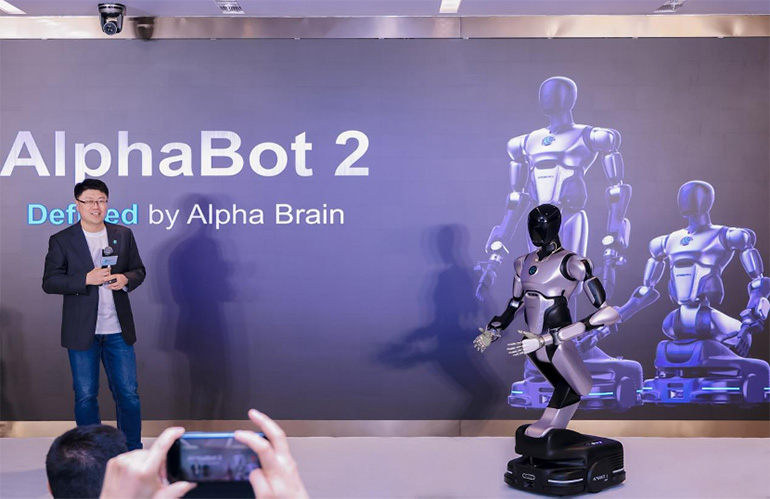
AI2 Robotics, a humanoid robotics company developing the AlphaBot platform, has closed a Series B funding round as it pushes to commercialize embodied artificial intelligence for real-world applications. The investment comes during an extraordinary period of venture capital activity in humanoid robotics, with multiple startups racing to bring general-purpose robots from research labs to factories, warehouses, and eventually homes.
The company, which focuses on what the industry calls embodied AI — artificial intelligence systems that interact physically with the real world through robotic bodies — has been developing AlphaBot as a versatile humanoid platform capable of performing a wide range of manipulation and navigation tasks. The Series B funding will be used to scale manufacturing, expand the engineering team, and accelerate deployment with early commercial partners.
AI2 Robotics joins a rapidly growing cohort of humanoid robotics firms that have attracted significant venture investment over the past two years. Figure AI, Apptronik, 1X Technologies, and Sanctuary AI have all raised substantial rounds, collectively drawing billions of dollars into a sector that was considered science fiction just a decade ago.
The AlphaBot Platform
AlphaBot is designed around the premise that humanoid form factors offer the most practical path to general-purpose robotics. The reasoning is straightforward: the built environment — factories, offices, homes, hospitals — was designed for human bodies. A robot that walks, reaches, grasps, and manipulates objects with human-like proportions can operate in these spaces without requiring expensive infrastructure modifications.
The platform integrates several key technologies. Its manipulation system uses dexterous hands with multi-fingered gripping capabilities, allowing it to handle a variety of objects from rigid tools to flexible packaging. The locomotion system employs a bipedal design with active balance control, enabling the robot to navigate uneven surfaces, stairs, and cluttered environments.
Perhaps most critically, AlphaBot's AI stack is designed for what researchers call zero-shot generalization — the ability to perform new tasks without being explicitly programmed for each one. Using large-scale vision-language-action models trained on diverse data sets, the robot can interpret natural language instructions and translate them into physical actions, adapting to novel objects and environments it has never encountered before.
Why Now for Humanoid Robots
The current wave of interest in humanoid robotics has been driven by several converging technological trends. The most important is the dramatic improvement in AI foundation models — the same large language models and vision transformers that power chatbots and image generators are now being adapted to control physical robots.
These models provide something that was previously missing from robotics: the ability to generalize. Traditional industrial robots are extraordinarily precise and reliable, but they must be meticulously programmed for each specific task. A welding robot on an automotive assembly line performs one operation flawlessly, but it cannot be asked to pick up a different tool and assemble a piece of furniture. Foundation models are changing this equation by enabling robots to understand high-level goals and figure out the low-level motor commands needed to achieve them.
Simultaneously, advances in hardware — more powerful and efficient processors, better sensors, improved actuators, and cheaper batteries — have made it technically feasible to build humanoid robots that are light enough to be safe around humans, strong enough to perform useful work, and capable of operating for meaningful durations on a single charge.
The Commercial Opportunity
The business case for humanoid robots centers on the global labor shortage in industries like manufacturing, logistics, and elder care. Demographic trends in developed countries point to a shrinking working-age population, while demand for physical labor in warehouses, factories, and healthcare facilities continues to grow. Humanoid robots are being positioned as a solution to this structural imbalance.
Early commercial deployments are focused on relatively constrained environments where the tasks are repetitive but varied enough that traditional automation is impractical. Warehousing and logistics operations, where robots must pick, sort, and transport a constantly changing inventory of items, are considered the most immediate market. Manufacturing applications — particularly in electronics assembly and quality inspection — are also being pursued.
The longer-term vision is far more ambitious. Companies in the space talk openly about deploying millions of humanoid robots as general-purpose workers, performing everything from construction and agriculture to household chores and personal assistance. Whether that vision is realistic on any near-term timeline remains hotly debated, but the venture capital flowing into the sector suggests that many investors are willing to bet on it.
Challenges Ahead
For all the excitement, significant technical and commercial challenges remain. Humanoid robots are mechanically complex machines that must operate reliably in unstructured environments — a far more demanding requirement than the controlled settings in which most robots currently work. Durability, maintenance costs, and safety around humans are all areas where the technology must still prove itself.
The AI systems that control these robots, while impressive in demonstrations, are still prone to errors when confronted with truly novel situations. A robot that can fold laundry in a lab may struggle with a different type of fabric or an unexpected obstacle. Bridging the gap between demo-ready performance and industrial-grade reliability is the central engineering challenge for every company in the space.
Regulatory and liability questions also loom large. How will workplace safety standards apply to humanoid robots working alongside humans? Who is responsible when a robot causes injury or damage? These questions have not yet been definitively answered, and the answers will shape how quickly humanoid robots can be deployed at scale.
Despite these hurdles, the trajectory of investment and technical progress suggests that humanoid robots will become an increasingly visible part of the commercial landscape over the next several years. AI2 Robotics and its AlphaBot platform are positioning themselves to be at the forefront of that transformation.
This article is based on reporting by The Robot Report. Read the original article.
Originally published on therobotreport.com