Xcel is trying to standardize the data-center power deal
Xcel Energy says its agreement with Google for a nearly 1 GW data center in Minnesota is more than a single commercial win. Company leaders describe it as the model for future large-load tariffs in Colorado, Texas, New Mexico and Wisconsin, according to Utility Dive. That is a significant signal from a major utility because it suggests the sector is moving from ad hoc negotiations toward a repeatable framework for serving hyperscale customers.
Under the Minnesota deal, which still requires regulatory approval, Google would cover the full cost of the infrastructure needed to serve its new data center, Xcel CEO Bob Frenzel said. The company has already filed for a similar large-load tariff in Colorado featuring long-term contracts, termination fees, credit requirements and incremental cost tests.
Why this matters now
Utilities across the United States are racing to respond to electricity demand from data centers, especially those tied to AI and cloud expansion. The commercial opportunity is enormous, but so is the political and regulatory risk. Existing customers do not want to subsidize network upgrades for giant new loads. Regulators do not want reliability undermined. Utilities, meanwhile, want the growth without being accused of socializing the downside.
Xcel’s proposed template is an attempt to solve that tension directly. The company’s message is that hyperscale demand can be welcomed if the customer pays its own way and if the contract terms provide enough certainty to support long-term planning. In other words, the utility is trying to build a rules-based path for large-load growth rather than improvising each deal from scratch.

The Google agreement shows the scale of the shift
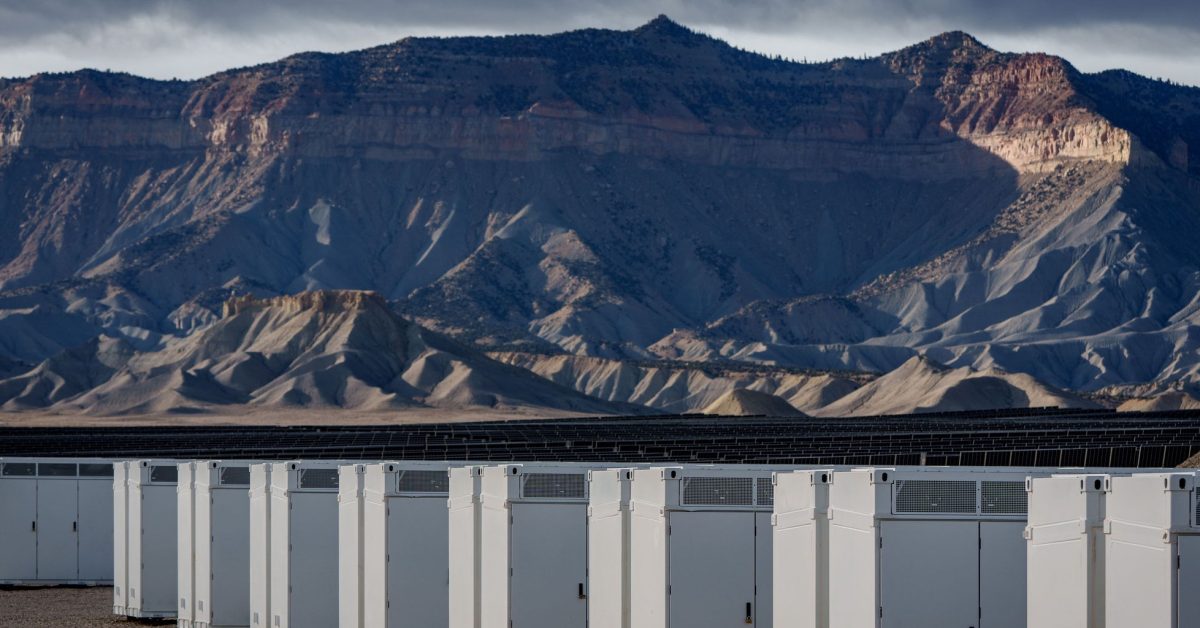
The numbers involved are striking. Utility Dive says Xcel plans to supply Google’s Minnesota data center with 1.9 GW of new wind, solar and long-duration storage, including a 100-hour iron-air battery. That is not a marginal procurement. It is the kind of buildout that can shape a utility’s resource plan, transmission priorities and capital schedule.
Xcel also says it is front-loading wind and solar development to capture expiring clean-energy tax credits, while storage with a longer tax-credit window can come later. That sequencing shows how utility planning is being shaped not only by load growth but by federal incentive timing. Large data-center deals are therefore becoming a place where rate design, clean-energy policy and industrial demand strategy all intersect.
A broader capital cycle is taking shape
Xcel outlined a $60 billion five-year capital plan and said it has 2 GW of data centers contracted or under construction. The company plans to deploy 2.1 GW of wind, solar and battery resources this year, followed by 2.2 GW annually in 2027 and 2028. Those figures show that data-center demand is not being treated as a speculative side market. It is influencing the scale and shape of utility investment planning right now.
That matters beyond Xcel because other utilities are confronting the same problem: how to connect very large new customers quickly enough to win investment while preserving fairness and system integrity. If regulators accept Xcel’s framework, it could become a reference point well beyond the company’s own service territories.

Why the tariff design is the key issue
The mechanics of the proposed tariff are where the real policy importance lies. Long-term contracts reduce the risk that a utility builds infrastructure for a customer who later changes plans. Termination fees and credit requirements help protect against stranded costs. Incremental cost tests aim to show that existing customers are not picking up the bill for expansions driven by a single large load.
Those details may sound technical, but they are quickly becoming central to one of the biggest utility questions of the decade. If data centers are going to drive large demand growth, utilities need rate structures that can survive both commission scrutiny and public skepticism.
Frenzel’s comment that the company wants large load growth to strengthen the overall system, benefit communities, maintain clean-energy goals and avoid increasing costs for existing customers is a concise summary of the political balancing act utilities now face. Every piece of that sentence matters, and failure on any one of them could trigger backlash.
The larger significance
Utilities have always pursued large industrial customers, but the hyperscale era is different in magnitude and speed. AI infrastructure and cloud buildouts can create demand clusters big enough to reshape local grids. That makes contract structure just as important as generation strategy.
Xcel’s effort to turn one Google deal into a multi-state template shows that the industry is beginning to institutionalize its response. Instead of asking whether data-center growth is coming, utilities are now asking what commercial and regulatory architecture will govern it.
If Xcel’s approach works, it could offer a politically durable formula: welcome the load, require customer-backed infrastructure economics and use the deal to accelerate new generation without burdening legacy ratepayers. If it fails, the sector may face a more fragmented and contentious path. Either way, Xcel’s template push is an important sign that utility strategy is adapting quickly to the power demands of the data-center economy.
This article is based on reporting by Utility Dive. Read the original article.

Originally published on utilitydive.com