A major climate policy reset is taking shape in Albany
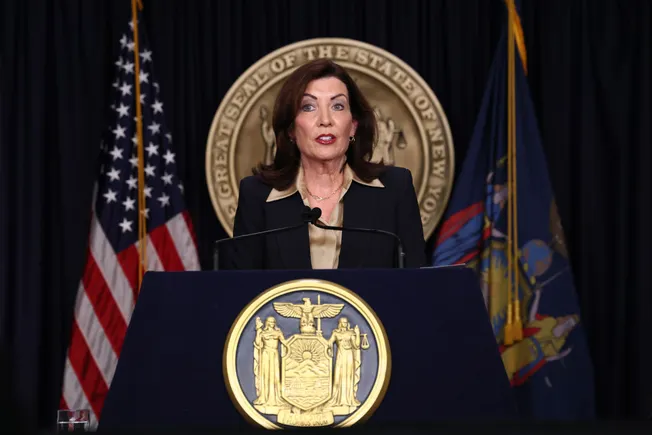
New York is preparing to make some of the most consequential changes yet to the climate framework established under its 2019 Climate Leadership and Community Protection Act. According to the supplied reporting, Gov. Kathy Hochul’s agreement with state legislators on a $268 billion budget would alter the state’s emissions targets, revise the accounting standard used to measure impact, and frame the changes as a way to help address rising energy costs.
The central change is a shift in timing. The budget agreement would scrap a 2030 target that called for a 40% reduction in greenhouse gas emissions relative to 1990 levels and replace it with a 2040 target seeking a 60% reduction. That is not a technical edit. It changes the state’s near-term pace of decarbonization and pushes part of the burden of progress further into the future.
The clock is moving, but the 2050 endpoint remains
The source text says the agreement would still require New York to promulgate regulations by 2028 that keep the state on track to meet revised decarbonization mandates. It also says the budget amends the CLCPA in a way that preserves the state’s 2050 emissions reduction mandate. Under the original law, New York must cut emissions 85% by 2050 compared with a 1990 baseline.
That means the current proposal is not a retreat from climate policy in full. It is a reset of intermediate milestones and implementation assumptions. Supporters of the change will argue that preserving the 2050 mandate keeps the state committed to long-term decarbonization while acknowledging the cost and delivery pressures of the present. Critics will see the opposite lesson: a long-term goal is easier to preserve politically if nearer-term obligations are weakened.
Both interpretations can coexist because the policy change is doing both things at once. It keeps the destination and alters the route.

The accounting change could be just as important as the deadline change
The proposed budget would also update the timeframe New York uses to measure emissions impact, shifting from 20 years to 100 years to align with other national and global jurisdictions, according to the source text. That may sound procedural, but accounting standards can reshape policy outcomes by changing how gases are weighted in official planning and compliance regimes.
In climate policy, the metric is never just a metric. It can influence perceived urgency, compliance burdens, and the distribution of costs across sectors. By moving to a 100-year timeframe, New York would be bringing its framework closer to broader external practice. Supporters can describe that as harmonization. Opponents can describe it as dilution. Either way, it is a meaningful policy choice, not mere bookkeeping.
Cost pressure is driving the politics
Hochul’s office says the changes are intended to avert major consumer cost increases while continuing the state’s commitment to clean energy and climate. That framing is essential to understanding the budget package. The political challenge in many energy-transition programs is no longer whether officials accept climate goals in principle. It is whether they can maintain support when timelines collide with affordability concerns.
New York’s move reflects that tension directly. The state is not abandoning climate governance. It is recalibrating its targets in response to the rising salience of power costs, implementation complexity, and ratepayer sensitivity. That makes this budget story important well beyond New York. Other jurisdictions are watching the same tradeoff emerge between decarbonization speed and consumer tolerance.

Equity funding goes up even as deadlines loosen
One of the most notable features of the agreement is that it combines slower near-term deadlines with increased support for disadvantaged communities. The source text says those communities would receive 40% of the benefits of investment funding set aside to meet climate goals, up from 35% under the prior standard.
That addition complicates any one-line narrative. The budget package loosens some climate requirements while strengthening one equity commitment within the climate framework. In policy terms, that suggests the state is trying to preserve political legitimacy for the transition even as it acknowledges implementation strain.
The final caveat is procedural. The budget was originally due April 1 and, according to the source text, has not yet passed. So these changes are highly significant, but not yet fully enacted. Still, the direction is clear. New York is attempting to rewrite the tempo of its climate strategy without surrendering the long-term promise behind it.
Whether that counts as a pragmatic correction or a rollback will depend on what comes next: the final legislative language, the regulations promised by 2028, and the credibility of a climate plan that now asks the public to wait longer for a benchmark that once looked much closer.
This article is based on reporting by Utility Dive. Read the original article.
Originally published on utilitydive.com