CEBA sees a new role for hyperscalers and other large-load customers
As power demand rises, especially from data centers, the clean-energy conversation is shifting from procurement alone to commercialization. A new report from the Corporate Energy Buyers Association argues that large-load customers can do more than buy clean electricity after projects are mature. They can help push newer technologies such as advanced geothermal and small modular nuclear reactors closer to commercial scale by taking on part of the demand and contract risk early.
The core argument is straightforward. Technologies that promise cleaner, more reliable power often struggle in the stage between demonstration and broad deployment. They are too established to be treated as pure experiments, but still too expensive or unfamiliar to scale smoothly. CEBA says clean energy tariffs and bilateral customer-utility arrangements can bridge that gap by allowing major customers to identify, fund, and support specific clean or clean-firm resources while preserving protections for other ratepayers.
Why this matters now
The timing is not accidental. Utility Dive’s source text points to hyperscalers spending heavily on the AI race, including both data-center construction and the electricity needed to run those facilities. Venture capital and private equity firm Bessemer Venture Partners expects the five largest hyperscalers, Google, Meta, Amazon, Oracle, and Microsoft, to cross $1 trillion in capital expenditures this year and spend $8 trillion in total from 2025 through 2031. In 2025, those same companies represented 49% of all corporate clean-energy power purchase agreements globally, according to the CEBA report.
That scale gives a relatively small number of companies unusual influence over the next generation of energy infrastructure. They are already among the biggest buyers in the market. The question now is whether they remain buyers of mature supply or become strategic backers of technologies that still need help crossing into bankable deployment.
Examples already exist
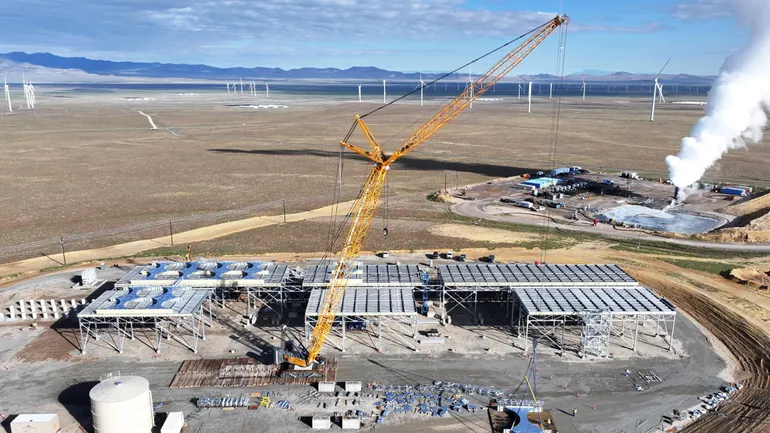
The report points to deals that move beyond conventional renewable procurement. One example is the 115-megawatt power purchase agreement between Google and advanced geothermal company Fervo Energy for the Cape Station project in Utah, structured under a Clean Transition Tariff proposed by Google and NV Energy and approved by Nevada regulators. Another is Microsoft’s power purchase agreement with Constellation Energy, which is helping drive the restart of Three Mile Island Unit 1.
These examples matter because they show how demand from large customers can do more than secure electricity for a single buyer. When structured through tariffs or utility partnerships, that demand can help prove commercial models, reduce financing uncertainty, and establish precedents that regulators and other customers can follow.
De-risking without socializing everything
CEBA’s Priya Barua framed the issue as one of commercialization. The goal, she said, is to get these technologies closer to maturity so costs can come down over time, much as they did for solar and wind. That does not mean every customer should bear the cost equally. The report’s emphasis on existing regulatory frameworks and ratepayer protections suggests an attempt to avoid a political backlash in which ordinary customers subsidize expensive experiments primarily needed by large corporate loads.
That balancing act is likely to determine whether the model spreads. Utilities need new generation quickly, especially in regions where load forecasts have been revised upward by data-center growth. Regulators want innovation, but they also want fairness and system reliability. Large customers want cleaner firm power, but not in a way that leaves them solely carrying first-mover risk. Tariffs and bilateral deals are emerging as one answer because they can allocate risk more precisely than a one-size-fits-all rate design.
The broader shift
The bigger development is that corporate energy procurement is no longer only about buying the lowest-cost clean electrons available today. It is increasingly about shaping what technologies become widely available tomorrow. If CEBA is right, large-load customers are evolving into the energy sector’s equivalent of anchor tenants or launch customers, helping bring difficult technologies into the mainstream.
That role will not solve every commercialization challenge. Nuclear, geothermal, and other clean-firm resources still face permitting, supply-chain, and execution risks. But the report makes a credible case that the market now contains a class of buyers large enough to move those technologies out of pilot mode and into real utility planning. In an era of AI-driven demand growth, that may prove to be one of the most consequential changes in the electricity sector.
This article is based on reporting by Utility Dive. Read the original article.
Originally published on utilitydive.com