A distributed battery model moves from pilot to scale
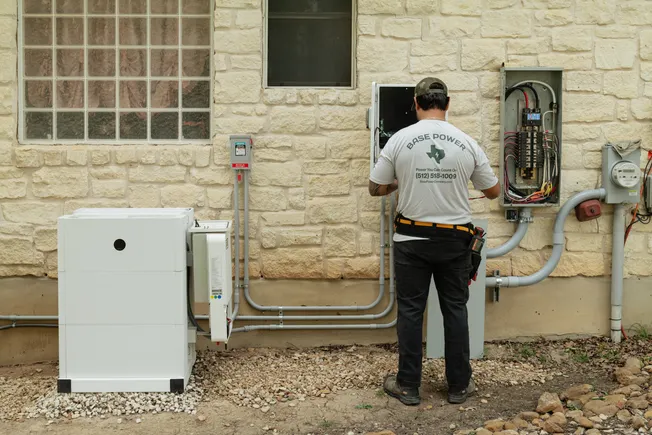
Guadalupe Valley Electric Cooperative, or GVEC, and distributed battery company Base Power are expanding their partnership in a way that points to a broader shift in grid strategy. The two organizations say the deal will provide 50 megawatts of capacity across GVEC’s South Texas service territory, turning residential battery systems into a meaningful utility-scale resource.
The announcement builds on a 2-MW pilot project that, according to GVEC General Manager and CEO Darren Schauer, demonstrated the potential for distributed batteries to improve system flexibility and performance. That matters because utilities have long discussed the promise of aggregated distributed energy resources, but pilots often remain pilots. In this case, the partnership is moving into a much larger deployment target.
GVEC aims to have 20 MW of distributed battery capacity online by the end of 2026, then add another 15 MW to 20 MW per year through the partnership, Schauer told Utility Dive. That pacing suggests the cooperative sees distributed storage not as a side experiment, but as a resource class that can sit alongside more conventional power procurement.
Why a distribution cooperative is making this move
GVEC serves about 100,000 customer meters across a 3,500-square-mile territory east of San Antonio, spanning suburban, exurban, and rural communities. The scale and load profile of that footprint make flexibility valuable. Schauer said summer demand typically peaks between 500 MW and 600 MW, while winter cold snaps can push demand to around 800 MW because many customers rely on electric resistance heating to back up heat pumps.
Those swings matter in Texas, particularly inside the Electric Reliability Council of Texas wholesale market. GVEC participates directly in ERCOT, which the source text describes as relatively unusual for distribution cooperatives. That direct exposure means the utility faces wholesale price volatility more immediately than utilities that buy power through generation and transmission cooperatives.
In practical terms, that makes distributed batteries financially attractive not only for reliability but also for cost control. During tight conditions, ERCOT’s energy-only market can produce dramatic price spikes. The article cites the February 2021 winter storm, when clearing prices rose to $1,200 per megawatt-hour before the Public Utilities Commission of Texas pushed them to the legal maximum of $9,000 per megawatt-hour in an effort to bring more supply online.
For a utility exposed to those conditions, flexible capacity that can be dispatched across customer sites is more than a clean-energy talking point. It is a hedge against concentrated price pain.

From household asset to system resource
The interesting feature of the Base Power partnership is that it treats home batteries as an aggregated fleet rather than as isolated customer devices. Base’s utility partnerships head, Tim Pianta, said the industry is moving toward distributed, aggregated resources that can be deployed quickly and at scale, calling the model a practical tool for reliability and flexibility in Texas and beyond.
That framing gets at the central shift underway in grid operations. Utilities historically built or contracted large, centralized assets and then managed demand around them. Distributed storage changes the equation by allowing many smaller devices, spread across homes and neighborhoods, to function collectively as a dispatchable resource.
For GVEC, Schauer said buying 50 MW from Base Power would put the company on par with other wholesale power providers the cooperative already buys from. That comparison is telling. It means the utility does not view the battery aggregation as a boutique add-on. It sees it as a provider large enough to stand in the same planning conversation as traditional counterparties.
Why Texas is a proving ground
Texas is a particularly revealing place to test this model. The state has rapid load growth, weather-driven demand extremes, and a market structure that can amplify price volatility. Those conditions are difficult for consumers and utilities, but they also create a strong commercial case for fast-response distributed resources.
The article suggests that GVEC’s goal is not merely backup resilience during outages. It is to use residential batteries to mitigate load peaks and blunt wholesale price spikes. That is a different and potentially more scalable value proposition. Instead of treating batteries as emergency equipment that sits idle most of the time, the cooperative can integrate them into routine system operations.
If that model works, it could help other utilities rethink how they approach capacity additions. Residential storage fleets are modular, can be deployed incrementally, and may avoid some of the siting and transmission constraints that slow larger infrastructure projects.
What this says about the grid’s direction
The expansion of the GVEC-Base partnership reflects a grid that is becoming more distributed in both technology and business structure. The old divide between utility-scale infrastructure and behind-the-meter customer equipment is eroding. A battery in a customer’s home can now be part of a utility’s operating strategy, not just a private resiliency purchase.
The source text does not specify every commercial or operational detail of the agreement, and it does not quantify exactly how much savings customers may see. But it does provide the core signal: a South Texas co-op believes a 50-MW distributed battery fleet can materially help manage price spikes and peak demand, and it is scaling the model accordingly.
That makes this more than a local deployment story. It is evidence that distributed storage is becoming a serious planning tool for utilities facing volatile markets and weather-linked demand stress. In Texas, where those pressures are unusually visible, the GVEC-Base deal may serve as an early indicator of how much capacity the grid of the future will draw from resources installed one house at a time.
This article is based on reporting by Utility Dive. Read the original article.
Originally published on utilitydive.com