Solar had its biggest year yet
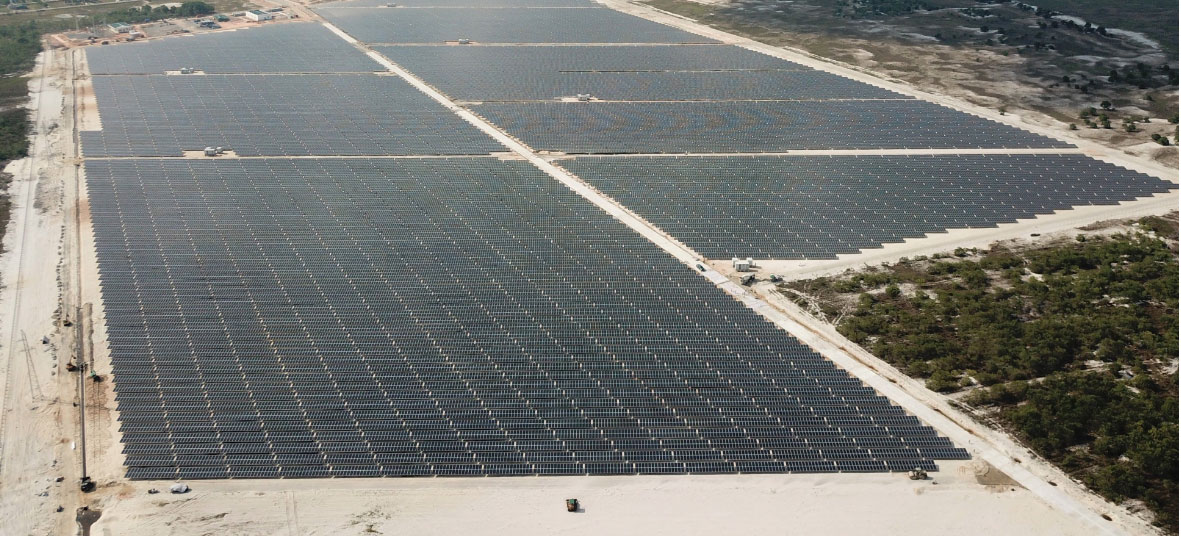
The world added 605 gigawatts of new solar photovoltaic capacity in 2025, according to the International Energy Agency’s Global Energy Review 2026, extending a period of exceptional growth that is reshaping the global electricity system. The scale of expansion did more than set another installation record. It also drove the largest annual increase in electricity generation ever observed for any energy source, outside years marked by recovery from major global shocks.
According to the source report, solar produced an additional 600 terawatt-hours of electricity in 2025, bringing total solar generation to around 2,800 terawatt-hours. That means solar output has more than doubled since 2022 and now accounts for more than 8 percent of global electricity generation.
Those numbers illustrate how quickly solar has moved from fast-growing alternative to a system-defining source of new power. For years, renewable growth was often described in terms of future potential. The latest IEA figures show that solar is now delivering expansion at a scale large enough to alter global generation statistics outright.
Why the 600-terawatt-hour increase matters
Installed capacity is an important signal, but electricity generation is the more consequential measure. A capacity boom only changes the energy system when it translates into actual power output. In 2025, it clearly did.
The source text says the 600-terawatt-hour rise in solar generation was the largest annual increase ever observed for any source, excluding unusual rebound years after large economic disruptions such as the Covid-19 period. That places solar’s recent growth in a category of its own.
The significance is twofold. First, it shows that deployment is no longer limited to scattered national success stories. Second, it indicates that solar is increasingly central to meeting growth in electricity demand, rather than merely adding a cleaner layer on top of existing fossil-heavy systems.
In practical terms, a jump of this size affects wholesale markets, grid planning, storage needs, manufacturing, and energy security strategy. As solar’s share rises above 8 percent globally, its variability becomes an operational issue that power systems must actively manage, especially through transmission upgrades, storage, and flexible demand.

Renewables kept setting records, with solar at the center
The IEA findings cited in the source report show that global annual renewable capacity additions reached 800 gigawatts in 2025, a 16 percent increase from the previous year and the 23rd consecutive annual record for renewable expansion. Solar covered most of that momentum.
That matters because it reinforces a broader pattern: renewable energy growth is no longer episodic. It has become structural. Twenty-three straight years of records suggest that the sector is not simply benefiting from temporary subsidies or one-off policy surges. It is expanding through a combination of falling costs, broader manufacturing scale, and rising demand for domestically generated electricity.
Solar’s share of that story is especially strong because of its modularity. It can be deployed across residential rooftops, commercial systems, utility-scale projects, and increasingly with storage. That makes it unusually adaptable across markets and grid conditions.
The energy transition is now a scale story
For a long time, debates about solar centered on whether it could become large enough to matter. That debate is effectively over. The new question is how power systems, markets, and industrial policy adapt to its speed.
A world adding 605 gigawatts of solar in a single year faces a very different policy agenda than one still trying to prove solar’s viability. Manufacturing supply chains, land use, interconnection queues, inverter deployment, storage integration, and transmission planning become the dominant constraints.
The source report does not detail every regional driver behind the increase, but the headline numbers alone suggest a market that is broad-based rather than narrowly concentrated. Generation growth of 600 terawatt-hours requires more than announced projects. It reflects real, operational assets connected in enough places to move global output materially upward.
That in turn strengthens solar’s role in industrial strategy. Countries seeking lower-cost electricity, reduced fuel import dependence, and faster clean-energy deployment are increasingly likely to view PV manufacturing and grid integration as economic priorities, not just environmental ones.

Success creates its own pressures
Solar’s acceleration also intensifies long-running grid challenges. A larger daytime generation peak can depress prices at certain hours, strain networks that were not built for distributed and variable power, and raise the value of storage and flexible demand. In other words, success forces infrastructure adaptation.
That is not a sign of weakness. It is what happens when a technology moves from the margins to the mainstream. The more solar the world adds, the more system operators must think in terms of balancing, shifting, and storing energy rather than merely generating it.
The latest numbers are therefore a reminder that the energy transition is no longer only a buildout story. It is a systems story. Record PV additions matter most when they are matched by smarter grids, improved interconnection, and enough flexibility to absorb abundant renewable generation efficiently.
Why the IEA report marks a milestone
The IEA’s latest figures give solar something it has often lacked in public debate: a simple measure of undeniable scale. Six hundred five gigawatts of new PV capacity and 600 terawatt-hours of additional generation in one year are not niche indicators. They are world-energy indicators.
The achievement is especially striking because it comes amid continued pressure on electricity demand from electrification, data infrastructure, industry, and extreme-weather resilience planning. Solar is not merely keeping pace with transition goals in theory. It is becoming one of the largest real-world contributors to new electricity supply.
That does not mean the transition is complete or that solar alone can solve energy security and decarbonization challenges. But the 2025 numbers show that one piece of the puzzle is now moving at exceptional velocity.
The implication is straightforward. The future of energy policy will be shaped less by whether solar can scale and more by whether the rest of the power system can scale around it quickly enough. On the evidence of 2025, PV has already entered that next phase.
This article is based on reporting by PV Magazine. Read the original article.

Originally published on pv-magazine.com




