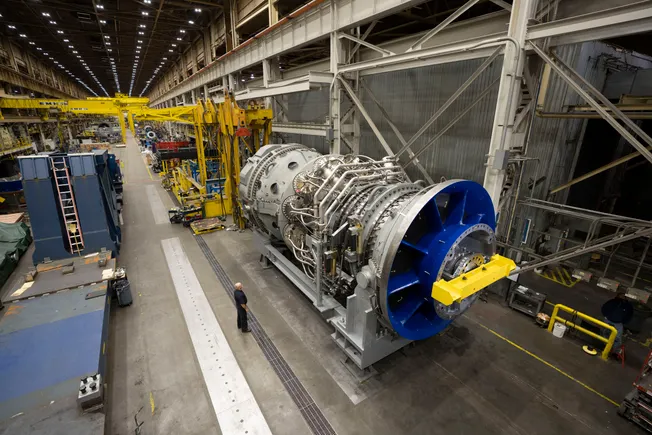
The Turbine Shortage Nobody Planned For
Electric utilities and independent power producers that assumed gas turbines would be available on historical delivery timelines are discovering the market has fundamentally changed. Lead times for large gas turbines from major manufacturers — GE Vernova, Siemens Energy, and Mitsubishi Power — have stretched to five years or longer in many cases, and prices have risen sharply as manufacturers struggle to expand production capacity to meet demand that has grown faster than supply chains can accommodate.
The shortage is a product of converging forces that individually might have been manageable but together have overwhelmed the market's ability to respond. Data center construction for AI workloads has created an enormous and largely unexpected new source of electricity demand that utilities are scrambling to serve with reliable, dispatchable generation. The energy transition has accelerated retirement of coal capacity without always ensuring replacement capacity is in place. And the manufacturing infrastructure for large gas turbines cannot respond quickly to demand shifts due to the specialized nature of the equipment and its components.
Why Gas Turbines Are Different
Gas turbines are not like most industrial equipment, where capacity can be added by building more factories and hiring more workers on a short timeline. The critical components of advanced gas turbines — particularly the turbine blades that operate in combustion gases exceeding 1,600 degrees Celsius — require exotic alloys processed through techniques like directional solidification and single-crystal casting that only a small number of facilities in the world can perform. The engineering tolerances involved are so extreme that a significant fraction of blades fail quality inspection and must be scrapped.
The casting and machining facilities that produce these components are not easily expanded. New capacity requires specialized equipment, expert technicians who typically require years of training, and quality systems that must demonstrate reliability before entering production. Manufacturers who need more turbine capacity cannot announce a factory expansion and have new blades available in 18 months. The realistic timeline for meaningful supply expansion is measured in years, not months.

The Reliability Imperative
For utilities operating in this environment, the supply shortage creates choices none of them are attractive. Ordering turbines with five-year lead times means committing to capacity additions based on demand forecasts with a very long horizon — forecasts that are inherently uncertain, particularly when electricity demand growth is being driven by AI data centers whose own growth trajectories are themselves uncertain.
Utilities that delay ordering to gather more information risk missing the window for capacity additions that will be needed to maintain reliability. Those that order early lock in long-term capital commitments based on uncertain demand projections. The Electric Power Research Institute argues the current environment rewards utilities that make early, informed decisions over those that adopt a wait-and-see posture — because waiting is no longer neutral. In a constrained supply environment, waiting effectively means accepting that capacity will not be available when needed.
Broader Energy Transition Implications
The gas turbine shortage illuminates a tension at the heart of the energy transition that policymakers and utilities have not fully reckoned with. The transition away from coal requires replacement capacity that is reliable and dispatchable — capable of generating power on demand regardless of weather. While solar and wind are cheaper on a levelized cost basis than gas for new capacity, they do not provide firm capacity: they generate power when the sun shines and wind blows, not necessarily when demand peaks.
Gas turbines and battery storage provide the dispatchable backup that makes high-penetration renewable grids reliable. A shortage of gas turbines — at precisely the moment when both the energy transition and AI data center buildout are creating unprecedented demand for firm capacity — represents a significant reliability risk that grid operators and regulators are only beginning to fully account for. The supply chain constraints in the turbine market also underscore a more general vulnerability: global production of components essential to modern energy systems is highly concentrated, and demand shocks exceeding that concentrated supply base have outsized consequences for the entire electricity system.
This article is based on reporting by Utility Dive. Read the original article.

Originally published on utilitydive.com




