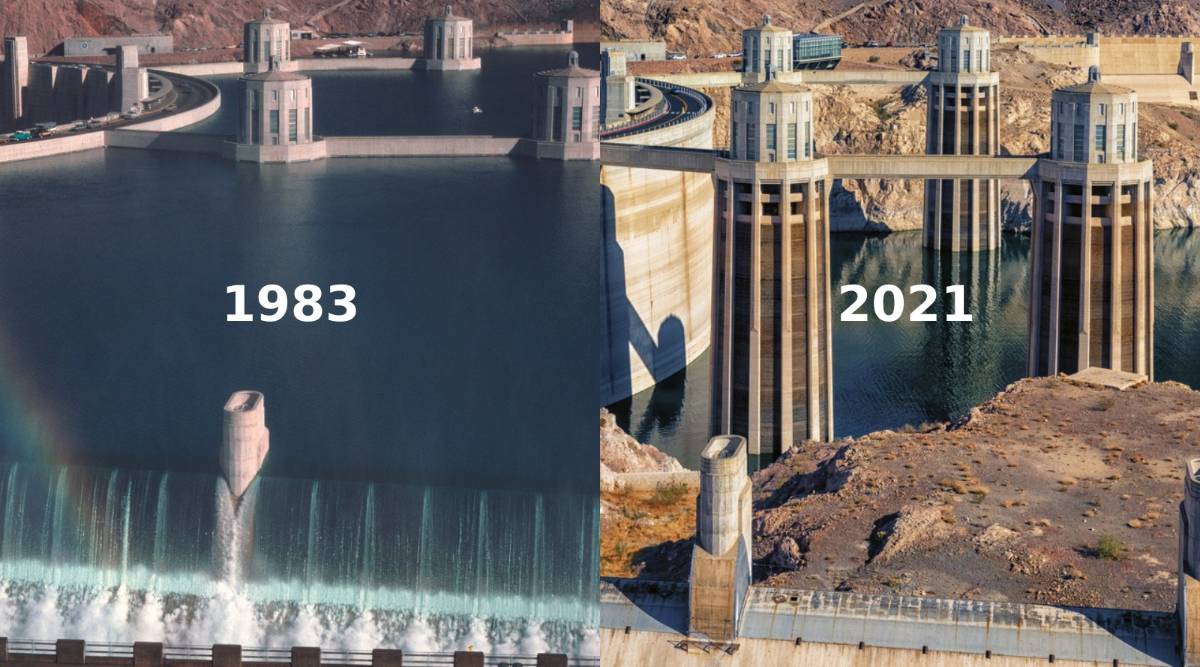
A harder water era is taking shape in the Colorado basin
A new federal plan under development for the Colorado River points to a sharp reset for water users across the U.S. Southwest. According to details discussed with state water managers in Phoenix, the proposal would reduce the amount of water drawn by Arizona, California, and Nevada by as much as 40 percent under a new 10-year framework.
The scale of the potential cuts shows how far the Colorado River crisis has moved beyond short-term drought management. The basin’s two biggest reservoirs, Lake Mead and Lake Powell, remain severely depleted, and federal officials appear to be preparing rules that treat lower supplies as a structural condition rather than a temporary emergency.
The framework under discussion
The developing plan would set rules for water reductions that are reassessed every two years. The Interior Department is preparing to release its final version in late June, according to Arizona Department of Water Resources director Tom Buschatzke, who described the proposal to a meeting of state water users.
Under the framework, water deliveries to farms, cities, and tribes in the downstream states could be reduced by as much as 3 million acre-feet per year. That is a striking number. Buschatzke said that volume is enough to supply roughly 6 million to 9 million households for a year, exceeding the total number of homes in Arizona and Nevada combined.
The proposal would either be implemented under existing Colorado River law or through agreements among the basin states. That distinction matters politically, but the practical message is simpler: the federal government is preparing to impose a harder allocation regime if the states cannot reach a durable settlement on their own.

Why Arizona may bear the brunt
The framework would apply reductions using the legal system that prioritizes the oldest water users. In effect, that would place much of the burden on central Arizona communities, industries, and tribes served by the Central Arizona Project canal system, which delivers Colorado River water to Phoenix, Tucson, and nearby areas.
That reflects the long-standing hierarchy embedded in the river’s legal structure. Senior rights holders are better protected, while junior users face deeper exposure when shortages intensify. In ordinary years, that system allocates scarcity through law. In a prolonged water crisis, it also determines which communities absorb the most disruptive cuts.
The implications extend well beyond suburban growth. The supplied reporting notes that much of the fruit and vegetable production in the United States depends on the affected states. That means irrigation reductions would not only reshape local water planning, but could ripple into agricultural output and food supply chains.
From negotiation fatigue to federal intervention
The seven states that rely on the Colorado River have spent years trying to negotiate how to handle falling flows and shrinking reservoir levels. Those talks have repeatedly exposed a basic tension: every state accepts that supplies are declining, but each has different legal claims, political constraints, and economic vulnerabilities.
The emerging federal plan suggests Washington is no longer willing to wait for a fully voluntary compromise. Instead, officials appear ready to establish a rule-based framework for the next decade and revisit its assumptions every two years as conditions evolve.
That structure is significant. It implies the government expects persistent uncertainty in hydrology and demand, not a quick return to older river conditions. It also indicates that future adjustments may become routine, turning water planning into a rolling process of recalibration rather than a one-time settlement.
What comes next
The final federal plan is expected in late June. Until then, the draft contours are enough to raise stakes across the lower basin. For Arizona, California, and Nevada, the question is no longer whether the Colorado River system is under severe strain. The question is how the pain will be distributed, how quickly users will be forced to adapt, and whether the legal framework that governed past abundance can manage a future defined by less water.
The coming decision will be watched not only as a regional resource fight, but as a test of how the United States manages climate-linked scarcity in critical infrastructure systems. The Colorado River is not just a river allocation issue. It is a foundation for urban growth, tribal water access, irrigation, and long-range economic planning across the Southwest.
This article is based on reporting by CleanTechnica. Read the original article.
Originally published on cleantechnica.com




