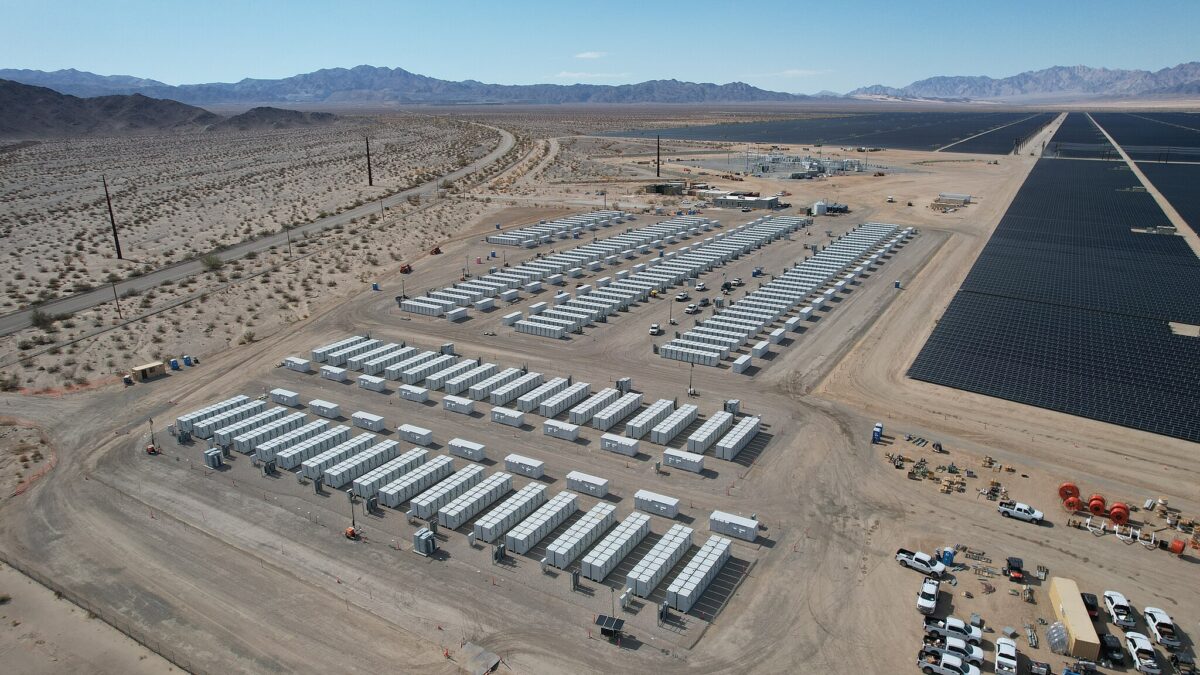
Colombia gives energy storage a policy foundation
Colombia has issued a new decree that establishes public policy guidelines for integrating energy storage systems into both its National Interconnected System and its Non-Interconnected Zones. The move matters because it gives storage a clearer institutional role in a power system that is dealing with rising shares of variable renewable energy and the operational challenges that come with it.
The measure, Decree 0393, does more than acknowledge storage as useful infrastructure. It sets out criteria for deployment, allows storage systems to participate in electricity markets, and creates the policy basis for remuneration. That combination is important. Storage projects often depend not only on technical recognition, but on a market structure that defines what services they can provide and how those services will be paid for.
What the decree says storage can do
According to the supplied source text, the Colombian regulation recognizes energy storage systems as assets capable of delivering multiple services across the grid. Those services include primary and secondary frequency regulation, voltage support, energy backup, black start capability, demand management, and relief of congestion in transmission and distribution networks.
That broad list reflects how storage has evolved from a niche balancing tool into a flexible piece of grid infrastructure. In practical terms, batteries and other storage technologies can help stabilize system frequency, support reliability after disturbances, and move electricity from periods of lower demand to peak hours when it is more valuable or more urgently needed.
The decree also explicitly allows energy shifting. That means electricity can be stored when demand is low and dispatched later when demand is high. In systems with expanding solar and wind generation, that function can become central to grid planning because it helps align intermittent supply with consumption patterns.

Why the policy shift matters now
The policy arrives in the context of growing renewable penetration, which the source identifies as part of the rationale for the new framework. As more variable generation enters the system, grid operators need tools that can respond quickly to imbalances, smooth fluctuations, and reduce stress on network infrastructure.
Colombia’s step is notable because it begins to move storage from an ancillary idea into a recognized market participant. That is a significant transition. When regulation defines storage as an asset with multiple system functions, it becomes easier to build planning rules, compensation mechanisms, and investment cases around it.
The decree also covers Non-Interconnected Zones, not just the main interconnected grid. That is potentially important for regions where conventional infrastructure may be weaker or where localized resilience and backup capabilities can have outsized value. The source text does not provide technical detail on how those zones will be prioritized, but their inclusion suggests a nationwide policy ambition rather than a framework limited to the core grid.
The next step is market design
Implementation will be led by Colombia’s Energy and Gas Regulatory Commission, or CREG. Under the decree, CREG is tasked with defining the specific remuneration mechanisms, operational rules, and market participation frameworks for storage systems.
That next phase will determine how transformative the decree becomes in practice. Public policy recognition is one step; usable market rules are another. Developers, utilities, and system operators will be watching for how compensation is structured and whether storage can stack multiple revenue streams tied to the different grid services it can provide.
The source text makes clear that the decree establishes a basis rather than a fully detailed operational regime. In other words, the government has created the policy architecture, while the regulator now has to translate that architecture into workable rules.
A broader signal for the region
Even in the narrow form described by the supplied material, the decree sends a broader signal about how Latin American electricity systems are adapting to cleaner but more variable generation mixes. Storage is increasingly treated not as a marginal add-on, but as infrastructure that can serve reliability, flexibility, and market efficiency at the same time.
For Colombia, that means storage is now formally tied to several of the power system’s core needs: balancing, backup, network support, and peak management. The decree does not settle every question, but it reduces one of the biggest sources of uncertainty for emerging storage markets: whether the technology is fully recognized in policy and whether there is a path to payment.
That matters for investors and operators because uncertainty around revenue and classification has often slowed deployment even where the technical case for storage is strong. By explicitly defining storage services and assigning the regulator responsibility for the detailed market rules, Colombia has taken a step toward turning technical potential into bankable infrastructure.
The significance of the measure is therefore less about a single project announcement than about institutional readiness. Decree 0393 frames storage as a multi-role asset inside the national electricity system and asks regulators to build the commercial rules around that reality. If those follow-on rules are robust, Colombia could move from discussing storage’s value to systematically procuring it.
This article is based on reporting by PV Magazine. Read the original article.
Originally published on pv-magazine.com




