Running Costs, Not Sticker Prices
Electric-vehicle debates often center on purchase price, range, charging access, or resale value. But day-to-day operating cost remains one of the most consequential ownership variables, especially for drivers logging average or above-average annual mileage. A new comparison published by CleanTechnica puts that reality into familiar terms by matching a Kia EV6 against a Toyota RAV4 Hybrid and focusing on what owners pay to keep each vehicle moving.
The result is a wide gap. Using a set of assumptions based on current Florida gas prices, low overnight home electricity rates, and published efficiency figures, the comparison estimates that a Toyota RAV4 Hybrid would cost $1,052 to fuel over 10,000 miles, while a Kia EV6 would cost $205 to energize over the same distance. At 15,000 miles, the numbers rise to $1,578 for the RAV4 Hybrid and $308 for the EV6.
That translates into annual savings of $846 at 10,000 miles and $1,269 at 15,000 miles in favor of the battery-electric vehicle.
The Assumptions Behind the Math
Comparisons like this depend heavily on local conditions, and CleanTechnica is explicit about the inputs. The analysis uses gasoline priced at $4.42 per gallon, described as the average price in Florida at the time. Electricity is set at $0.07 per kilowatt-hour, reflecting an overnight charging rate available to the author. Annual driving is modeled at 10,000 miles and 15,000 miles. The Toyota RAV4 Hybrid is assumed to average 42 miles per gallon, based on EPA figures, while the rear-wheel-drive Kia EV6 is assumed to average 3.4 miles per kilowatt-hour.
Those numbers matter because they show where the savings actually come from. The EV6 benefit is not just about drivetrains in the abstract. It is the interaction between vehicle efficiency and a very low off-peak charging rate. In regions with expensive residential electricity, the gap would narrow. In places with lower gasoline prices, it would narrow again. But where drivers can reliably charge at low overnight rates, the arithmetic can become difficult for even efficient gasoline vehicles to overcome.
Why This Matchup Matters
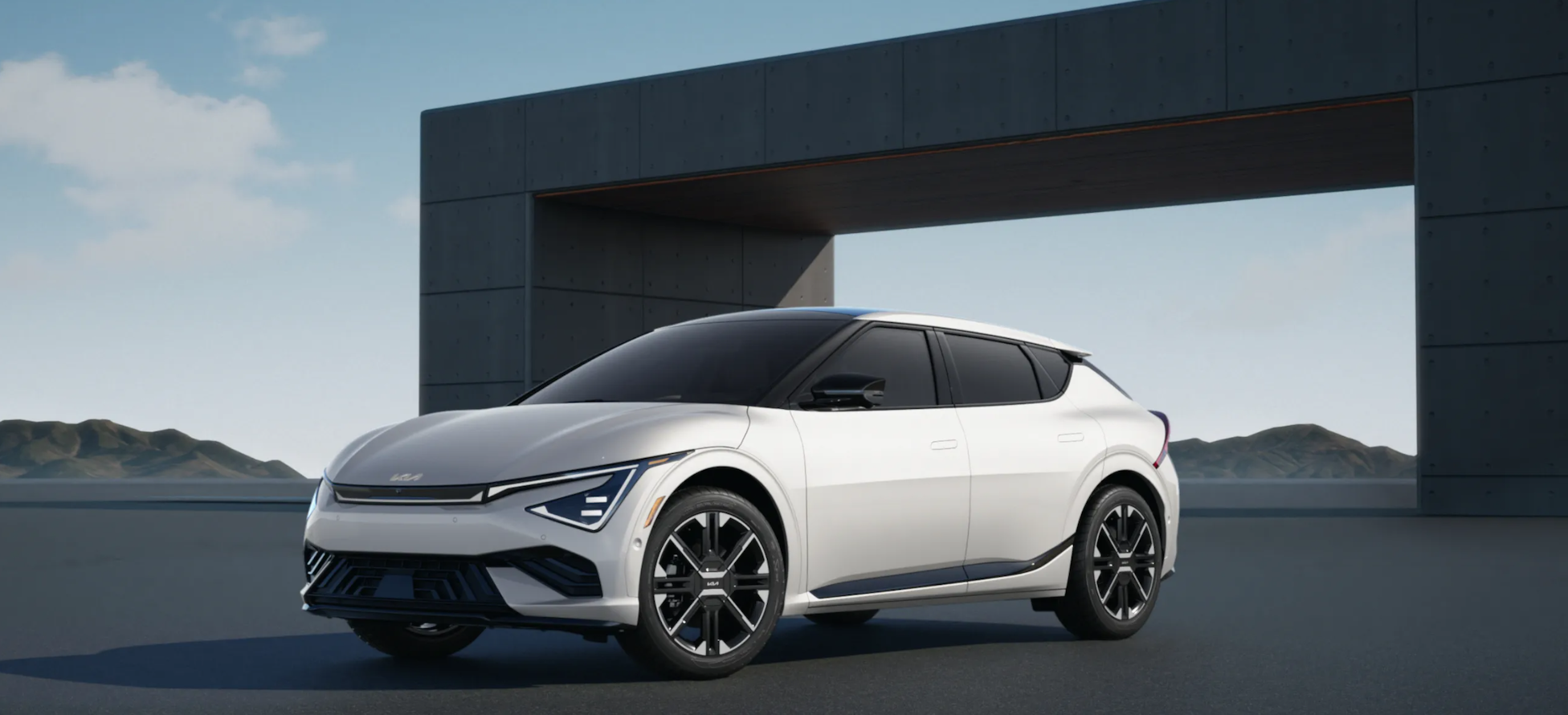
The EV6 and RAV4 are not identical vehicles, but the comparison is close enough to be relevant for mainstream buyers. CleanTechnica notes that the EV6 is around three inches longer and one inch wider, while the RAV4 is significantly taller. The EV6 offers more passenger volume and more legroom, while the RAV4 provides more cargo space. In other words, this is not a niche sports sedan being compared to a large SUV. It is a practical comparison between two vehicles that can plausibly land on the same shopping list for many households.
The timing also matters. The article points to recent EV6 price cuts, which strengthen the case for evaluating not only operating costs but total value. Lower sticker prices reduce one of the most common barriers to EV adoption. When lower upfront pricing is combined with lower annual energy cost, the ownership equation can move meaningfully.
What the Savings Mean Over Time
CleanTechnica extends the yearly difference across a hypothetical decade of ownership, arriving at savings of $8,460 under the 10,000-mile scenario and $12,690 under the 15,000-mile scenario. That kind of long-horizon extrapolation should be handled carefully, and the article acknowledges that forecasting average energy prices over 10 years gets harder the further out one goes.
Still, the directional point is strong. Even if gasoline and electricity prices shift, and even if driving patterns vary, energy cost is not a marginal line item for many households. Over several years, it can rival or exceed major maintenance events. For buyers already considering an EV, a difference of several hundred to more than a thousand dollars per year is not trivial. It affects monthly budgets, fleet decisions, and the economics of household vehicle replacement.
Why Charging Strategy Changes the Equation
The comparison also highlights a larger transition in how consumers think about refueling. For gasoline vehicles, cost is mostly a function of market fuel prices and efficiency. For EVs, cost can depend heavily on when and where charging happens. A driver who relies on premium public fast charging will see very different economics from a driver charging at home overnight on a low-rate plan.
That means EV affordability is increasingly tied to utility structures as much as vehicle technology. Time-of-use rates, smart charging, and home energy management all influence real ownership cost. Buyers who ignore that layer may misjudge the economics of a battery-electric vehicle, either positively or negatively.
The Broader Market Signal
The comparison does not settle the EV-versus-hybrid debate for every buyer. Hybrids still offer long range, easy refueling, and freedom from charging constraints. They remain a practical option in areas where home charging is unavailable or electricity prices are unfavorable. But this case study reinforces an important market signal: once a driver has access to cheap charging, the operating-cost advantage of a well-designed EV can become substantial even against one of the most efficient gasoline-powered alternatives in its class.
That is likely to remain relevant as automakers continue lowering EV prices and buyers grow more sensitive to total cost of ownership. A vehicle purchase is still shaped by financing, insurance, incentives, and depreciation. But energy cost is one of the few variables owners experience every week. When the spread is this wide, it becomes a persuasive part of the sales story.
For consumers, the lesson is straightforward. Comparing vehicles only at the dealership misses a large share of the financial picture. For automakers, the message is equally clear: as EV prices come down, running-cost advantages are becoming harder for even efficient hybrids to offset.
This article is based on reporting by CleanTechnica. Read the original article.
Originally published on cleantechnica.com