When AI Data Collection Meets Early Childhood Education
A proposed University of Washington research effort has brought a difficult question into public view: how far should researchers go to gather real-world data for artificial intelligence systems when that data would come from preschool classrooms?
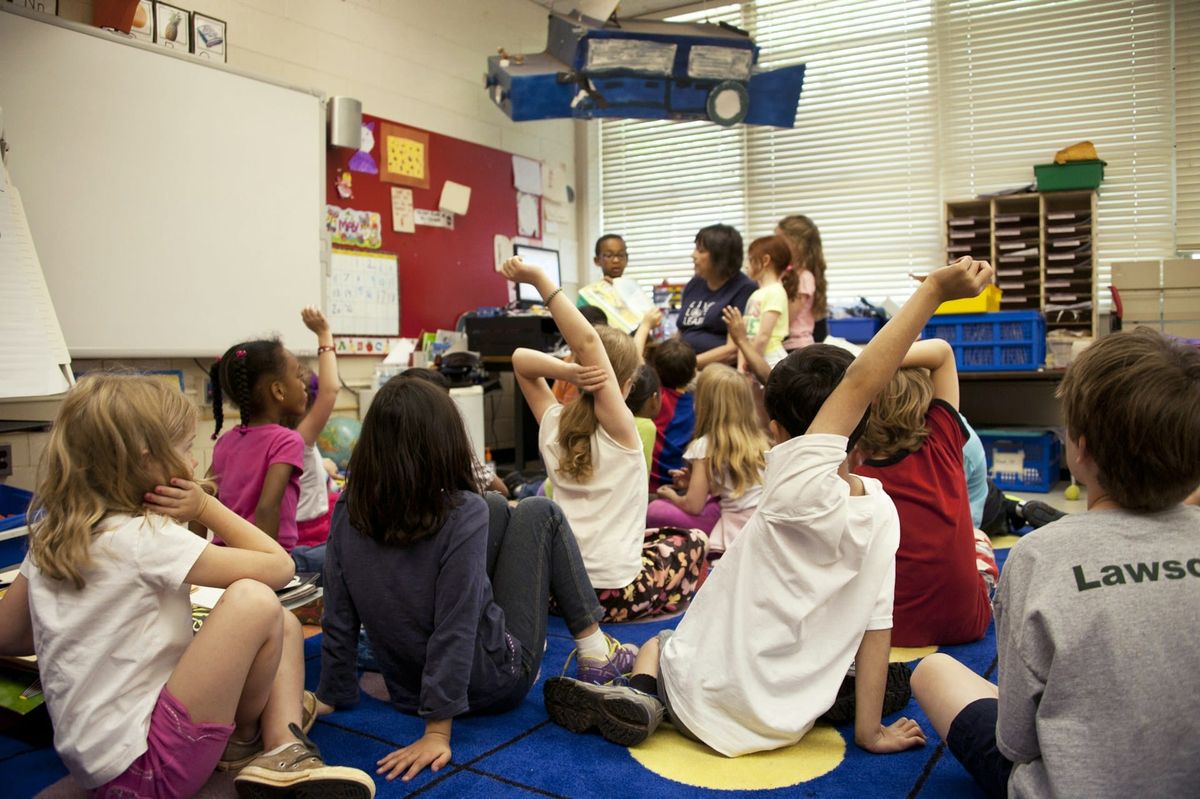
According to 404 Media, researchers planned to ask preschool teachers to wear small cameras that would capture an approximate first-person perspective during normal classroom activities. The footage, which would include the children being taught, would then be used to develop AI models. Project documents also said that researchers might place a fixed video camera in the classroom as part of the study.
Even before any technical details of the AI work become the focus, the proposal exposes a growing tension between the demand for richer training data and the social boundaries around where such data should come from.
What Parents Were Told
A document shared with parents and later obtained by 404 Media said that, with permission, a child's lead teacher might wear a teacher-worn camera capturing the teacher's approximate first-person perspective, and researchers might also place a fixed camera in the classroom. The recordings were described as capturing normal interactions between teachers and children during regular classroom activities. The proposed schedule was up to 150 minutes during morning program hours, for as many as four visits in one month.
The document emphasized that children would not be asked to do anything new or different and that their daily routine would remain the same. On one level, that reassurance is understandable: researchers often want naturalistic data rather than behavior altered by experimental intervention. On another level, it sharpens the discomfort. The closer data collection gets to ordinary life, the harder it becomes to separate observation from surveillance.
The Consent Problem
One parent who spoke to 404 Media understood the program as opt-out rather than opt-in. The university disputed that interpretation and said classroom participation depended on receiving parental permission for all of the children involved. That disagreement is not a minor administrative detail. It goes to the legitimacy of the entire study design.
In environments involving very young children, the mechanics of consent matter as much as the formal existence of a consent form. Parents need to understand what is being recorded, how long it will be retained, who will have access to it, and what kind of AI system the footage is meant to support. If any part of that chain is unclear, public trust can collapse quickly.
The report does not provide a full technical protocol, but the available details are enough to show why interpretation of the consent model became central almost immediately. An opt-in framework implies affirmative, informed agreement in a highly sensitive setting. An opt-out perception implies a much weaker standard, even if that was not the university's intent.
Why Classroom Footage Is So Valuable
From a machine-learning perspective, classroom environments are information-rich. They involve constant interaction, language use, gesture, attention shifts, object handling, and social coordination. First-person video from a teacher would capture many of those dynamics from a perspective that is difficult to simulate. For AI developers interested in embodied systems, instructional modeling, or scene understanding, that kind of data could be unusually attractive.
But the very properties that make the footage useful also make it sensitive. Preschool classrooms involve children who cannot meaningfully consent, teachers who may be recorded while managing discipline and care, and institutions that are expected to provide a protected environment. Data gathered there is not interchangeable with street footage, public web text, or generic workplace video.
The Broader Governance Gap
This episode reflects a broader pattern in AI development: the search for higher-quality, more realistic training data is increasingly pushing into contexts with stronger ethical constraints. Health care, education, employment, and home life all contain the kinds of nuanced behavior data that advanced models can benefit from. They are also domains where misuse, misunderstanding, or weak governance can have outsized consequences.
That does not mean such research should never happen. It means the threshold for clarity should be much higher than it often is in ordinary software testing. Institutions need to anticipate not only whether a study meets minimum procedural requirements, but also whether the collection method will remain defensible once people understand what the system is for.
What This Reveals About AI's Next Data Frontier
Public debate about AI frequently concentrates on models after they are released: what they can do, how they fail, whether they are biased, and how they should be regulated. Far less attention goes to the upstream question of where training data comes from when easy internet-scale sources are no longer enough.
The preschool-camera proposal offers a concrete answer. As labs and universities look for richer signals, they may increasingly target structured real-world environments full of interaction and context. That move could produce better systems. It could also generate a cycle of backlash if data collection expands faster than institutions can explain and justify it.
A Warning Before the Norms Settle
What makes this case important is not only whether the specific study proceeds. It is the early warning it provides about how educational spaces may be pulled into the AI pipeline. Once research teams establish that highly sensitive environments are fair game for model development, the pressure to normalize similar efforts elsewhere will increase.
The documents described to parents framed the recording sessions as ordinary and minimally disruptive. In one sense, that is what responsible observational research aims for. In another, it may be exactly why stronger scrutiny is needed. The more invisible AI data collection becomes in daily life, the more essential it is to decide where the line should be before the practice scales by default.
Preschool classrooms are among the clearest places to draw that line carefully. This proposal shows that the debate has already begun.
This article is based on reporting by 404 Media. Read the original article.
Originally published on 404media.co