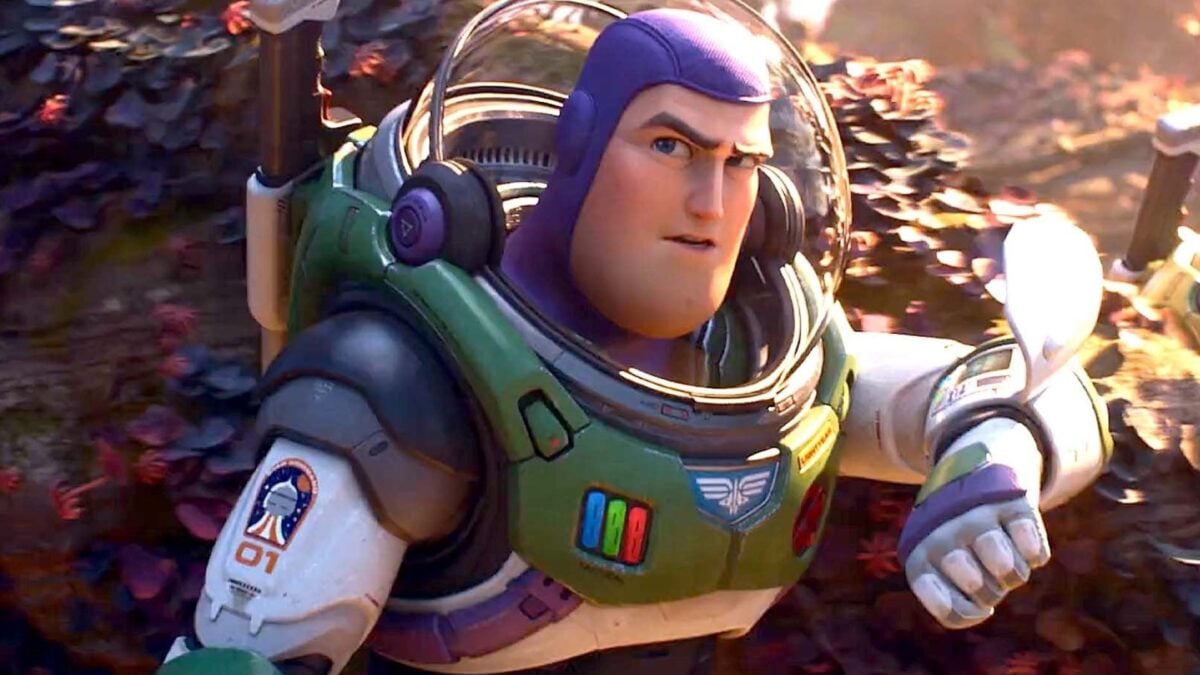
Pixar revisits one of its stranger franchise decisions
Nearly four years after Lightyear failed to connect with audiences, Pixar is reopening an awkward chapter in the Toy Story franchise: why Tim Allen did not voice Buzz Lightyear in the 2022 spinoff. According to comments from Pixar executive and Toy Story 5 director Andrew Stanton, the studio’s internal handling of the switch was far less contentious than the public may have assumed.
Stanton told Entertainment Weekly, as reported in the supplied source text, that Allen was informed early, that there were conversations before and after Lightyear was made, and that the actor responded professionally. Pixar’s position, Stanton said, was that the movie’s Buzz was not the same character as the toy version Allen had voiced since 1995. In that framing, Chris Evans was not replacing Allen’s Buzz so much as voicing a different figure within the franchise’s layered fictional setup.
The franchise logic was always complicated
The source text underscores why the casting choice felt confusing to audiences in the first place. Lightyear was built not around the familiar toy character from Toy Story, but around the “real” space adventurer inside the fictional Toy Story universe who supposedly inspired the toy. That distinction may have made conceptual sense inside Pixar’s world-building, but it also created distance from the version of Buzz people actually recognized.
That gap helps explain why Allen’s absence became such a flashpoint. His voice had been central to the character’s identity for decades, and the famous line “To infinity and beyond!” was inseparable from his performance. Even if Pixar viewed the spinoff as a separate interpretation, audiences still encountered a familiar brand icon with an unfamiliar voice. The source text makes clear that this tension never fully disappeared.
_.png)
What Stanton says happened behind the scenes
Stanton’s account is notable because it directly addresses the question of whether Pixar’s decision damaged its relationship with Allen. According to the source, he said Allen was “way more professional” about the choice than many would have expected. Stanton also described Pixar as being explicit that Lightyear had “no bearing on Buzz, the toy,” and that Allen would continue as that version of the character.
That reassurance now looks especially relevant because Allen is back as Buzz in Toy Story 5, which the source says is set to reach theaters on June 19. In other words, the spinoff did not become a permanent recasting. Instead, it now reads more like an experiment that Pixar ring-fenced from the core series, even if the audience never fully bought the distinction.
Allen’s earlier reaction lines up with Pixar’s version
The supplied article also points to a 2022 Entertainment Weekly interview in which Allen said the Lightyear Buzz was not really his Buzz. The actor reportedly described the project as a “whole new team” with little connection to the earlier films and said the movie did not seem to have a meaningful relationship to the toy character. That comment did not sound enthusiastic, but it also did not amount to a public feud.
In that sense, Stanton’s current comments and Allen’s earlier remarks are broadly consistent. Both sides appear to have accepted the same basic premise: Pixar was trying a different version of Buzz, and that version stood apart from the role Allen had long owned. The tension was less about personal conflict than about whether the creative distinction held up for viewers.

Why this still matters in 2026
On one level, this is a niche franchise anecdote. On another, it says something bigger about how legacy entertainment properties are managed. Studios increasingly treat major characters as flexible IP that can be reinterpreted across timelines, formats, and tonal registers. But voice and performance can be as important to continuity as costume or design. When a studio disrupts that relationship, even for a carefully explained in-universe reason, it risks weakening the audience’s intuitive grasp of the brand.
Lightyear appears to be a case study in that problem. The source text says the film failed to catch on with audiences, and it explicitly raises the idea that using Allen might have created a stronger connection. Pixar’s internal distinction between the human adventurer and the toy may have been coherent in development meetings, but franchise storytelling ultimately has to survive audience instinct, not just studio logic.
A controlled retreat to the familiar
Allen’s return for Toy Story 5 suggests Pixar understands where the durable center of the franchise still sits. The studio can experiment around the edges, but the core identity of Buzz Lightyear remains tied to the toy version and to Allen’s performance. That does not mean Lightyear was a meaningless detour. It does mean the experiment did not reset the franchise’s emotional anchor.
Stanton’s comments therefore serve two purposes at once. They clear up any lingering assumption of behind-the-scenes bitterness, and they gently reaffirm the hierarchy inside Pixar’s own canon: the toy Buzz is still the defining Buzz. For a studio preparing another mainline Toy Story release, that message is as much brand management as it is historical clarification.

The lesson from the episode
The story of the Lightyear casting switch is no longer really about whether Allen was offended. By Stanton’s account, he was not, at least not in the way many people imagined. The larger lesson is that audiences often treat performance continuity as part of character continuity, even when a studio tries to split the two apart.
Pixar’s explanation may always have been technically sound, but the franchise itself seems to have delivered the verdict. The experiment happened, the distinction proved hard to sell, and Tim Allen is back voicing Buzz in the next Toy Story. In Hollywood terms, that is a fairly clear answer.
This article is based on reporting by Gizmodo. Read the original article.
Originally published on gizmodo.com


