NASA has attached a timetable to its moon base ambitions
NASA says Blue Origin will carry out the first of three uncrewed lunar missions planned for 2026 as part of a new push toward building a moon base, according to the supplied source material. The announcement gives the agency’s lunar strategy something it has often lacked in public: a more explicit sequence of missions, contractors and near-term objectives tied to infrastructure rather than symbolism alone.
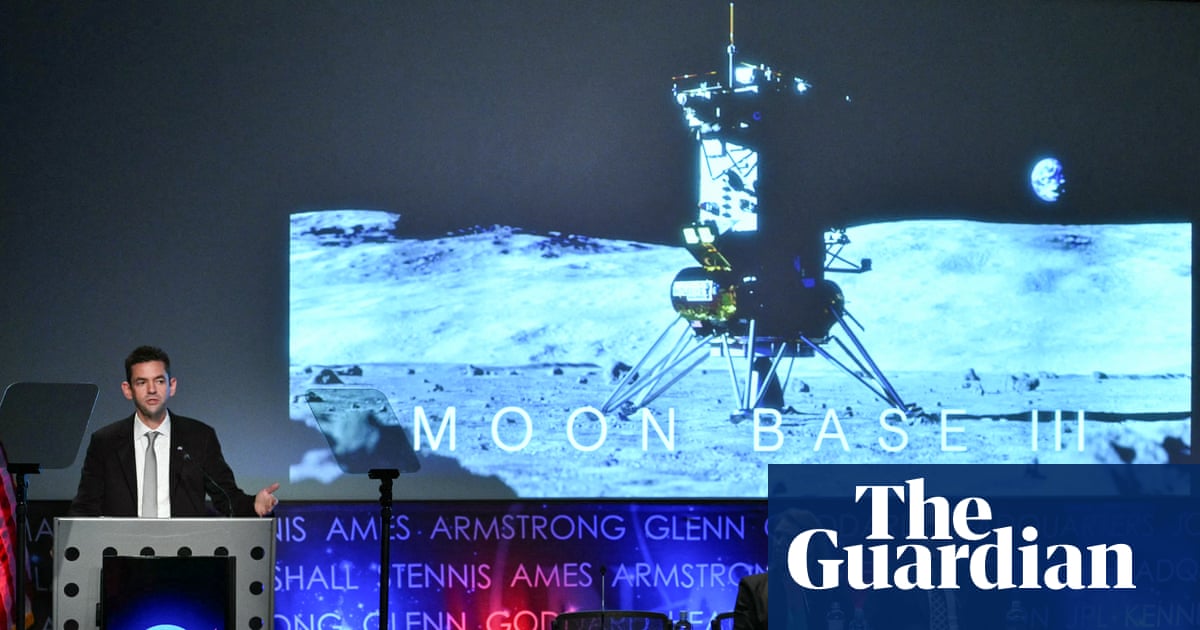
The plan was outlined in Washington by NASA administrator Jared Isaacman, who described three missions this year followed by more than a dozen in the coming years to test systems, equipment and scientific payloads. The framing is important. NASA is not presenting the base as a single monumental build. It is presenting it as an iterative campaign, with frequent uncrewed flights used to validate the technologies and operating methods needed for survival on the moon.
Blue Origin gets the first mission
The headline decision is NASA’s selection of Jeff Bezos’s Blue Origin over Elon Musk’s SpaceX for the first mission, expected as early as fall. The source material says NASA awarded Blue Origin $230.4 million to support each of its first two moon base missions, while also stating the company will largely fund the operation itself. NASA identified the flight as the first privately funded lunar lander mission in history.
That contract choice matters beyond the immediate mission. Blue Origin and SpaceX have become symbolic rivals in the commercial space sector, and any NASA selection involving both companies is read as a signal about institutional confidence, schedule credibility and strategic fit. Isaacman’s comments, as provided in the source, also suggested frustration with contractors who were not meeting expectations, though he did not name them directly.

From Apollo nostalgia to industrial iteration
The agency’s rhetoric is deliberately expansive. Isaacman linked the moon base effort to renewed public attention after Artemis II, which the source says sent four astronauts around the moon for the first time since 1972 and splashed down on April 10. But he also stressed that NASA does not intend to jump straight to an iconic dome-like settlement. Instead, the plan is to send repeated missions carrying landers, rovers, demonstrations and science payloads to determine what actually works.
That is the most credible part of the announcement. Sustained lunar presence depends less on a single spectacular mission than on reliable logistics, equipment survivability and repeated operational learning. By describing the effort as an iterative campaign, NASA is effectively saying the moon base will emerge from cumulative test-and-build cycles rather than from one grand design reveal.
The reported cost estimate of a $20 billion moon base gives the program scale, but the real significance lies in the cadence. Three uncrewed landings in a single year would mark a substantial acceleration in lunar surface activity if achieved. It would also create pressure on the supporting industrial base to deliver hardware and demonstrate repeatability on a compressed schedule.
Why this marks a shift in lunar planning
NASA’s emphasis appears to be evolving from exploration milestones toward operational infrastructure. The source material says the coming missions will carry systems and equipment needed to test the science of survival on the moon. That phrase is telling. It recognizes that a base is not just a destination but a hostile-environment engineering problem involving transport, energy, mobility, payload integration and endurance.
The strategy also mirrors the broader public-private model NASA has used elsewhere: create demand, pay for selected missions, and rely on industry competition to expand capability faster than a wholly government-built system might. In practice, that means the early lunar economy may be shaped as much by procurement design as by rocket performance.
Blue Origin’s Endurance cargo lander, referenced in the source material, now becomes central to that test. If it flies on time and performs well, Blue Origin strengthens its standing in the next phase of lunar logistics. If it stumbles, the advantage could shift quickly in a field where schedule reliability remains decisive.

A bigger message to the space sector
NASA’s announcement is not simply about choosing one company for one mission. It is a demand signal to the lunar industry. The agency says it intends to buy numerous landers, rovers, demonstrations and scientific payload opportunities over multiple missions. That gives commercial suppliers a clearer reason to build for lunar operations rather than for isolated showcase flights.
Whether the 2026 schedule holds is still an open question. Space programs routinely slip, and the supplied article does not provide enough evidence to assess technical readiness in detail. But the policy shift is visible even without that. NASA has moved from broad lunar ambition to a named sequence of uncrewed construction-oriented missions, starting with Blue Origin.
If the campaign proceeds as described, the moon is about to become less of a one-off destination and more of a testbed for industrial presence. That is the real development here. The first mission matters, but the strategy behind it matters more.
This article is based on reporting by The Guardian. Read the original article.
Originally published on theguardian.com