The internet has a physical politics
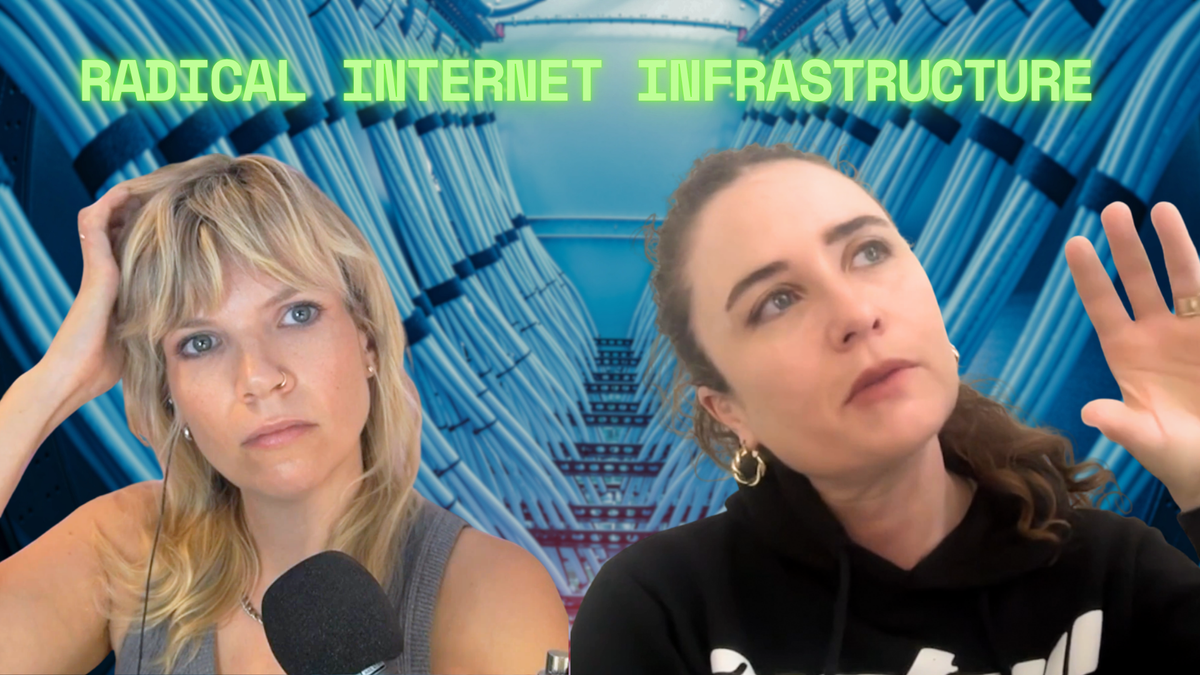
A new 404 Media podcast episode featuring scholar Britt Paris pushes a familiar technology into a less familiar frame: the internet as physical infrastructure. Paris, an associate professor of library and information science at Rutgers and a fellow with AI Now, discusses her recent book Radical Infrastructure: Imagining the Internet from the Ground Up, which examines the land, cables, institutions, and ownership structures that shape how digital life actually functions.
The central idea is simple but consequential. People often experience the internet as apps, feeds, search results, or cloud services. Paris argues that real power sits lower in the stack, in the infrastructure itself: miles of cable, energy-intensive facilities, and the governance models that decide who controls access and under what terms. That shift in perspective turns the internet from an abstract space into something closer to a utility.
From monopoly assumptions to cooperative alternatives
According to the episode summary, Paris uses examples including a telecommunications cooperative in rural Missouri and the organization NEMR to illustrate that the internet does not have to be organized only around large corporate monopolies. These examples are important because they move the conversation beyond critique. Rather than simply saying the present model is concentrated, they suggest alternative ownership and operational structures in which communities have more say over how connectivity serves local needs.
That is a meaningful cultural and political claim. If internet access is treated as infrastructure, then questions about who builds it, who profits from it, and who governs it become public-interest questions rather than merely market outcomes. Paris’s framing suggests that the shape of the internet is not inevitable. It is built, maintained, financed, and regulated through choices that could be made differently.

Why this argument lands now
The timing is notable. Debates over AI, data centers, digital labor, and platform control have made the material footprint of online systems harder to ignore. Paris’s academic work, as described by 404 Media, spans internet infrastructure, AI-generated information objects, digital labor, civic data, and social epistemology. Those themes converge around a common issue: digital systems are not weightless, and their design has social consequences.
The podcast also links Paris’s research to labor politics, including her work helping bargain for educators’ rights at Rutgers. That connection broadens the significance of the conversation. Infrastructure is not only about hardware. It is also about institutions, bargaining power, and who gets to influence the systems they depend on.
A useful correction to platform-era thinking
For years, mainstream internet discourse has been dominated by platforms and products. That has often obscured the material layer beneath them. Paris’s intervention, at least as presented in the episode, is to restore that missing layer to public understanding. The internet is not just a marketplace of apps. It is a physical and political arrangement that can either concentrate power or distribute it more widely.
That makes the discussion more than a book promotion. It is part of a broader attempt to recover infrastructure as a cultural subject. In a moment when connectivity, compute, and AI are being built out at scale, the question is no longer only what digital tools do. It is who owns the pipes, the land, the institutions, and the rights attached to them. Paris’s work argues those are the questions that should have been central all along.
This article is based on reporting by 404 Media. Read the original article.

Originally published on 404media.co