Search advertising is becoming more conversational
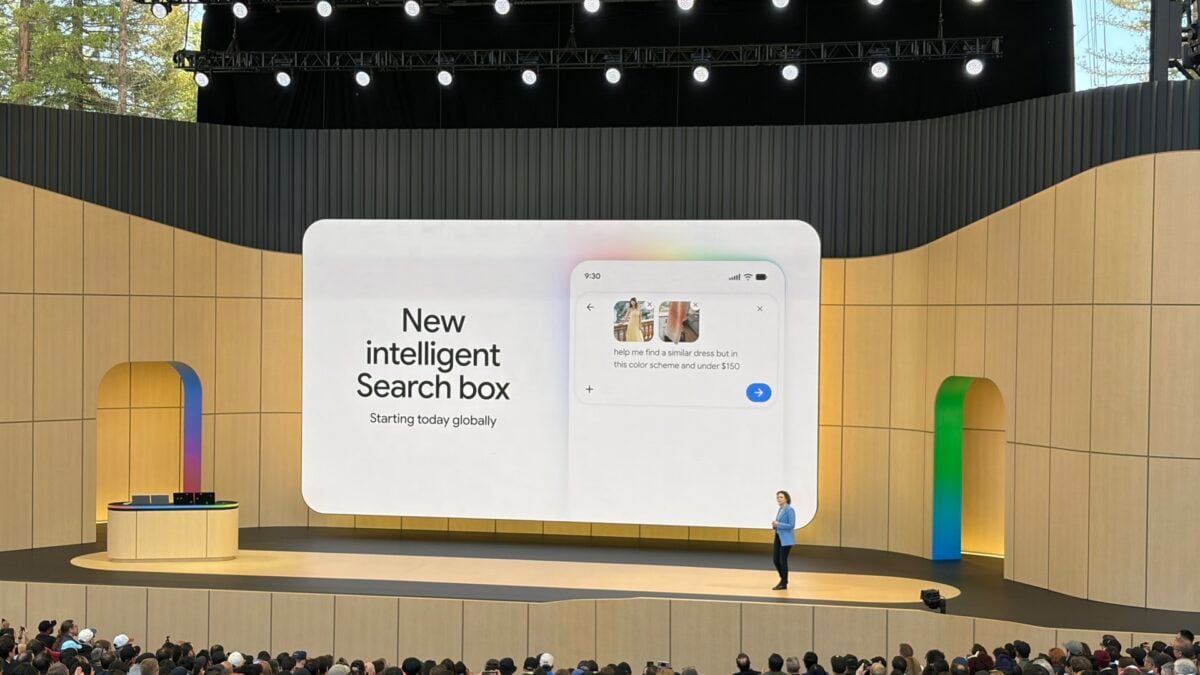
Google’s latest vision for Search is not just more AI-generated answers. It is also more AI-generated advertising. At this year’s Google Marketing Live event, the company outlined new ad formats designed to appear inside its increasingly conversational Search experience, according to reporting cited in Gizmodo. The result is a sharper picture of where Google appears to be headed: not away from ads in the AI era, but toward ads that behave more like the answers people are already being encouraged to ask for.
Two formats stand out in the report. One is called “Conversational Discovery” ads. These are sponsored results meant to look and function more like a response to a user’s query within Google’s AI Mode. The other is “Highlighted Answers,” promotions presented in recommendation-style lists within the standard Search experience. Both, the report says, are powered by Google’s Gemini AI systems.
Why this matters for Google
Search is the foundation of Google’s advertising empire, so any major redesign of search behavior eventually has to answer one practical question: where do the ads go? AI-generated summaries and conversational interfaces reduce the obvious space once occupied by classic blue links and keyword-triggered placements. That creates both a problem and an opportunity for the company.
The problem is that a traditional ad slot can feel awkward inside a chat-like experience. The opportunity is that AI can make ads feel less like isolated inserts and more like dynamic responses shaped around the context of a user’s prompt. That appears to be what Google is testing now.
According to the report, these new formats are designed to produce more tailored promotional responses rather than static ads tied rigidly to prewritten copy and specific keywords. For advertisers, that promises flexibility and potentially better targeting. For users, it likely means ads that are harder to distinguish psychologically from the surrounding answer flow, even when they are still labeled as sponsored content.

The shift from search engine to answer engine
Google has been steadily remaking Search around generative AI, with AI Mode and other features meant to keep users inside a more guided, assistant-like environment. In that world, the company is no longer just indexing pages and ranking links. It is mediating the query, the answer, and increasingly the commercial suggestion attached to both.
That is a meaningful shift. Traditional search ads were explicit interruptions in a list of results. Conversational ads are closer to interventions inside an ongoing exchange. They are meant to feel native to the interaction. That could make them more useful in some cases, but it also raises new questions about transparency, user trust, and how clearly people can separate recommendation from marketing when both are generated through the same interface style.
What is being tested now
The report says Conversational Discovery ads and Highlighted Answers are already being tested with users in the United States on both mobile and desktop. More AI-powered features for advertisers are expected later this year.
That testing timeline matters because it suggests Google sees ad integration not as a later monetization layer for AI Search, but as part of the core rollout. The company appears to be moving quickly to ensure that whatever replaces the classic search page can still support the commercial machinery that made the old one so profitable.
In effect, the experiment is testing whether users will accept a search product in which the line between answer and ad becomes more fluid while still remaining commercially effective for brands.
Why the industry will be watching closely
Google’s scale gives it unusual power to normalize new ad behavior. A smaller platform can experiment with chatbot advertising and fail quietly. Google cannot. If these formats spread across Search, they could reshape how digital marketers think about discovery, keyword strategy, creative production, and performance measurement.
They could also influence the design choices of rivals. Once AI-native ads become a viable revenue stream inside mainstream search, every major platform building answer interfaces will face pressure to develop its own version. That would accelerate a wider industry transition from page-based advertising to dialogue-based advertising.
There is an obvious tension here. AI search products are often marketed as cleaner, more intuitive, and more helpful than the cluttered web interfaces they might replace. But integrating ads deeply into those same interfaces risks recreating the old commercial incentives in a new format. The interface may look more elegant; the monetization logic remains familiar.

The user experience question
Whether people accept these changes will likely depend on execution. If conversational ads are clearly labeled and genuinely relevant, some users may treat them as useful shortcuts. If they feel manipulative, intrusive, or indistinguishable from organic AI output, backlash could come quickly.
The deeper issue is not simply whether ads appear in AI search, but how much agency users feel they retain inside a system designed to answer, recommend, and sell in the same breath. Search has always balanced utility and monetization. The AI version raises that balance to a different intensity because the interface can now shape the narrative around a query, not just rank options beneath it.
Google’s new ad tests suggest the company has chosen its direction. AI Search will not be a retreat from advertising. It will be an expansion of advertising into more adaptive, conversational, and ambient forms. For the ad business, that may be the natural next step. For users, it may determine whether the future of search feels genuinely smarter or simply more persuasive.
This article is based on reporting by Gizmodo. Read the original article.
Originally published on gizmodo.com