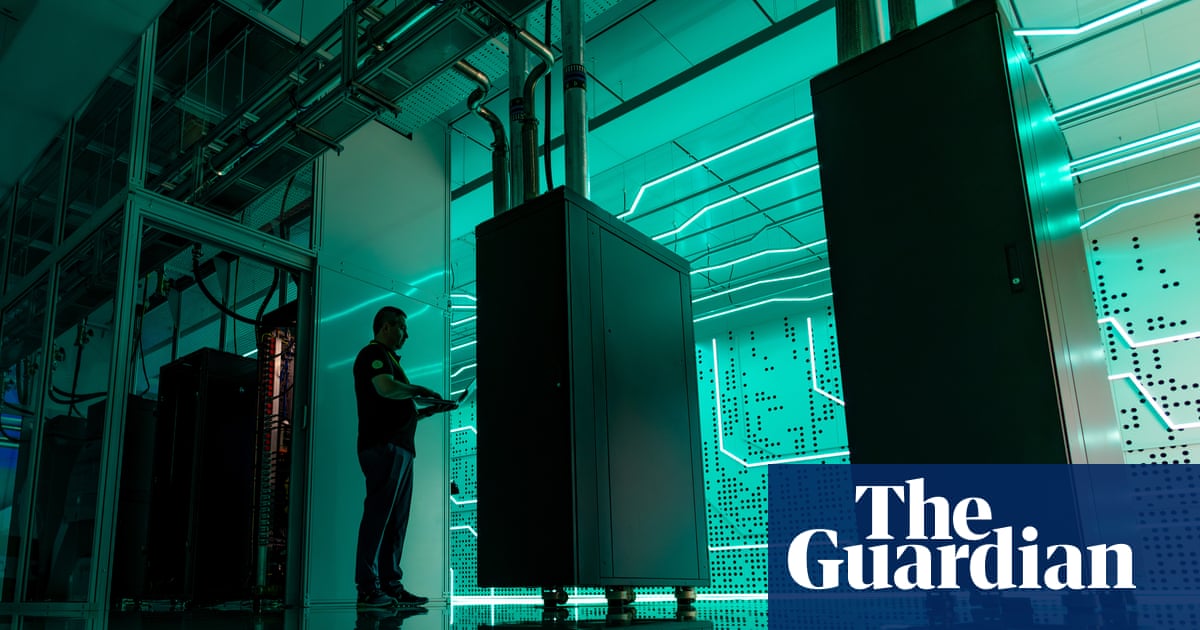
Amazon claims a networking breakthrough inside its cloud infrastructure
Amazon says it has achieved a major advance in data-center networking and has already been deploying the technology in its facilities since late 2025. According to the company, the new design boosts data speeds while reducing energy use, a combination that could matter as cloud operators race to build larger and faster infrastructure.
The system is based on what Amazon describes as a “quasi-random” architecture. Rather than relying entirely on conventional, highly structured network layouts, it combines ordered design with the performance advantages associated with more random network graphs. Researchers have explored random networks for decades, but Amazon says the challenge has been making them work reliably and economically at scale.
From theory to production
The company detailed the approach in a paper published last month titled RNG: Flat Datacenter Networks at Scale. RNG stands for resilient network graphs. Amazon says these graphs are neither fully structured nor fully random, but instead are designed to retain resilience while reducing the bottlenecks that can come with traditional topologies.
AWS vice president of network engineering Matt Rehder said the design effectively flattens the network. That matters because many data-center systems have long depended on fat-tree structures, with traffic moving through multiple vertical layers. Flattening that arrangement can reduce chokepoints and improve how efficiently data flows across large clusters of machines.

The hardware piece: ShuffleBox
Amazon also said it designed a new piece of equipment called the ShuffleBox to make the architecture practical in the physical world. The company says the device automatically shuffles the cabling required for this style of networking. That is a notable detail because random or semi-random network graphs may look attractive on paper, but the physical challenge of wiring them has historically made large-scale deployment difficult.
The combination of a new graph design and new cabling hardware is what Amazon argues allowed it to move from academic possibility to production use. An outside expert quoted by the source called the real-world deployment “remarkable,” underscoring how difficult this class of problem has been for the industry.
Not primarily about generative AI
One striking part of Amazon’s framing is what it did not emphasize. The company said this work is not a direct pitch for generative AI training infrastructure. Rehder said AI training workloads are much more coordinated and centrally orchestrated, and therefore do not resemble the kinds of random graph patterns that make RNG a natural fit.
Instead, Amazon is presenting the design as a way to make its core data-center architecture more efficient for everyday cloud demand. That distinction matters. While AI has dominated infrastructure spending narratives, the economic value of cloud platforms still depends heavily on the efficiency of general-purpose computing, storage, and networking at massive scale.

Why this matters for the cloud market
Data-center operators are under simultaneous pressure to increase performance, control power consumption, and keep expansion costs manageable. A networking design that delivers higher throughput while using less energy could offer a meaningful operational edge, especially if it can be rolled out across a large existing footprint.
Amazon says it has been quietly deploying the technology since late last year, suggesting the company viewed the system as mature enough to use before discussing it publicly. If the results hold up, the approach could influence how hyperscale operators think about network architecture beyond the established fat-tree model.
A test of whether infrastructure innovation can stay hidden
Cloud competition is often discussed in terms of chips, models, and software services, but networking remains one of the foundational constraints in modern computing. Amazon’s announcement is a reminder that some of the biggest strategic gains in infrastructure come from solving old systems problems in new ways.
For now, the company’s claim is specific: a resilient, quasi-random network design paired with new hardware can scale in production and improve both speed and energy efficiency. If competitors respond with similar work, networking may become a more visible front in the next phase of cloud infrastructure competition.
This article is based on reporting by Wired. Read the original article.

Originally published on wired.com