A narrow win delivered by persistence, not comfort
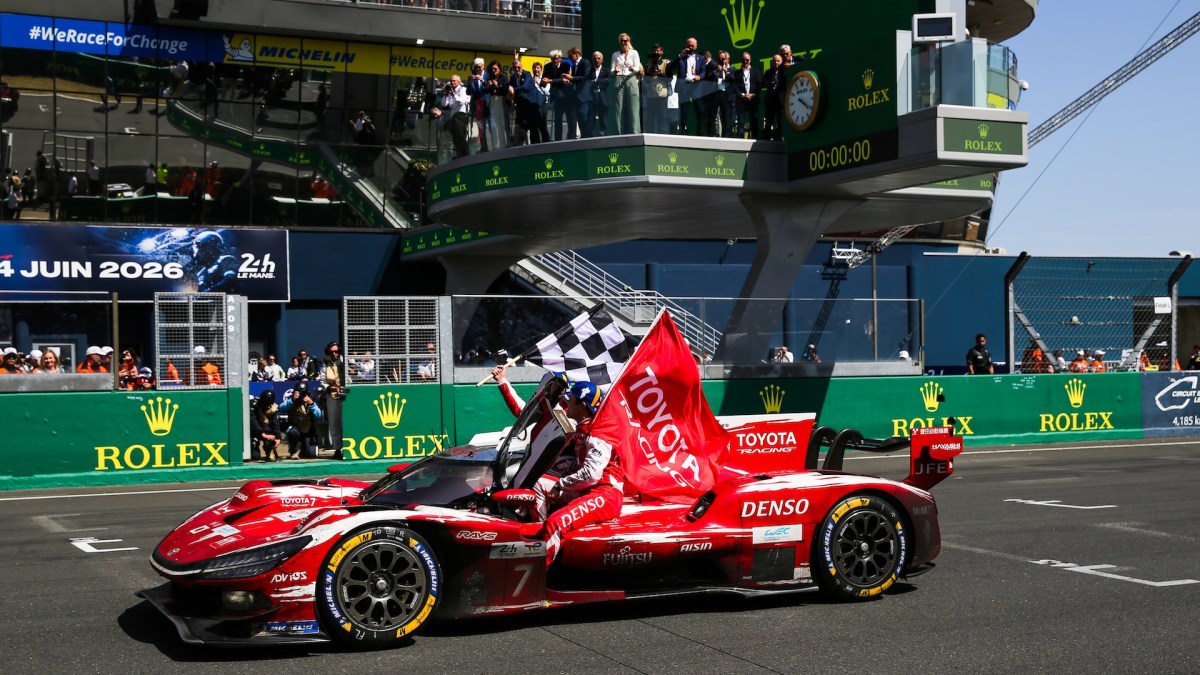
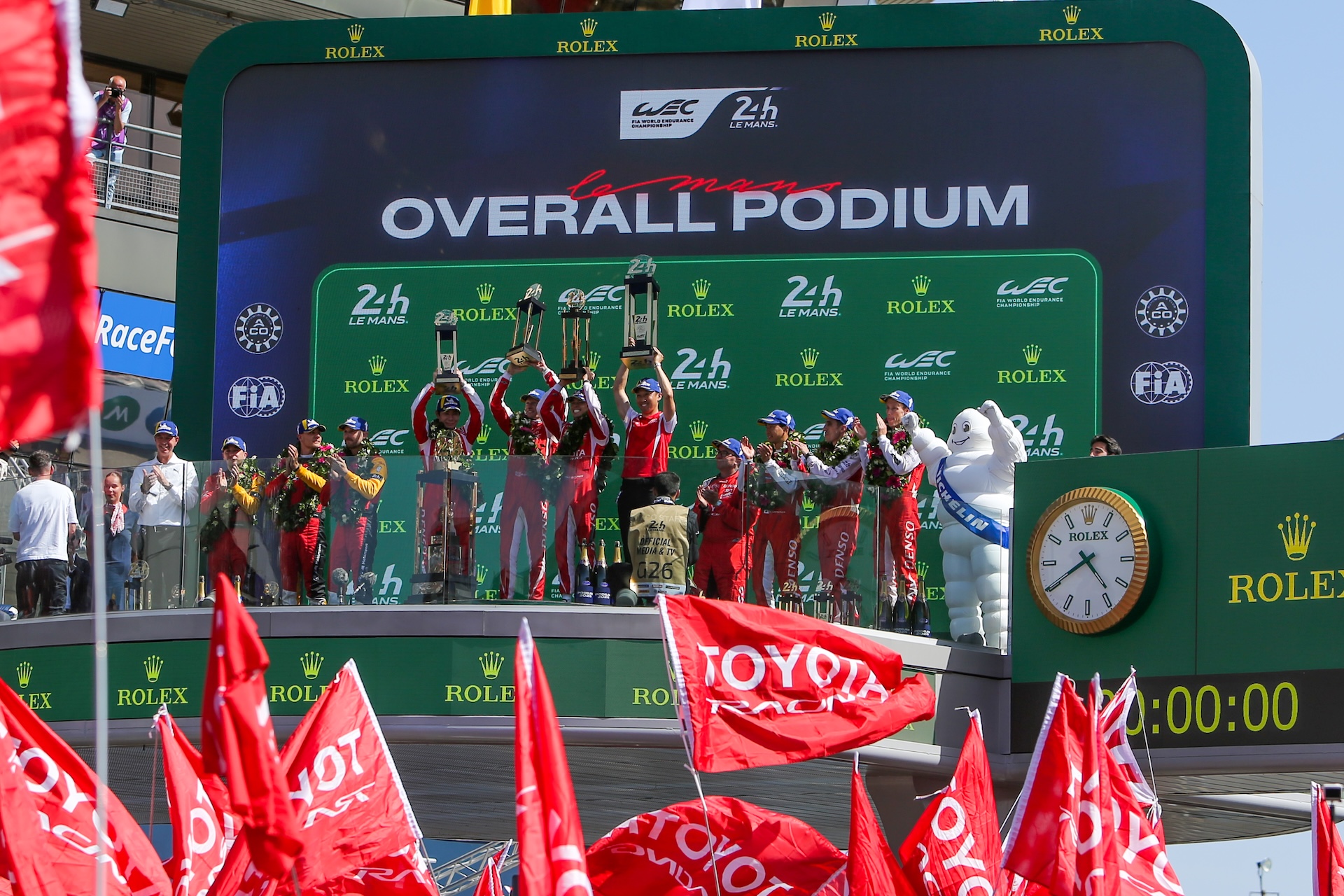
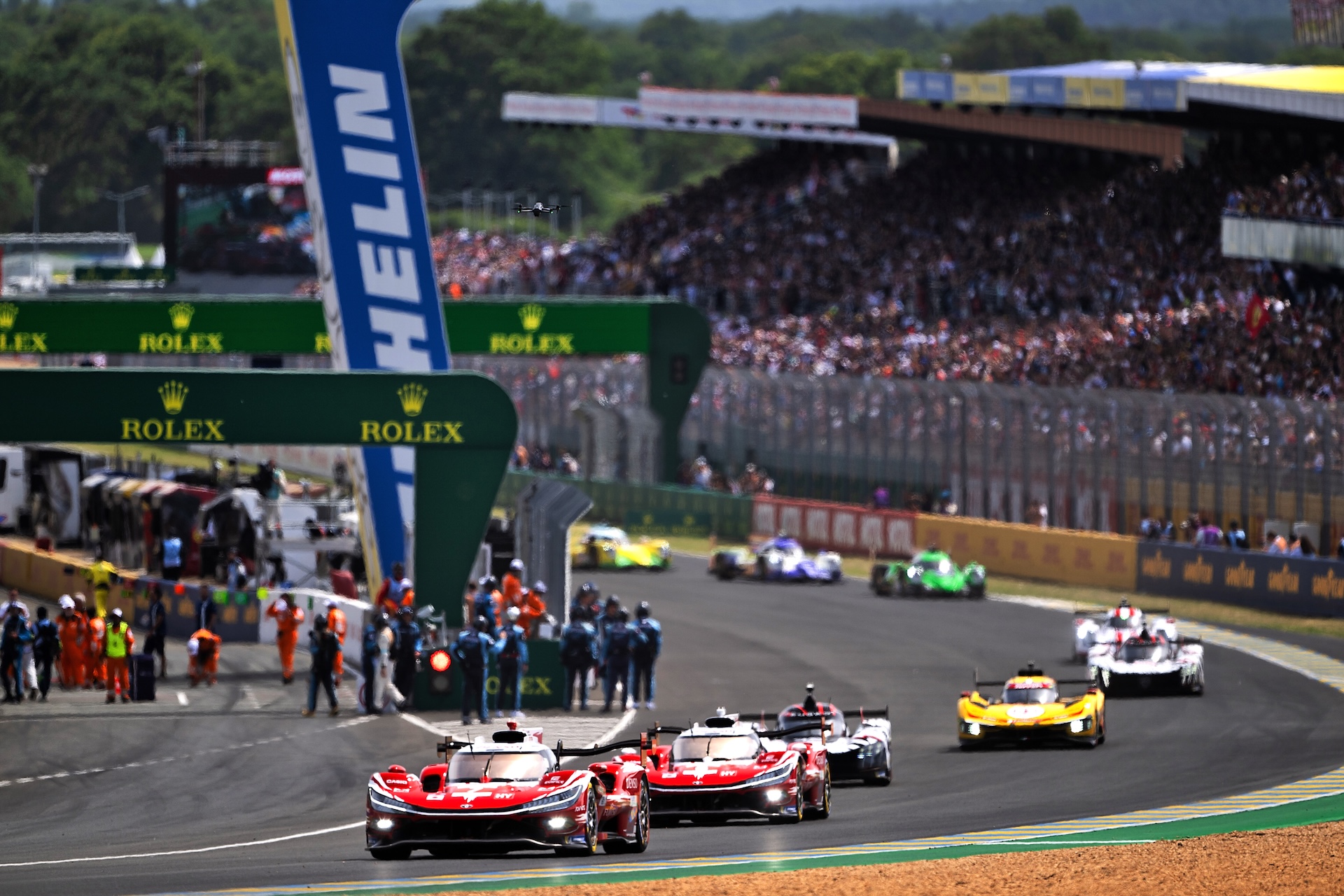
Toyota’s return to the top step at the 24 Hours of Le Mans was anything but straightforward. The No. 7 Toyota prototype driven by Kamui Kobayashi, Mike Conway, and Nyck de Vries won the race by just 10.6 seconds over the No. 20 BMW M Hybrid V8, with the No. 8 Toyota completing the podium. The margin was the fourth-shortest in the event’s history, a reminder that modern endurance racing can compress an entire day of competition into a final gap measured in moments.
The result ended Toyota’s Le Mans drought since 2022 and broke Ferrari’s run of victories over the previous three editions. Just as importantly, it reinforced a familiar truth about top-level endurance racing: outright pace matters, but recovery from setbacks matters just as much. Toyota did not win with a flawless week or a trouble-free car. It won by surviving the kind of accumulating problems that often define Le Mans more than raw speed does.
The winning car was not the obvious favorite
The No. 7 entry did not begin from a position of control. It started the race in 14th place, while Toyota’s sister car was more strongly favored. During the event, the eventual winner dealt with tire issues, a puncture, and badly timed yellow flags and safety cars. Those interruptions would have been difficult enough in isolation. What raised the pressure further was that rival manufacturers were not merely waiting for Toyota to stumble. BMW and Cadillac showed strong pace, keeping the contest open deep into the race.
Then came the more technical problem. Toyota technical director David Floury said the car was fighting an intermittent sensor issue that repeatedly pushed it into a kind of “safe mode.” According to Floury, that cost the leading car up to 8 km/h compared with its sister machine. At Le Mans, where top speed and long-run efficiency matter on every lap, that kind of deficit compounds quickly.
The team’s response was not dramatic in the cinematic sense. It was procedural, disciplined, and exactly the sort of thing endurance racing rewards. The sensor had not failed completely, but it was drifting and noisy enough to interfere with measurements. At one stage the team had to go to a default mode, and even after the sensor returned, repeated triggers forced a power reduction. In a sprint race, that could be terminal. Over 24 hours, it became another variable to manage.
Le Mans still punishes the smallest instability
What makes this win notable is not just that Toyota overcame problems. It is that the problems were so ordinary by Le Mans standards and still nearly decisive. A puncture, a timing disadvantage under neutralization, and an unreliable sensor do not sound spectacular on paper. At Circuit de la Sarthe, each can distort strategy, fuel planning, overtaking windows, and driver rhythm for hours.
Kobayashi’s comments after the race reflected that strain. He described a “very challenging week” and a race that was not smooth enough, citing the puncture and sensor issue as central difficulties. That account matters because it pushes back against any easy reading of the result as a comfortable comeback by an established powerhouse. Toyota’s operational strength was real, but the margin of victory shows how fragile that strength looked under pressure.
The result also carried personal significance for the drivers. It marked a second Le Mans overall win for Kobayashi and Conway, while de Vries became only the third Dutchman to win the race outright. Those milestones add to the story, but the broader takeaway sits with the team performance rather than individual legacy.
A competitive field is improving the race
Le Mans is at its best when the win feels earned against multiple credible threats, and this edition appears to have delivered exactly that. Ferrari entered with recent history on its side, BMW pushed the winner to the line, Cadillac showed pace, and Toyota still found a way through. A 10.6-second gap after 24 hours is not just a statistical curiosity. It is evidence that the top class remains close enough for reliability, driver execution, and strategic flexibility to matter until the end.
That is healthy for the championship and for the race’s identity. Endurance competition can sometimes drift toward engineering inevitability, where the fastest and cleanest program simply separates. Here, the winner had to improvise and endure, and the final standings remained uncertain long enough to make every small error meaningful.
Toyota’s victory restores more than a number
Toyota’s win is officially its first at Le Mans in four years, but the deeper significance is qualitative. It restores the image of Toyota not simply as a team that dominated one era, but as one that can still outlast a crowded, technically varied field when the race gets difficult. That is a different kind of validation.
The company’s previous five-year reign at Le Mans had already cemented its place in the modern race’s history. This victory says something slightly different. It says Toyota can still win when it is not the cleanest, quickest, or most comfortable operation on the day. It can still absorb problems that would break other efforts.
That is why this result resonates beyond the trophy. Endurance racing’s central ethic has always been survival with purpose: solve the next issue, preserve the car, and stay close enough for the final hour to matter. Toyota’s No. 7 did exactly that. In the end, that was enough to reclaim Le Mans by one of the tightest margins the race has ever seen.
This article is based on reporting by The Drive. Read the original article.
Originally published on thedrive.com