The Ekpyrotic Universe: A Promising Idea Under Fire
The ekpyrotic universe model offers a compelling alternative to the Big Bang: a cosmos that cycles eternally, avoiding singularities and inflation, with entropy resetting each cycle. It's a beautiful idea, but beauty does not guarantee truth. As we delve into the mounting evidence against it, we find a theory struggling to survive against observational data.
The Singularity Problem Returns
One of the main selling points of the ekpyrotic model was its promise to eliminate the initial singularity. In this scenario, our universe arises from the collision of two higher-dimensional branes, avoiding the infinite density of the Big Bang. However, the mathematics describing the exact moment of collision becomes extremely problematic. The theory relies on the hope that string theory's exotic machinery will smooth over the infinities, but this is a promissory note, not a proof. Until that math is worked out, the singularity remains a significant issue.
Dark Energy: An Uncooperative Assumption
The cyclic mechanism depends on dark energy eventually turning off, allowing the branes to stop drifting apart and fall back together for the next cycle. Yet, all observational evidence points to dark energy being a constant, steady feature of the cosmos. There is no indication that it will ever fade. The ekpyrotic theory requires dark energy to behave in a way that the universe has not shown any sign of doing, making this a critical flaw.
The Proliferation of Branes
String theory naturally allows for many branes, and once you introduce a few, it becomes difficult to prevent more from appearing. Many versions of the ekpyrotic scenario end up with stacks of branes, dragging the theory into the same multiverse complications that plagued inflation. The model was supposed to avoid such complexities, but instead, it falls into the same trap.
The Killer Blow: Observational Data from Planck and WMAP
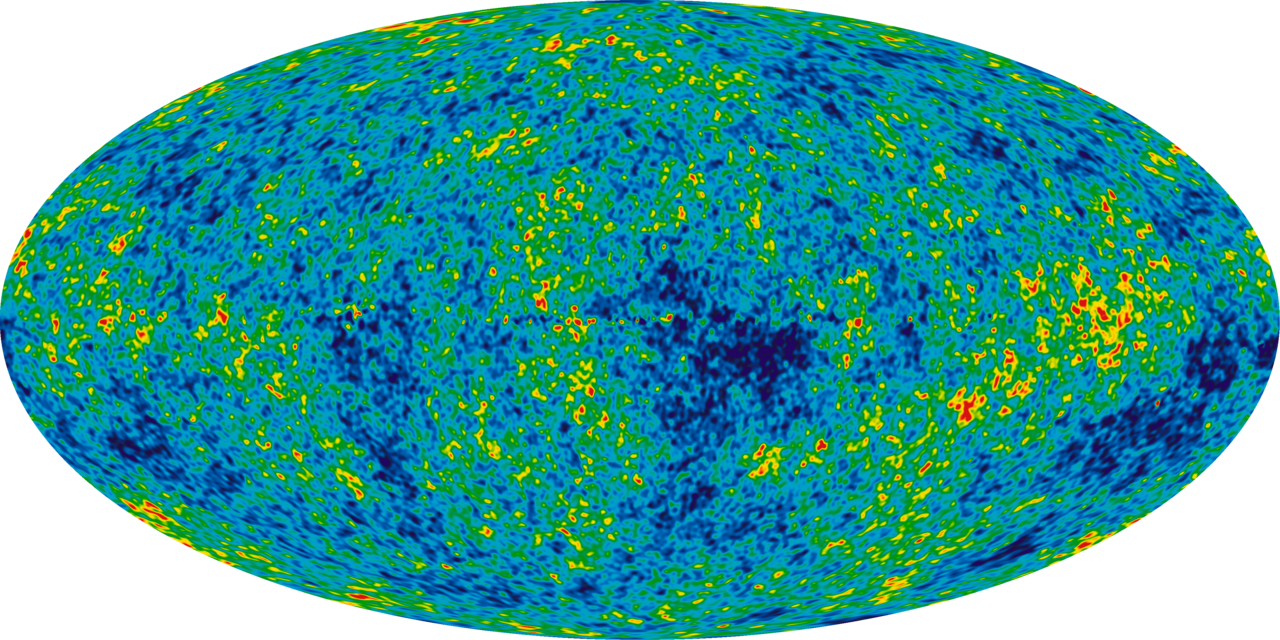
Despite these theoretical issues, the most damning evidence comes from observations. Inflation made specific predictions about the seeds of cosmic structure, which were confirmed by the Planck and WMAP missions. The cosmic microwave background (CMB) fluctuations match inflation's predictions with remarkable precision. The ekpyrotic model, however, predicts a different pattern of fluctuations—one that does not match the data. The CMB's detailed statistics are a death knell for the ekpyrotic universe. No amount of theoretical hand-waving can change what we observe.
Why Good Ideas Sometimes Fail
The ekpyrotic model is a testament to human creativity and the desire to understand the cosmos. It attempted to solve problems that inflation left open, such as the initial singularity and the nature of dark energy. But science is ultimately about matching theory to reality. When a beautiful idea meets bad data, the data wins. The universe does not care about our aesthetic preferences.
Conclusion: The Verdict from the Cosmos
While the ekpyrotic universe remains an intriguing concept, it fails to survive contact with observations. The singularity issue, the uncooperative behavior of dark energy, the proliferation of branes, and most importantly, the mismatch with CMB data, all point to its demise. The standard inflationary model, for all its own problems, has the advantage of being supported by evidence. As we continue to explore the cosmos, we must be willing to let go of even our most beautiful ideas when the data says otherwise.
This article is based on reporting by Universe Today. Read the original article.
Originally published on universetoday.com