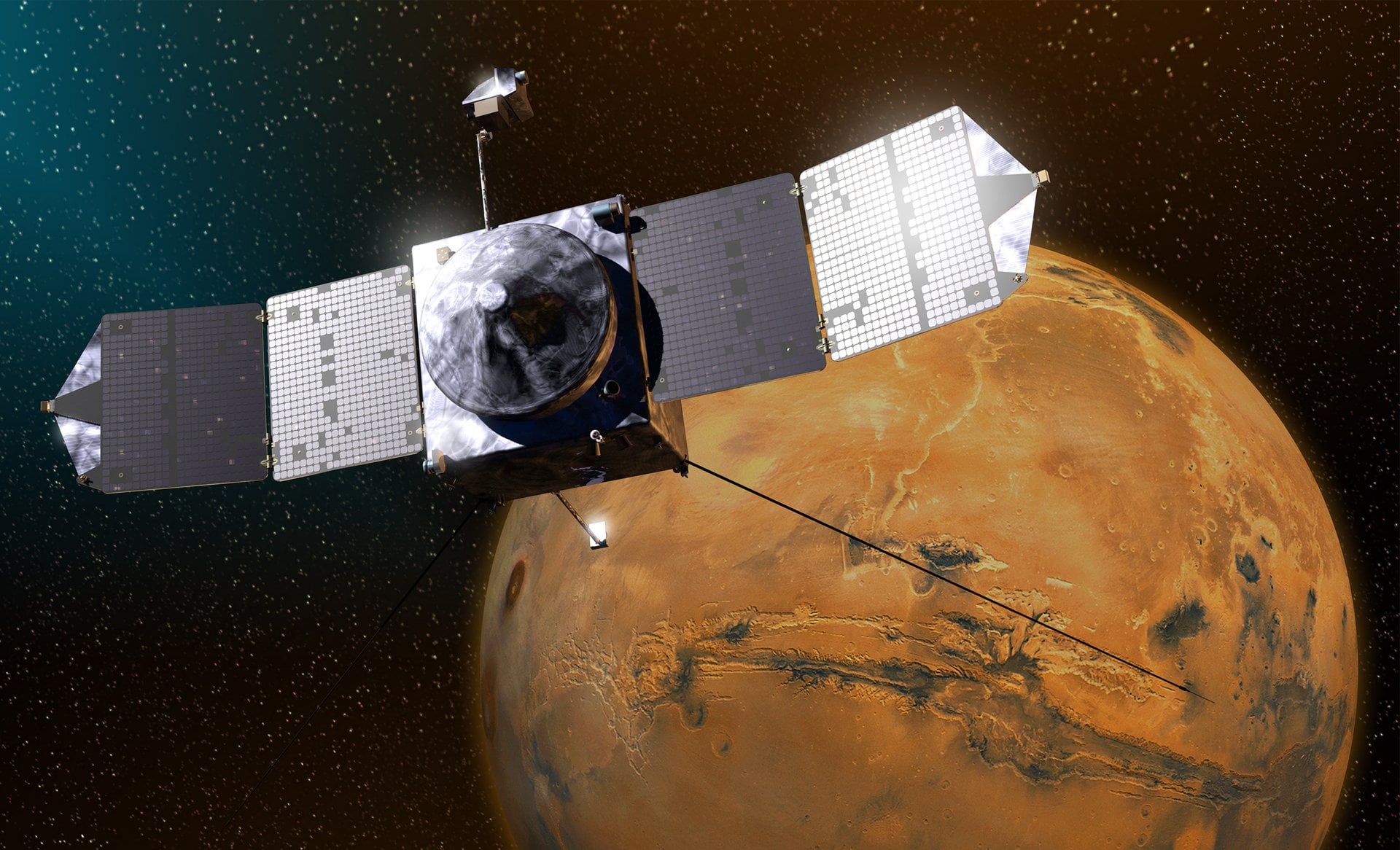
مهمة طويلة الأمد على المريخ تصل إلى نهايتها
أنهت ناسا رسميا مهمة MAVEN بعد أن قررت أن المركبة لم يعد بالإمكان استعادتها. ويطوي هذا القرار صفحة أحد أكثر برامج المريخ إنتاجا علميا لدى الوكالة، منهيا أكثر من 11 عاما في المدار ومهمة تجاوزت خطتها الأصلية البالغة عاما واحدا بنحو عقد كامل.
MAVEN، وهو اختصار لـ Mars Atmosphere and Volatile Evolution، كانت أول مهمة مخصصة على وجه التحديد لدراسة الغلاف الجوي للمريخ وكيف تغيّر مع مرور الوقت. وأعلنت ناسا نهاية المهمة في اتصال هاتفي عام في 3 يونيو، وفقا لموقع Universe Today، بعد فشل جهود استعادة الاتصالات التي استمرت أشهرا.
بدأت المشكلة الأخيرة للمركبة في 6 ديسمبر 2025، عندما مرت MAVEN خلف المريخ ثم فشلت في إعادة الاتصال بالأرض. ولم ترصد شبكة الفضاء العميق التابعة لناسا أي إشارة عائدة. وأظهرت الكمية القليلة من القياسات التي وصلت أن المركبة دخلت في وضع الأمان وكانت تدور بمعدل مرتفع على نحو غير معتاد. وأشارت هذه المجموعة من المعطيات إلى اضطراب مداري شديد بما يكفي لاستنزاف بطاريات المركبة وقطع الطاقة عن نظام الاتصالات.
لماذا أصبح الاسترداد مستحيلا
شكّلت ناسا في فبراير لجنة لمراجعة الشذوذات لتقييم حالة المركبة والنظر في خيارات الاستعادة. وخلص التقرير، كما لخص، إلى أن MAVEN أصبحت في حالة غير قابلة للاسترداد ولم يعد بإمكانها تنفيذ العمليات العلمية.
ولا يزال السبب الجذري النهائي غير محدد حتى الآن. وتتوقع ناسا أن تصدر لجنة المراجعة تقريرها الكامل في وقت لاحق من عام 2026. وهذا يترك أحد الأسئلة الأخيرة للمهمة بلا جواب: ما التسلسل الدقيق للأحداث الذي دفع مدارا مخضرما من التشغيل الطبيعي إلى وضع فشل نهائي.
ومع ذلك، فإن الصورة العامة واضحة. فبمجرد فقدان الاتصالات وتدهور ظروف الطاقة على متن المركبة، دخلت المهمة في حالة لم يتمكن المهندسون من إعادتها منها. وفي المركبات الفضائية العميقة، وخاصة تلك التي تعمل لسنوات بعد عمرها التصميمي، يمكن أن تكون نوافذ الاستعادة ضيقة وهوامش العتاد محدودة.
الإرث العلمي لمهمة MAVEN
تكمن أهمية MAVEN أقل في كيفية انتهائها وأكثر في ما أنجزته. فقد أُطلقت المركبة في نوفمبر 2013، وصُممت للتحقيق في الغلاف الجوي العلوي للمريخ وتفاعله مع الشمس. وكان هذا التركيز يواجه أحد الألغاز المركزية في علم المريخ: كيف ومتى فقد الكوكب معظم غلافه الجوي، ومعه كثيرا من مياهه السطحية.
ساعدت المهمة العلماء على فهم أفضل للعلاقة بين النشاط الشمسي والهروب الجوي. ووفقا للتقرير، أظهرت MAVEN كيف تتفاعل الأغلفة الجوية الكوكبية مع الرياح الشمسية، وكيف تساعد الجسيمات المشحونة القادمة من الشمس على تجريد الغازات بمرور الوقت. وكانت هذه النتائج أساسية في تفسير سبب كون المريخ، البارد والرقيق الهواء حاليا، قد بدا في الماضي أكثر ملاءمة لسطحه.
وتجاوزت القيمة العلمية الأوسع المريخ وحده. ففقدان الغلاف الجوي يرتبط ارتباطا وثيقا بصلاحية الكواكب للسكن. كما أن فهم سبب فقدان المريخ للشروط اللازمة لوجود مياه سطحية مستقرة يساعد العلماء أيضا على طرح سؤال مقارن أكبر: لماذا بقيت الأرض صالحة للسكن بينما سلك المريخ والزهرة مسارات تطورية مختلفة تماما.
وهذا يجعل MAVEN جزءا من جهد بحثي أوسع بكثير في علوم الكواكب، يربط عوالمنا المجاورة بدراسات الكواكب الخارجية وبالبحث عن بيئات صالحة للسكن في أماكن أخرى.
مهمة تفوقت على خطتها
كانت ناسا قد خصصت لمهمة MAVEN في الأصل مهمة رئيسية مدتها عام واحد. لكن المركبة قدمت أكثر من عقد إضافي من العلم. وتمثل هذه الإطالة أهمية عملية، لأن المدارات المريخية طويلة الأمد لا تصبح منصات لقياساتها الخاصة فحسب، بل أيضا للاستمرارية. فهي تراقب التغيرات الموسمية، وتأثيرات الدورة الشمسية، والسلوك الجوي طويل الأمد الذي لا تستطيع المهمات الأقصر التقاطه بالكامل.
وعملت المركبة أيضا خلال فترة أصبحت فيها علوم المريخ أكثر ترابطا. فقد استكشفت المركبات الهبوطية والعربات الجوالة السطح، بينما رسمت المدارات معالم المعادن والمناخ وبنية الغلاف الجوي. وكان منظور MAVEN الجوي يشغل مكانة مميزة داخل تلك المنظومة. فهي لم تضف مجرد مجموعة أخرى من صور المريخ، بل قدمت إطارا لفهم كيفية تطور بيئة الكوكب على مدى مليارات السنين.
وتساعد هذه السجلات في تفسير سبب اختيار ناسا عقد اتصال هاتفي عام في نهاية المهمة. لم تكن MAVEN مركبة دعم هادئة تخبو بعد خدمة روتينية، بل كانت مهمة شكلت فصلا محوريا من أبحاث المريخ الحديثة.
ما الذي تتركه MAVEN وراءها
لا تعني نهاية MAVEN انتهاء دراسة الهروب الجوي على المريخ، لكنها تزيل مراقبا متخصصا من المدار. وستبني المهمات المستقبلية على نتائجها، كما قد يفيد تقرير الشذوذ النهائي أيضا في عمليات المركبات الفضائية وإدارة الأعطال في المهمات الكوكبية طويلة الأمد.
أما إرثها الأوسع فهو مفاهيمي. فقبل MAVEN، كان فقدان الغلاف الجوي للمريخ مفهوما في خطوطه العامة فقط. وبعد MAVEN، امتلك الباحثون أدلة أقوى بكثير على الآليات المعنية، ورؤية أوضح لكيفية قدرة تأثير الشمس على تغيير مصير كوكب عبر الزمن الجيولوجي.
وهذا إنجاز كبير لأي مركبة فضائية، وخاصة واحدة تجاوزت مهمتها الأصلية بعشر سنوات. وفي النهاية، أجابت MAVEN عن بعض أكبر الأسئلة حول المريخ عبر قضائها أكثر من عقد تسأل الغلاف الجوي كيف اختفى.
ويشير صمتها الآن إلى نهاية حقبة، لكنه لا يعني نهاية العلم الذي أتاحته. وبالنسبة لعلماء المريخ، قد تكون آخر رسالة من MAVEN قد ضاعت، لكن أهم رسائل المهمة من المرجح أن تبقى متجذرة في علوم الكواكب لسنوات قادمة.
يعتمد هذا المقال على تقرير من Universe Today. اقرأ المقال الأصلي.
Originally published on universetoday.com