Discovery at the Neolithic Site of Vráble
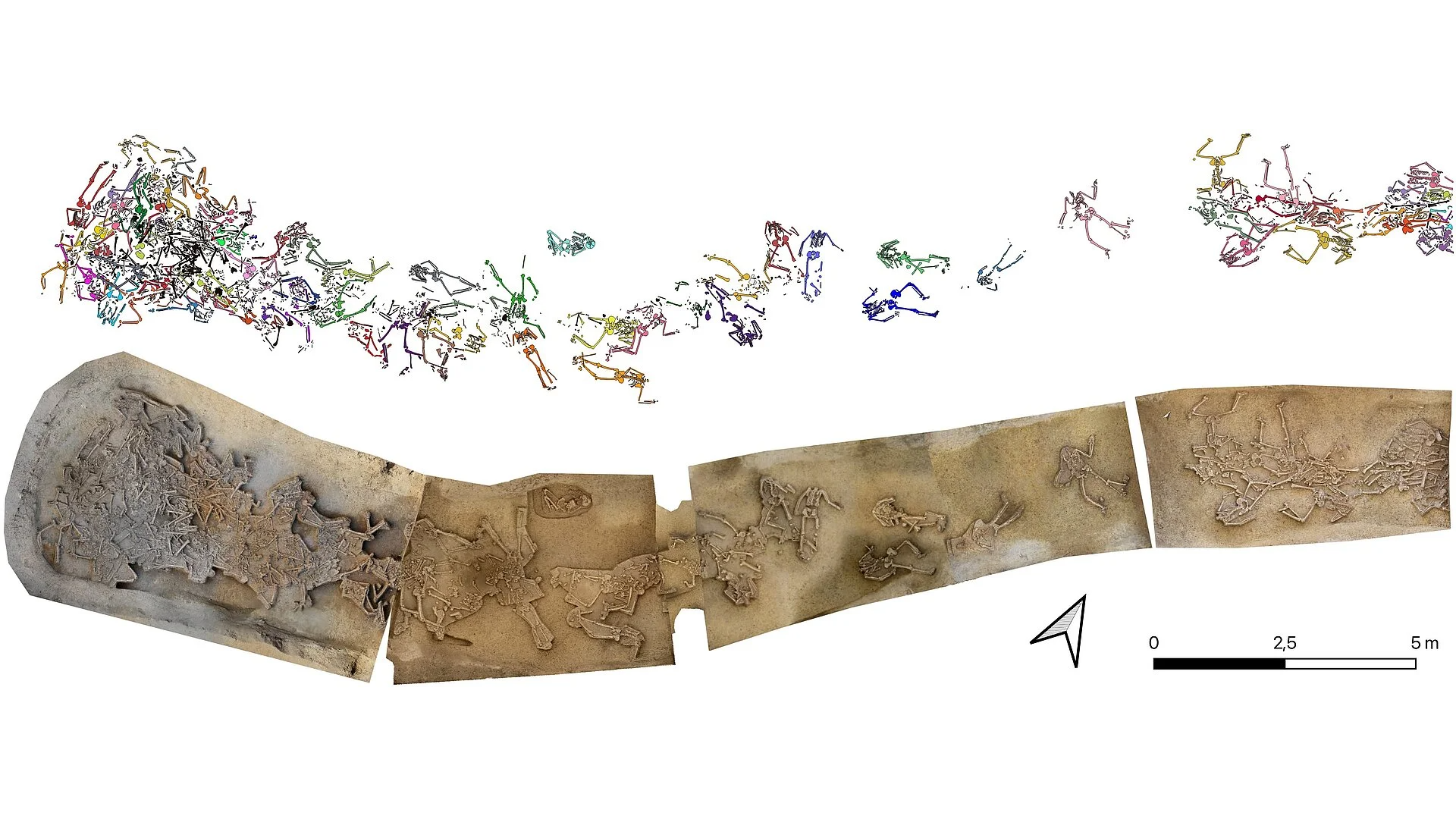
Archaeologists have uncovered a mass burial of headless human skeletons in a ditch at the entrance to a Stone Age neighborhood in Vráble, Slovakia. The site, dating back more than 7,000 years, has left researchers puzzled as to why the heads were removed. The discovery was made during excavations of a double ditch surrounding one of three neighborhoods at the settlement, which was occupied between 5250 and 4950 B.C. by the Linear Pottery culture (LBK), known for its distinctive pottery decorated with parallel lines.
Details of the Excavation
The ditch, approximately 0.8 miles (1.3 kilometers) long, yielded four pairs of headless skeletons and a mass burial containing at least 77 headless individuals. Only one skeleton, belonging to a child, retained its skull. The remains show cut marks on the upper neck vertebrae, indicating that the heads were removed with sharp tools. Notably, the lower jaws were also missing, suggesting that the skulls were deliberately taken.

Interpretation: Ritual Rather Than Violence
According to study co-author Katharina Fuchs, a biological anthropologist at Kiel University in Germany, the evidence points to skillful removal of skulls after death rather than violent decapitation. The researchers believe this was part of a complex burial ritual, not a mass killing. The careful removal of heads and the placement of bodies in the ditch suggest a structured funerary practice, though the exact meaning remains unknown.
Context of the Linear Pottery Culture
The LBK culture is known for its longhouses and early farming communities across Central Europe. The Vráble site, first investigated in 2012, includes over 300 houses grouped into three neighborhoods. The double ditch surrounding one neighborhood may have served a defensive or symbolic purpose. The discovery of headless skeletons adds a new layer of mystery to our understanding of Neolithic rituals.

Ongoing Research and Questions
Excavations at the ditch are ongoing, and further analysis may shed light on the identity of the individuals and the purpose of the head removal. The findings were published in the Proceedings of the Prehistoric Society on June 2, 2026. Archaeologists hope that future studies, including DNA analysis and examination of the cut marks, will reveal whether the heads were kept as trophies, used in ancestor worship, or disposed of elsewhere.
Implications for Neolithic Archaeology
This discovery challenges assumptions about Neolithic burial practices and highlights the diversity of funerary customs in prehistoric Europe. The absence of heads in a mass grave is unusual and suggests that the head held special significance. The Vráble site continues to provide valuable insights into the social and ritual life of early farming communities.
This article is based on reporting by Live Science. Read the original article.

Originally published on livescience.com