NASA Seeks Contractor to Evaluate Classified Air Force 737
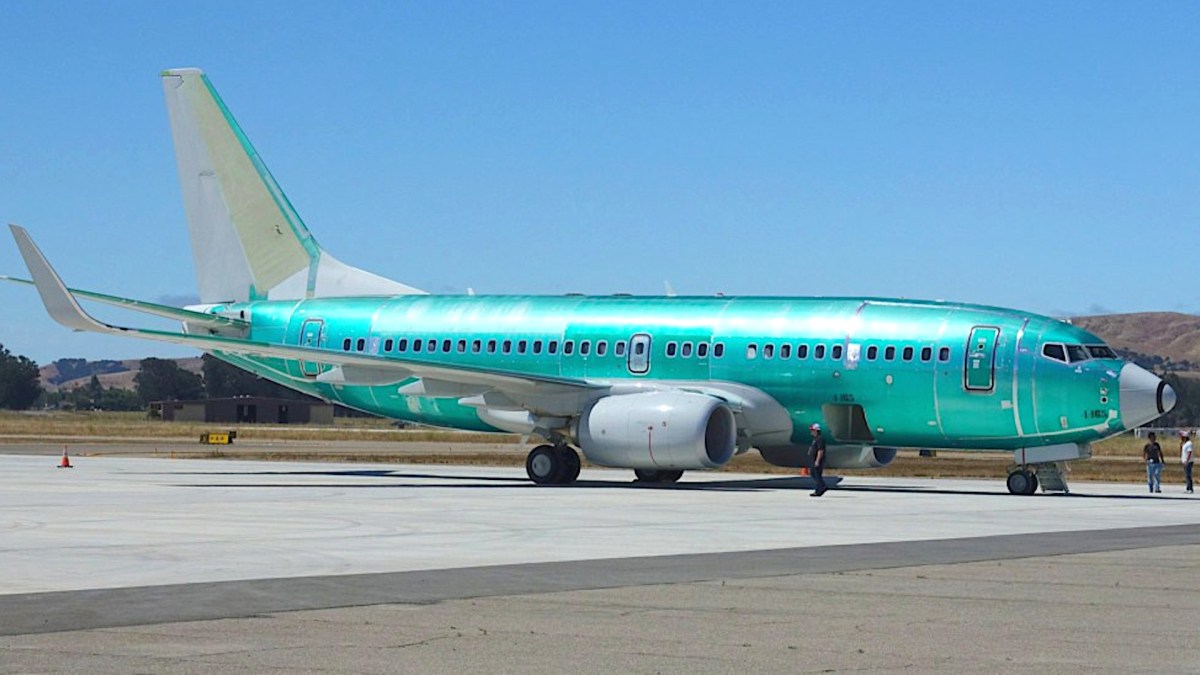
NASA is moving forward with plans to hire a specialized contractor to determine whether a Boeing 737-73W currently operated by the U.S. Air Force under a classified program can be converted into a reduced-gravity testbed aircraft. The Armstrong Flight Research Center issued a contracting notice on June 10, 2026, justifying a sole-source contract with Denmar Technical Services, Inc. to conduct a feasibility assessment and potential modification of the aircraft.
The aircraft in question is not the well-known NT-43A (callsign RAT55), a heavily modified 737-200 used for airborne signature measurement, but rather a newer 737-73W acquired by the Air Force in 2020. This particular plane has been shrouded in secrecy, with its purpose remaining a subject of speculation. The notice explicitly states that the aircraft is part of a “classified military program.”
What the Feasibility Assessment Entails
According to the contracting notice, Denmar Technical Services is tasked with several key objectives: determine the 737-73W’s suitability for reduced-gravity operations, modify the cabin if required to support such missions, perform overdue maintenance and inspections, complete airworthiness restoration tasks, and paint the aircraft with NASA identifiers. The assessment will be critical in deciding whether the aircraft can join NASA’s fleet of reduced-gravity testbeds, commonly known as “Vomit Comets” due to the parabolic flight maneuvers that induce brief periods of weightlessness and the associated motion sickness.
Background on Reduced-Gravity Aircraft
NASA has long used modified aircraft to simulate microgravity environments for training, research, and equipment testing. The most famous is the KC-135A “Vomit Comet,” which was retired in 2004 and replaced by a C-9B Skytrain II. More recently, NASA has operated a modified Boeing 727-200F. The agency’s current reduced-gravity aircraft is a McDonnell Douglas DC-9-30, but it is aging and may need replacement. The Air Force’s 737-73W could offer a more modern platform with better performance and payload capacity.
Parabolic flights typically involve flying a series of arcs that produce 20-30 seconds of near-zero gravity, followed by periods of hypergravity up to 1.8 G. These maneuvers are physically demanding on both crew and equipment, necessitating robust airframe modifications and safety systems.
The Secretive Air Force 737-73W
The specific 737-73W acquired by the Air Force in 2020 has been a topic of intense interest among aviation enthusiasts and analysts. Its registration and details remain classified, but it is believed to be equipped with advanced sensors or communications systems. The aircraft’s potential conversion to a NASA testbed would mark a significant shift in its mission, from classified operations to public scientific research.
It is important to distinguish this aircraft from the NT-43A, which is based on a much older 200-series airframe and has been used for radar cross-section measurements. The NT-43A, also known as RAT55, has been described as the world’s most secretive 737 and is not part of the current NASA assessment.
Implications for NASA’s Reduced-Gravity Program
If the feasibility assessment proves positive, NASA could gain a capable and relatively modern aircraft for reduced-gravity research. The 737-73W offers a larger cabin and longer range than the current DC-9, potentially allowing for more experiments per flight and longer-duration missions. The aircraft’s existing military-grade systems could also provide enhanced safety and reliability.
However, the classified nature of the aircraft’s current role may pose challenges for integration into NASA’s unclassified research environment. The contracting notice does not detail how sensitive equipment or systems would be handled, but it is likely that any modifications would remove or isolate classified components.
Next Steps and Timeline
The sole-source contract to Denmar Technical Services indicates that NASA believes this company is uniquely qualified to perform the work, possibly due to prior experience with military aircraft modifications. The assessment phase is expected to take several months, after which NASA will decide whether to proceed with full modification and operational use.
No timeline has been provided for the first reduced-gravity flights, but if the aircraft is deemed suitable, it could enter service within a year or two. The addition of a 737-73W would ensure NASA’s continued ability to conduct microgravity research without relying on aging platforms or expensive space-based alternatives.
Conclusion
NASA’s interest in a classified Air Force 737-73W for reduced-gravity operations marks an intriguing development in the agency’s quest for a new “Vomit Comet.” While many details remain under wraps, the feasibility assessment represents a critical first step. If successful, this secretive aircraft could soon be flying parabolic arcs over the United States, contributing to scientific discovery and astronaut training.
This article is based on reporting by twz.com. Read the original article.
Originally published on twz.com