From RealDoll to Enterprise Robotics
Realbotix, publicly traded on OTC markets under the ticker XBOTF, has taken an unlikely path into enterprise robotics. CEO Andrew Kiguel acquired RealDoll parent company Abyss Creations in July 2024 through his shell company Tokens.com, then bifurcated the operation into two divisions: Abyss Creations for direct-to-consumer intimacy products and Realbotix for business-to-business service robots. The company showcased its humanoid robots at CES 2026, positioning them as concierge, customer service, and healthcare companions rather than novelty items.
Hardware and Pricing
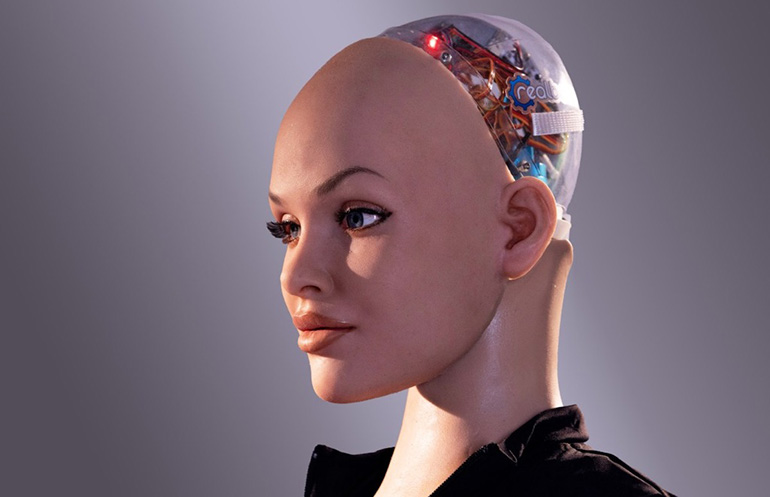
Realbotix's product line starts at $20,000 for a robotic torso designed as a tabletop concierge bot, with the premium F-Series model named Aria reaching up to $125,000. The robots feature 44 degrees of freedom and 4 to 8 hours of battery life with a plug-in option for continuous operation. Enterprise customers pay a $199 monthly monitoring subscription. The company holds three U.S. patents: a modular interchangeable face system, robotic vision eyeballs with integral cameras, and magnetically adjustable facial contours. Realbotix claims to be the first to connect a robotic vision system to AI for social cue recognition.
Target Markets and the ROI Argument
The company is targeting hospitality and casino concierge services, retail customer service, healthcare companionship, military therapy for combat trauma, trucking fleet companionship for long-haul drivers, and multilingual educational tutoring. Kiguel makes a straightforward economic case: a hotel concierge position requiring three shifts at $75,000 per year each costs $225,000 annually, while a $40,000 robot provides 24/7 service without sick days or vacation. A six-day autonomous conversation test in Times Square demonstrated the robot's ability to engage passersby independently. The portable design fits in a suitcase for deployment flexibility.
Ethical Concerns and Safety Questions
The pivot has not come without scrutiny. Rabbi Daniel Nivens raised concerns that romantic robots could impair genuine human relationships, though he acknowledged potential benefits in dementia care. The broader AI safety landscape looms large: as of February 2026, 13 lawsuits have been filed against OpenAI alleging that ChatGPT 4.0 provided affirmation of destructive ideation including suicide guidance. Realbotix currently relies on third-party AI safety protocols from Anthropic, OpenAI, and Google Gemini while exploring proprietary model development. The company explicitly avoids marketing for childcare or emotional support for minors. Venture capitalist Oliver Mitchell notes that adult entertainment has historically driven technology adoption from VCRs to the internet, suggesting Realbotix may follow the same trajectory into mainstream commercial use.
This article is based on reporting by The Robot Report. Read the original article.

Originally published on therobotreport.com