From Research to Revenue
British autonomous vehicle technology company Oxa has closed its Series D funding round, securing capital to accelerate the commercial deployment of its autonomous driving platform for industrial mobility applications. The company, which emerged from the University of Oxford's robotics program, is focusing on controlled industrial environments rather than the complex open-road scenarios that have challenged many autonomous vehicle developers.
Oxa's approach represents a pragmatic pivot that an increasing number of autonomous vehicle companies are making. While the dream of fully autonomous passenger cars on public roads has proven more technically challenging and commercially distant than early projections suggested, autonomous vehicles operating in structured industrial environments face a more tractable set of problems and a clearer path to commercial viability.
Industrial Mobility Focus
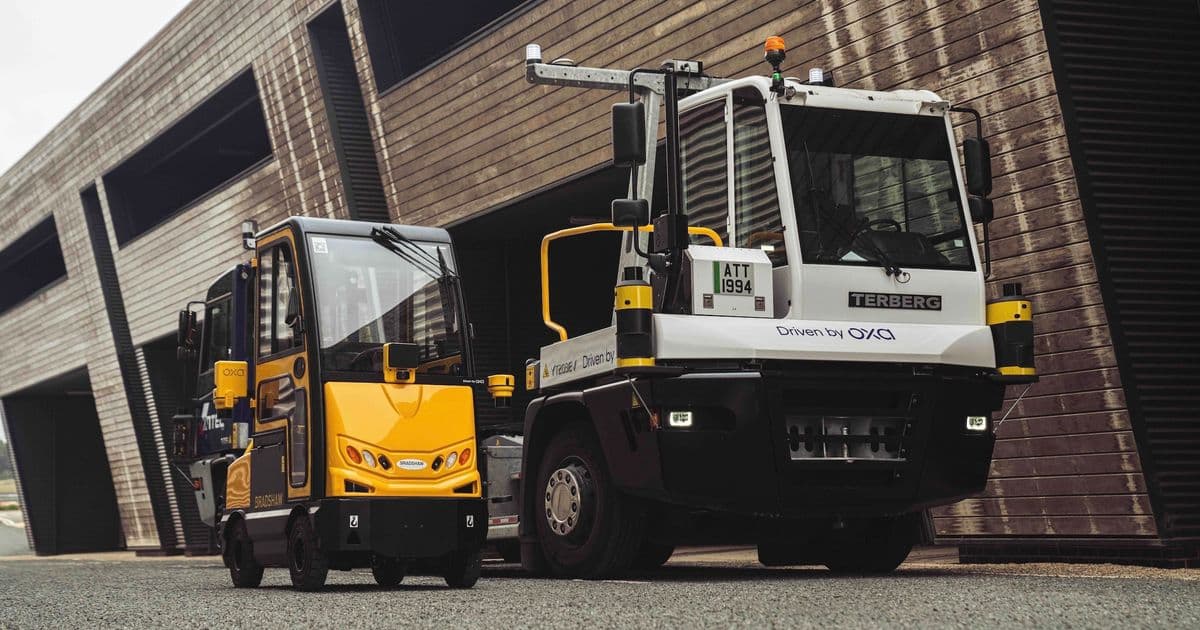
The company's autonomous driving platform is designed for deployment in logistics hubs, port facilities, mining operations, and other industrial settings where vehicles operate within defined boundaries and follow predictable routes. These environments offer several advantages over public roads: they can be mapped in detail and updated regularly, traffic patterns are more predictable, pedestrian interactions are limited and can be managed through operational procedures, and the economic case for automation is strengthened by 24/7 operations and labor shortages.
Industrial autonomous vehicles can operate at lower speeds than highway vehicles, reducing the kinetic energy involved in any potential incident and simplifying the perception and decision-making challenges. The vehicles also operate in commercial contexts where the customer, typically a large logistics or industrial operator, has both the technical sophistication to manage autonomous systems and the economic motivation to adopt them.
Oxa's platform is designed to be hardware-agnostic, meaning it can be integrated with various vehicle types from multiple manufacturers. This approach allows the company to serve customers who have existing vehicle fleets and want to add autonomy as an upgrade rather than purchasing entirely new vehicles.
Market Opportunity
The industrial autonomous vehicle market has been growing steadily as labor shortages in logistics, mining, and port operations create economic pressure to automate repetitive driving tasks. The global logistics industry alone moves trillions of dollars in goods annually, and the cost of human drivers represents a significant portion of operating expenses.
In mining operations, autonomous haulage trucks have been deployed commercially for over a decade by companies like Caterpillar and Komatsu, demonstrating both the technical feasibility and economic benefits of industrial vehicle automation. Oxa is extending this proven concept to a broader range of industrial applications and vehicle types.
Port operations represent another promising market. Container ports are among the most complex logistics environments in the world, with vast quantities of cargo moving between ships, storage yards, and land transportation. Autonomous terminal tractors and yard trucks can operate around the clock without shift changes, improving throughput and reducing the idle time that represents lost productivity.
Technology Platform
Oxa's technology stack includes perception systems that use lidar, cameras, and radar to build real-time models of the vehicle's environment, planning algorithms that generate safe trajectories, and a cloud-based fleet management system that allows remote monitoring and oversight of multiple autonomous vehicles simultaneously.
The company emphasizes its safety case methodology, which involves rigorous analysis of potential failure modes and the implementation of redundant systems to ensure safe operation. In industrial environments, the safety case can be strengthened through environmental modifications such as dedicated lanes, physical barriers, and electronic geofencing that constrain the autonomous vehicles to known safe operating areas.
Competitive Landscape
Oxa competes in a growing market segment that includes several well-funded companies targeting similar industrial applications. Companies like Einride in Sweden, Outrider in the United States, and various Chinese autonomous trucking startups are all pursuing variations on the industrial autonomy theme. The competitive dynamics favor companies that can demonstrate reliable operation at scale and build the operational track record needed to win trust from conservative industrial customers.
The Series D funding positions Oxa to expand its deployment footprint and demonstrate the commercial viability of its platform across multiple customer sites. The company's Oxford academic heritage and strong engineering team provide credibility in a market where technical sophistication and safety rigor are essential differentiators.
For the broader autonomous vehicle industry, Oxa's industrial focus represents an acknowledgment that the path to autonomous driving may run through controlled environments before reaching the open road.
This article is based on reporting by The Robot Report. Read the original article.