Locus targets a stubborn warehouse bottleneck
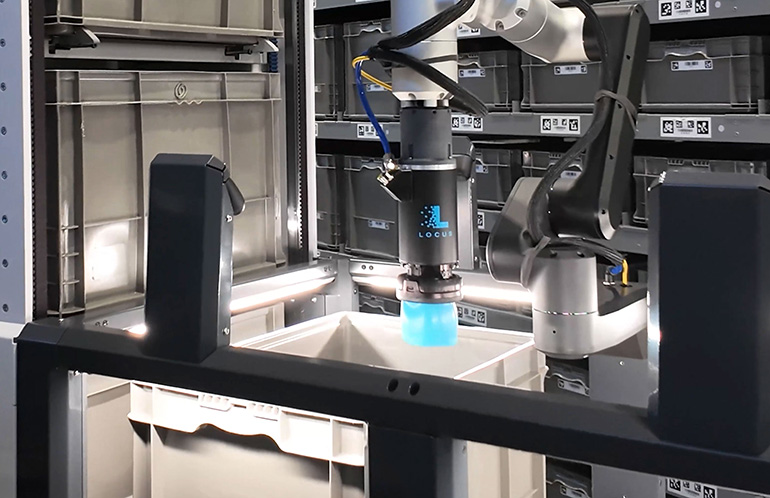
Locus Robotics has acquired Nexera Robotics in a move aimed at improving one of the toughest jobs in fulfillment automation: reliably picking a wide range of stock keeping units, or SKUs, at speed. The deal centers on Nexera’s NeuraGrasp system, which Locus says will replace the suction-cup gripper on its Locus Array mobile manipulator and significantly expand the kinds of items the robot can handle.
The announcement matters because robotic picking has long been constrained not just by software, but by the physical limits of the end effector. Many warehouse robots can handle clean, rigid objects reasonably well. Problems start when the stream of goods becomes more varied, especially in e-commerce environments where packaging changes constantly and items can be soft, porous, irregularly shaped, or hard to isolate from surrounding inventory.
Locus framed the acquisition as a direct response to those limitations. Chief Strategy Officer Gina Chung said the company had already pushed Array on perception and grasping intelligence, but concluded that suction-based picking had practical limits. Integrating Nexera’s technology, she said, is intended to unlock broader manipulation capability.
Why the gripper matters as much as the AI
Nexera’s NeuraGrasp combines a soft compliant membrane with onboard sensing, computer vision, and artificial intelligence. According to the companies, that setup has been shown to grasp a broad mix of items, including small containers, cloth goods, and porous polybags that are often difficult for conventional suction systems. That is a meaningful detail, because polybags and similarly inconsistent packaging are common in modern fulfillment and often represent failure points for automated picking cells.
In practical terms, Locus is trying to close the gap between a robot that works in a demo and one that can run across enterprise-scale operations where exceptions quickly erode return on investment. A system that can pick only a narrow slice of inventory creates labor handoffs and workflow fragmentation. A system that can address more of the long tail of SKUs becomes more useful as a general warehouse tool.
Rick Faulk, CEO of Locus Robotics, described AI-driven mobile manipulation at enterprise scale as the next frontier in warehouse robotics and said that efficiently grasping millions of SKU types is where the next decade of value will be created. That is an ambitious framing, but it captures the strategic logic behind the acquisition: Locus is not just adding a component, it is trying to strengthen the economic case for mobile manipulation as a platform.
Array’s role in the broader automation push
Locus launched the Locus Array mobile manipulator only last month, so the acquisition also shows how quickly the company is iterating around that product. Array already received a 2026 RBR50 Robotics Innovation Award, and Locus has been positioning it as part of a larger autonomy push inside the warehouse. Adding NeuraGrasp gives the company a way to claim that its manipulation stack now extends beyond perception and navigation into the harder question of physical adaptability.
That matters in competitive terms. Warehouse robotics vendors increasingly need to show not just movement automation, but end-to-end task completion. Moving bins, carts, or inventory through a facility is useful, but picking remains one of the highest-value steps because it directly replaces labor-intensive work. A mobile manipulator that can travel and pick reliably has broader appeal than a robot that still depends on tightly constrained item conditions.
What the acquisition says about the market
The deal also underlines a wider industry trend: robotics companies are combining hardware, software, and AI more tightly rather than treating grippers as interchangeable attachments. Nexera CEO Roy Belak said the company built NeuraGrasp to address manipulation challenges that have held robotic picking back for years. Joining Locus, he said, gives the technology access to the scale and customer base needed to deploy in high-velocity fulfillment environments.
That suggests the acquisition is as much about commercialization as research. Grasping breakthroughs are valuable, but they become strategically important only when they can be deployed across real operations with demanding throughput requirements. Locus already has a warehouse footprint; Nexera brings a tool designed to widen what that footprint can automate.
The immediate test will be whether NeuraGrasp materially improves pick coverage inside Locus Array deployments. If it does, the acquisition could strengthen Locus’s argument that mobile manipulation is moving from pilot-stage novelty toward practical infrastructure for high-mix fulfillment. If not, it will illustrate a lesson the industry already knows well: better AI alone is not enough if the robot’s hand cannot cope with the messiness of real-world inventory.
This article is based on reporting by The Robot Report. Read the original article.
Originally published on therobotreport.com