The factory floor still runs on pragmatism
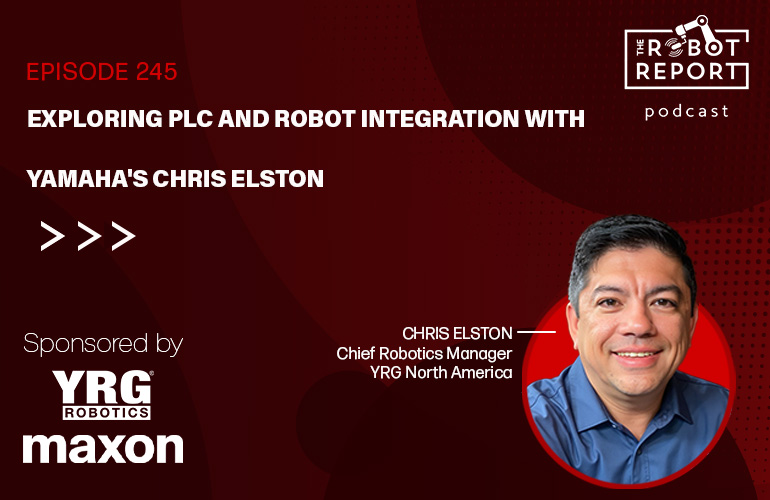
For all the excitement around AI, humanoids, and next-generation robotics, a more immediate shift in automation is happening in a less glamorous place: the interface between industrial robots and PLC-based control systems. A new episode of The Robot Report Podcast featuring Yamaha Robotics Group North America executive Chris Elston points to the same theme many machine builders already recognize: the PLC is not disappearing, and robotics adoption gets easier when systems work with that reality instead of against it.
Elston’s role centers on helping machine builders and end users integrate robotics and PLC-driven automation into manufacturing environments designed to be practical, scalable, and easier to deploy. That framing is significant because it puts usability and compatibility ahead of spectacle. In industrial settings, the value of a robot is often determined less by what it can do in isolation than by how smoothly it fits into an existing line, operator workflow, and controls stack.
The key market pressure is accessibility
Manufacturers still face the same basic constraints: labor pressure, productivity demands, and the cost of downtime. That has created sustained interest in automation, but not necessarily in systems that require a wholesale redesign of plant operations. PLC-driven environments remain deeply embedded across industrial facilities, which is why robotics vendors increasingly emphasize integration layers, operator interfaces, and deployment simplicity rather than only raw hardware capability.
The podcast episode’s sponsorship language makes that case plainly, arguing that the PLC “isn’t going anywhere” and is instead evolving. Whether read as marketing or diagnosis, the point aligns with broader industry logic. Brownfield manufacturing sites do not replace controls philosophies overnight. They extend them. Robots that can enter that environment without excessive friction have a better chance of scaling.
Why this matters now
The commercialization gap in robotics is often not about whether a machine can perform a task in a demo. It is about whether an integrator can make the system reliable, maintainable, and understandable for plant personnel. That is why companies continue to put energy into conveyor modules, operator interfaces, controls integration, and community knowledge networks such as MrPLC.com, which Elston founded.
In other words, the next phase of robotics growth may depend less on entirely new control paradigms than on making advanced machines legible inside existing ones. That is an important correction to the common assumption that robotics progress is mainly about replacing legacy industrial logic. In many factories, success comes from layering new capability onto familiar infrastructure.
The industry conversation is shifting from possibility to deployment
The Robot Report episode sits alongside other signals in the same publication, including coverage of warehouse picking expansion and discussion of robotics components designed for operation beyond controlled factory cells. Together, those topics suggest a maturing industry focused not only on what robots can theoretically do, but on what can be implemented repeatedly in commercial conditions.
That emphasis on deployment quality is likely to define the strongest industrial robotics companies over the next several years. Businesses need systems that reduce integration overhead, shorten commissioning time, and let operators interact with automation without specialist-only knowledge. PLC compatibility is not the whole answer, but it remains a core part of that equation.
The most important message from the discussion is straightforward: in manufacturing, technological progress usually wins when it respects installed reality. Robots may become more intelligent and flexible, but if they are to spread faster across real production lines, they will need to keep meeting factories where factories already are.
This article is based on reporting by The Robot Report. Read the original article.
Originally published on therobotreport.com