Industrial robotics is moving from isolated pilots toward platform-scale deployment
Flex and Teradyne Robotics are expanding a long-term partnership to accelerate what both companies describe as physical AI across manufacturing. The arrangement does more than deepen a supplier relationship. It positions Flex as both the maker of core robotics components and a large-scale user of those systems in its own facilities around the world.
That dual role is what makes the announcement significant. Many industrial automation efforts stall between demonstration and broad operational rollout. A robot may work in a controlled environment yet struggle to scale across global sites with different constraints, labor realities, and process requirements. By manufacturing Teradyne’s robotics hardware while also deploying collaborative robots and autonomous mobile robots across its own production environments, Flex is trying to close that gap.
A two-track strategy for scaling robotics
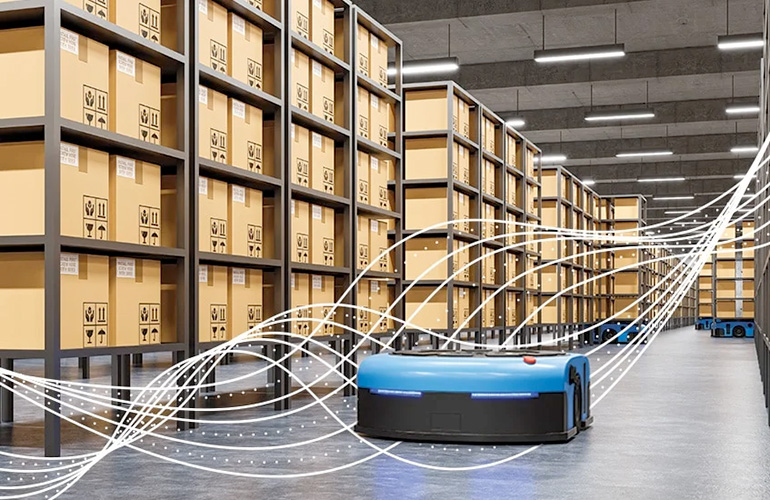
According to the supplied source text, the expanded partnership creates a dual-track model. Flex already makes key components for Universal Robots and will deploy collaborative robots from UR as well as autonomous mobile robots from Mobile Industrial Robots, both Teradyne units, in facilities worldwide. The aim is to drive operational efficiency while generating continuous real-world feedback.
That is an important shift in posture. Instead of serving only as an upstream manufacturing partner, Flex is becoming a proving ground for the robotics systems it helps produce. In theory, this gives both companies faster learning cycles. Hardware issues, workflow bottlenecks, integration problems, and scaling limits can be identified in live industrial contexts rather than in abstract evaluation environments.
The strategy also reflects a broader change in industrial AI. Physical AI is increasingly judged not by impressive demos but by whether it can run reliably in production, adapt to real workflows, and replicate across sites. That means the boundary between vendor and customer is starting to blur. The same company can help build a robotics platform and supply the operational environment that tests whether the platform is truly ready for scale.

Why the manufacturing setting matters
Manufacturing is a particularly revealing test bed for intelligent automation. Factory environments demand consistency, safety, uptime, and repeatability. Any system that claims to deliver physical AI has to prove itself under those conditions, not just in curated demonstrations. Flex’s global footprint gives the partnership a chance to test whether workflows that succeed in one facility can be replicated elsewhere with less friction.
The source material frames this as an attempt to solve the scale problem that has long constrained widespread automation. That phrase captures the central challenge. Industrial robotics has delivered value for years, but deployment often remains fragmented. A process that works in one line or one plant may not travel cleanly. Integration can be complex. Infrastructure, heat, power, and IT demands can become limiting factors.
Flex and Teradyne say they plan to address power, heat, and scale challenges through advanced power and cooling technology alongside scalable IT infrastructure. Those details matter because physical AI is not only about the robot arm or the mobile platform. It is also about the surrounding systems that support reliable operation at meaningful volume.
From automation concept to operational feedback loop
One of the strongest elements in the announcement is the emphasis on continuous operational feedback. Industrial technology often struggles when product teams are too far removed from day-to-day deployment realities. By running UR cobots and MiR autonomous mobile robots inside its own production environments, Flex can provide immediate signals about how the systems behave in actual work conditions.
That feedback can affect much more than hardware refinement. It can inform software behavior, workflow design, replication strategy, and integration practices. If a successful automation pattern can be validated in one site and then copied faster elsewhere, the value of the partnership rises sharply. Scale in robotics is rarely about a single breakthrough machine. It is about repeatable deployment models.
The broader industrial sector will likely watch this closely because the partnership serves as a real test of whether advanced manufacturing and AI-driven robotics can reinforce each other. If the model works, it suggests a path where companies do not wait for perfect automation products before deploying. Instead, they improve platforms through large-scale use in the environments that matter most.

Physical AI needs more than impressive hardware
The announcement also underscores an important truth about the current robotics market: physical AI will only matter commercially if it survives operational reality. Terms like intelligent automation can sound abstract until they are tied to output, throughput, labor support, and global replication. Flex and Teradyne appear to be structuring their relationship around that practical requirement.
Flex brings advanced manufacturing capabilities, systems integration, and global supply chain execution. Teradyne brings established robotics platforms through Universal Robots and Mobile Industrial Robots. Combining those strengths inside Flex’s own facilities creates a more demanding benchmark than a standard supplier agreement would. It asks whether the technology can perform not only in theory but across a distributed industrial footprint.
If it can, the payoff could extend beyond the two companies. Manufacturers across sectors are looking for ways to move from selective automation toward broader operational consistency. A visible success case would give the market a stronger template for how that transition can happen.
The bigger question is whether the model can be repeated
The most important outcome from this partnership may not be any single deployment. It may be whether the companies can repeatedly validate, refine, and replicate successful workflows at scale. That is the real threshold for physical AI in manufacturing. Not isolated wins, but a system that can travel.
Flex and Teradyne are betting that a tighter loop between building robots and using robots can accelerate that process. If they are right, the expanded partnership could become less a routine industrial alliance and more a blueprint for how intelligent robotics gets industrialized in practice.
This article is based on reporting by The Robot Report. Read the original article.

Originally published on therobotreport.com