A Milestone in Computational Neuroscience
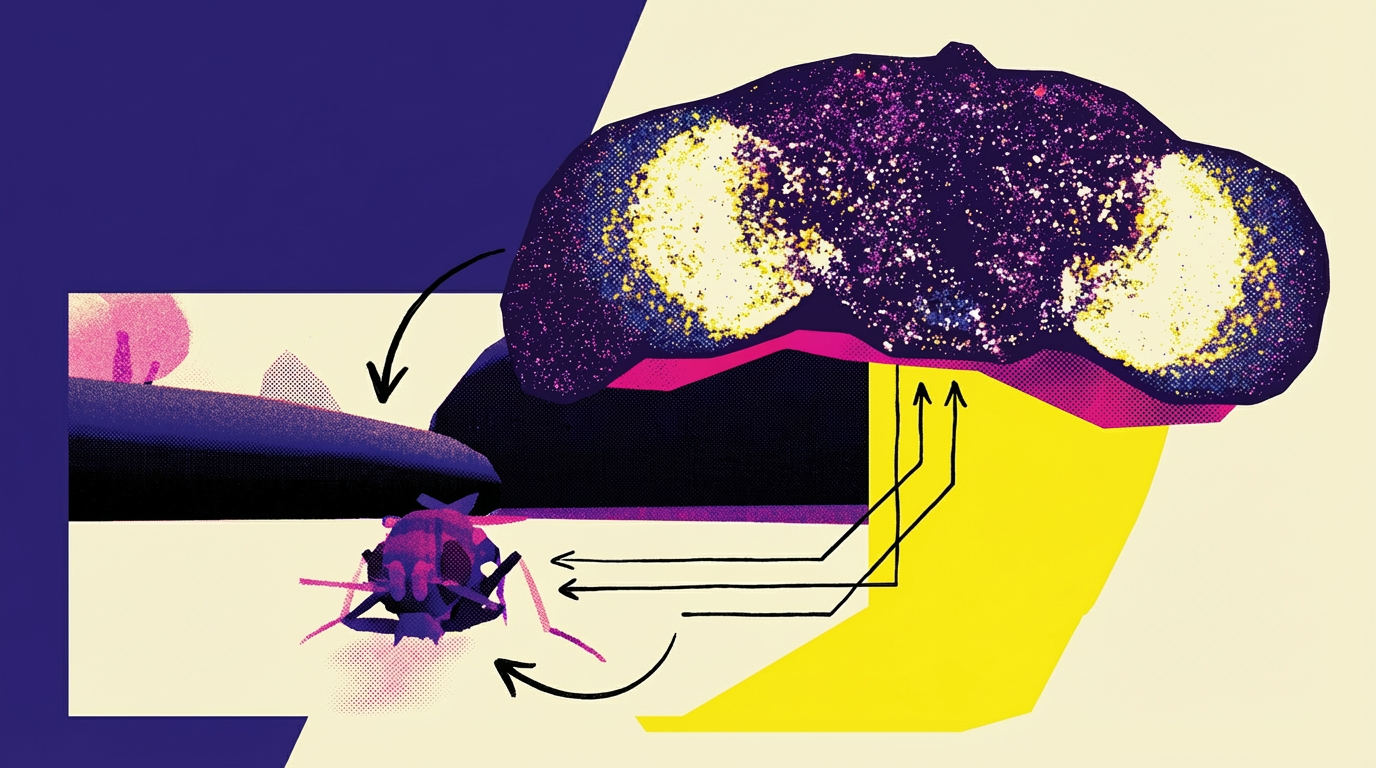
A startup called Eon Systems claims to have achieved the first complete brain emulation of a fruit fly connected to a simulated body. The system models all 125,000 neurons and approximately 50 million synaptic connections found in the Drosophila melanogaster brain, representing a significant leap forward in the field of whole-brain emulation.
Unlike previous efforts that simulated isolated neural circuits or static connectivity maps, Eon Systems says its emulation produces multiple observable behaviors when connected to a virtual body. The digital fly reportedly exhibits locomotion patterns, sensory responses, and other behaviors that mirror those seen in living fruit flies, suggesting that the emulation captures meaningful aspects of the biological system's computational architecture.
How the Emulation Works
The emulation builds upon the fruit fly connectome, a complete map of every neuron and synapse in the insect's brain that was published by researchers in recent years. This connectome provided the structural blueprint, but translating a wiring diagram into a functional simulation required significant additional work.
Eon Systems developed custom simulation software that models not just the connections between neurons but also the dynamics of how signals propagate through the network. Each of the 125,000 neurons is simulated individually, with its firing patterns determined by inputs from connected neurons weighted by synaptic strengths. The virtual body provides sensory inputs and receives motor outputs, creating a closed loop that allows emergent behaviors to arise from the neural simulation.
The computational demands of running such a simulation are substantial. Processing 50 million synaptic connections in real time requires significant GPU resources, and the company has developed optimized algorithms to make the simulation tractable on modern hardware.
Why Fruit Flies Matter
The fruit fly has long been a model organism in neuroscience, prized for its relatively simple nervous system that nonetheless supports a rich repertoire of behaviors. With only 125,000 neurons compared to the roughly 86 billion found in the human brain, the fruit fly represents a manageable target for whole-brain emulation while still being complex enough to produce interesting behaviors.
Key behaviors that fruit flies exhibit include:
- Complex flight patterns and navigation
- Learning and memory formation
- Social behaviors including courtship rituals
- Decision-making under uncertainty
- Circadian rhythm regulation
If Eon Systems' emulation can reproduce even a subset of these behaviors faithfully, it would validate the approach of using connectome data to build functional brain simulations and open the door to emulating more complex organisms.
Implications for AI and Neuroscience
The achievement sits at the intersection of neuroscience and artificial intelligence. While modern AI systems like large language models operate on principles quite different from biological neural networks, whole-brain emulation takes a fundamentally different approach by attempting to replicate the actual computational substrate of biological intelligence.
Proponents of brain emulation argue that it could eventually lead to AI systems that exhibit the flexibility, efficiency, and robustness of biological brains. A fruit fly brain, for instance, operates on a fraction of a watt of power while performing sophisticated sensory processing and motor control that remains challenging for engineered systems.
For neuroscience, the emulation provides a powerful new tool for testing hypotheses about brain function. Researchers can manipulate individual neurons or connections in the simulation and observe the effects on behavior, experiments that would be extremely difficult or impossible to perform on living animals.
Skepticism and Challenges
The announcement has been met with both excitement and skepticism in the scientific community. Some researchers have questioned whether the observed behaviors truly emerge from the neural simulation or are artifacts of the way the virtual body is implemented. Others have pointed out that a connectome alone may not capture all the relevant biology, since factors like neuromodulation, glial cell activity, and molecular signaling also play important roles in brain function.
Eon Systems has said it plans to publish detailed results for peer review, which will allow the scientific community to evaluate the claims rigorously. The company has also indicated that it views the fruit fly emulation as a stepping stone toward emulating larger and more complex brains, though the computational requirements scale dramatically with brain size.
The Road Ahead
If validated, Eon Systems' achievement would mark a genuine milestone in the decades-long quest to understand and replicate biological intelligence. The gap between a fruit fly brain and a human brain remains enormous, but demonstrating that whole-brain emulation can produce meaningful behaviors is a necessary first step. The work also highlights the growing convergence of neuroscience, computer science, and AI, a trend that is likely to produce increasingly dramatic results in the years ahead.
This article is based on reporting by The Decoder. Read the original article.
Originally published on the-decoder.com